The Ultimate Guide to Evaporative Cooling Dog Vests: How They Work, Benefits, and Best Options
Introduction: What Is an Evaporative Cooling Dog Vest?
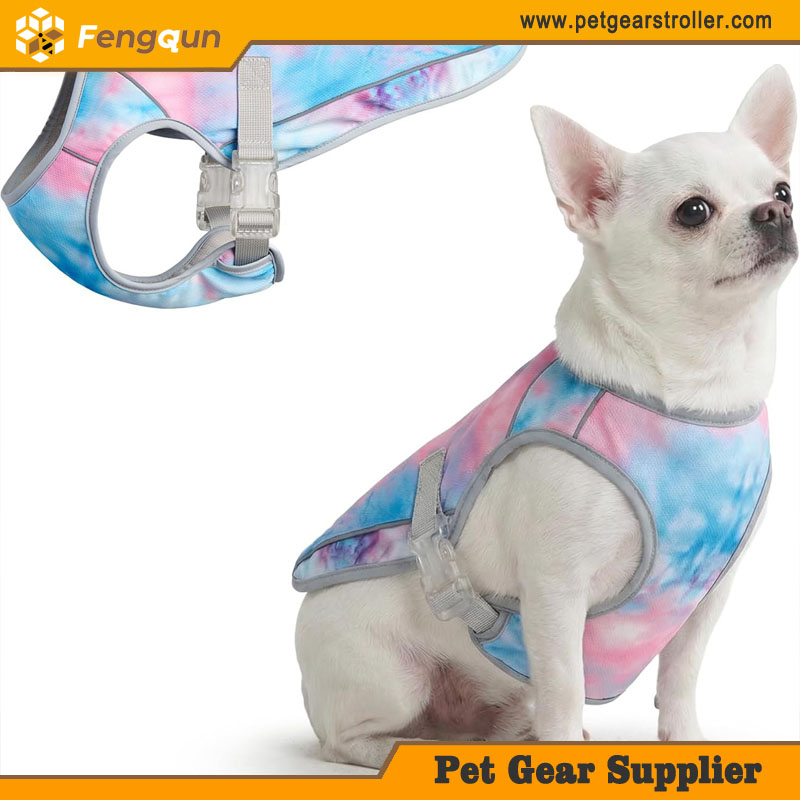
An evaporative cooling dog vest is a wearable cooling garment designed to help dogs manage heat during summer activities. It absorbs water into specialized fabric layers and releases it through evaporation, drawing heat away from the dog's body. Under suitable conditions, this process can lower the temperature at the fabric–coat interface by approximately 5°C–10°C (9°F–18°F), although actual performance varies with humidity, airflow, and product construction.
Unlike electrically powered cooling equipment, an evaporative cooling dog vest operates without batteries, compressors, or refrigerants. Its performance depends on water retention, evaporation rate, and environmental conditions. These characteristics make it a practical option for walking, hiking, training, and other outdoor activities in warm weather.
However, cooling performance is not uniform across all climates. Dry environments with adequate airflow generally support faster evaporation, while high humidity can significantly reduce cooling efficiency.
1. The Science Behind Evaporative Cooling Dog Vests
1.1 How Does Evaporative Cooling Work?
Evaporative cooling is a heat-transfer process in which liquid water absorbs energy from its surroundings as it changes into vapor.
When a wet cooling vest is exposed to moving air, water molecules escape from the fabric surface. This phase change requires latent heat, which is drawn from the surrounding fabric, air, and potentially the dog's body through thermal contact.
The basic principle can be expressed as:
Q = m × Lᵥ
Where:
Q = thermal energy absorbed during evaporation, measured in joules (J).
m = mass of evaporated water, measured in kilograms (kg).
Lᵥ = latent heat of vaporization of water, approximately 2,260 kJ/kg near 100°C and approximately 2,400–2,450 kJ/kg around typical outdoor temperatures.
For example, if 100 g of water evaporates from a vest, the theoretical heat absorbed by the evaporation process is approximately 240 kJ under typical warm-weather conditions.
This value represents the energy associated with evaporation, not the amount of heat necessarily removed from the dog's body. Some energy comes from the surrounding air and sunlight, and the actual cooling benefit depends on garment design, contact area, and environmental conditions.
1.2 Understanding Three-Layer Fabric Technology
Many evaporative cooling dog vests use a multilayer textile structure. The exact materials vary by manufacturer, but a three-layer design can combine water storage, heat management, and comfortable body contact.
Layer 1: Outer Heat-Management Layer
The outer layer protects the internal fabric structure and may help reflect solar radiation, improve durability, or provide UV protection.
Light-colored textiles and suitable reflective finishes can reduce solar heat absorption. However, a UPF rating should be verified through product testing rather than assumed from fabric color alone.
Layer 2: Water-Retention Layer
The middle layer stores water and provides the reservoir required for sustained evaporation. Its fiber structure, thickness, porosity, and water-holding capacity influence how much moisture the vest can retain.
A well-designed reservoir should distribute water evenly without excessive dripping or creating uncomfortable bulk.
Water retention alone does not determine cooling performance. A fabric that stores a large quantity of water may cool slowly if its construction restricts airflow or delays moisture evaporation.
Layer 3: Inner Contact Layer
The inner layer sits against the dog's coat and should provide a soft, comfortable interface. Mesh or moisture-distributing textiles can help spread cooling across the contact area.
The material must also allow sufficient air movement and avoid unnecessary friction, restricted movement, or excessive moisture accumulation.
The three layers therefore perform complementary functions: the outer layer manages environmental exposure, the middle layer stores water, and the inner layer supports comfortable thermal contact.
1.3 Key Technical Factors Affecting Cooling Performance
Several engineering variables determine whether a cooling vest performs effectively.
Water absorption capacity: Determines how much water the vest can hold after soaking.
Evaporation rate: Influences how quickly stored water releases heat through phase change.
Air permeability: Allows moving air to carry water vapor away from the textile.
Fabric thickness: Affects water storage, drying time, weight, and thermal resistance.
Contact area: Determines how much of the dog's body can exchange heat with the garment.
Solar reflectance: Influences how much radiant energy the outer surface absorbs.
Fit and ventilation: Affect comfort, airflow, and the distribution of cooling.
A useful product evaluation should measure these characteristics under controlled conditions rather than relying exclusively on marketing descriptions.
2. Key Benefits of an Evaporative Cooling Dog Vest
2.1 Supports Heat Management During Summer Activities
Dogs rely heavily on panting to regulate body temperature. They have fewer effective heat-dissipation options than humans, particularly during vigorous exercise or exposure to hot weather.
An evaporative cooling vest can provide an additional heat-management measure by transferring heat through contact and evaporation. It may be especially useful during moderate outdoor activities when temperatures are elevated but environmental airflow remains adequate.
Nevertheless, a cooling vest cannot guarantee protection against heatstroke. Dogs can still overheat while wearing one, particularly during strenuous exercise, prolonged sun exposure, or extreme temperatures.
2.2 Improves Comfort During Walking and Hiking
For dogs accompanying their owners on summer walks, camping trips, or moderate hikes, a lightweight cooling vest can improve comfort when used appropriately.
Important design considerations include:
Adjustable straps for a secure, non-restrictive fit.
Breathable materials that support evaporation.
Low dry weight to reduce unnecessary carrying load.
Sufficient chest and torso coverage without restricting shoulder movement.
Easy re-wetting during longer outdoor activities.
The vest should be removed if it becomes restrictive, causes skin irritation, or retains excessive heat and moisture.
2.3 Helps Reduce Solar Heat Exposure
Dogs walking in direct sunlight may absorb heat through exposed body surfaces, especially when the sun is intense and shade is limited.
An outer layer designed to reflect sunlight can reduce radiant heat absorption, while the wet internal layers provide evaporative cooling.
However, a cooling vest does not protect a dog's paws from hot pavement. Asphalt and other hard surfaces can become much hotter than the surrounding air. Owners should test the walking surface, seek shade, and avoid walking during the hottest part of the day.
2.4 Offers a Portable, Battery-Free Cooling Solution
Unlike powered cooling products, evaporative vests do not require electrical connections or battery charging.
Their lightweight construction and simple activation process make them convenient for travel and outdoor use. Most models can be activated by soaking the garment, gently squeezing out excess water, and fitting it to the dog according to the manufacturer's instructions.
This simplicity also makes evaporative cooling vests attractive to retailers seeking practical summer pet accessories.
3. Ideal Conditions and Performance Limitations
An evaporative cooling dog vest should be selected according to the intended climate and activity.
3.1 Where Does an Evaporative Cooling Vest Work Best?
Dry, warm environments with adequate airflow generally provide favorable conditions for evaporation.
As a practical guide:
Relative humidity below 60%: Evaporation is often relatively efficient when airflow is adequate.
Relative humidity between 60% and 70%: Performance becomes increasingly dependent on wind, temperature, and fabric design.
Relative humidity above 70%: Evaporation may slow substantially, reducing the vest's cooling effect.
These humidity values are useful screening guidelines, not universal performance thresholds. A product's actual cooling capacity must be evaluated alongside ambient temperature, air movement, radiant heat, and textile properties.
A light breeze can help remove water vapor from the fabric surface, maintaining the vapor-pressure gradient needed for continued evaporation.
3.2 Why High Humidity Reduces Cooling Efficiency
Evaporation depends partly on the difference in water vapor pressure between the wet fabric surface and the surrounding air.
When ambient air is humid, it already contains a relatively high concentration of water vapor. The difference between the wet surface and the surrounding air decreases, slowing evaporation.
As a result, a vest that performs well in a dry climate may provide substantially less cooling in humid coastal regions or tropical environments.
For dogs living in humid climates, owners should prioritize shade, ventilation, reduced exercise intensity, access to drinking water, and other appropriate cooling measures rather than relying on the vest alone.
3.3 Limitations in Enclosed or Poorly Ventilated Spaces
Evaporative cooling also requires effective moisture removal.
A sealed vehicle, poorly ventilated crate, or enclosed space can restrict airflow and allow humidity to accumulate near the wet fabric. These conditions may reduce evaporation and compromise the garment's cooling performance.
A cooling vest must never be treated as a substitute for safe vehicle temperatures, adequate ventilation, or direct supervision.
Dogs should never be left unattended in a hot car, even when wearing a cooling garment.
4. How to Choose the Best Dog Cooling Vest
The best dog cooling vest is not necessarily the thickest or the one that holds the most water. Buyers should evaluate cooling performance, garment weight, fit, durability, and ease of maintenance together.
4.1 Technical Feature Comparison
| Feature | What to Look For | Why It Matters |
|---|---|---|
| Water-retention capacity | Clearly specified water absorption or retention data | Helps estimate usable moisture storage |
| Dry weight | Lightweight textile construction | Reduces carrying load |
| Wet weight | Maximum or typical weight after soaking | Indicates the additional load during use |
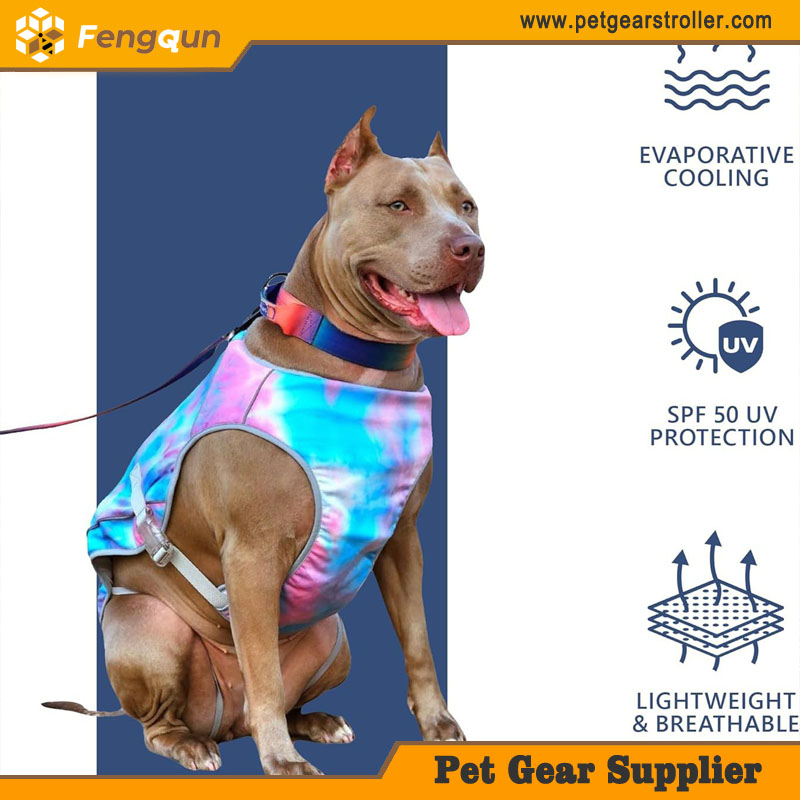
| UV protection | Verified UPF rating, ideally UPF 50+ where available | Helps assess protection from ultraviolet radiation |
| Air permeability | Breathable fabric construction or test data | Supports moisture evaporation |
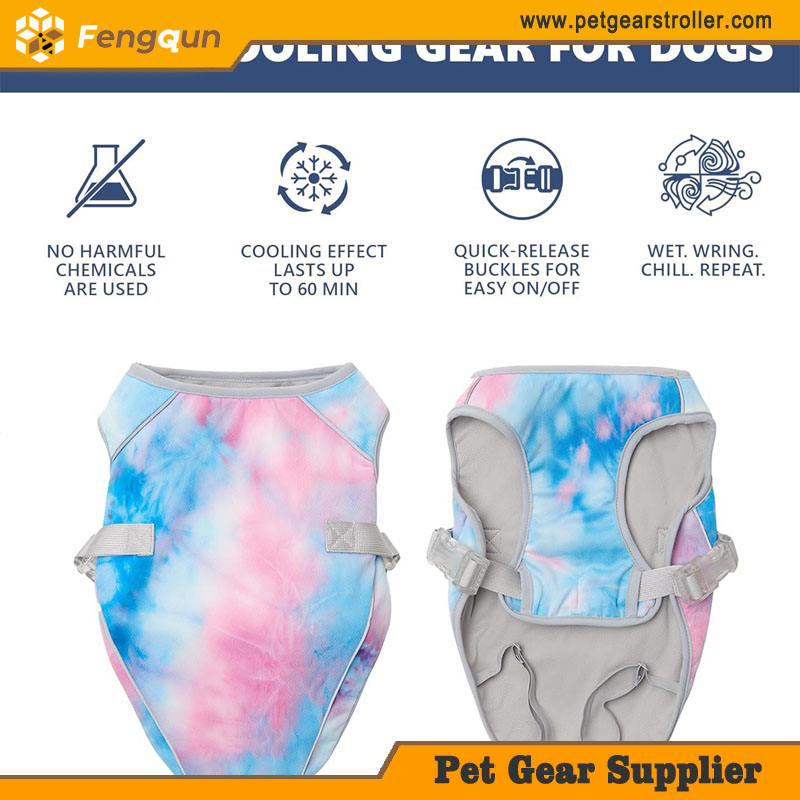
| Fit adjustment | Adjustable chest and torso straps | Improves stability and comfort |
| Harness compatibility | Dedicated harness openings or attachment points | Simplifies outdoor walking |
| Reflective trim | Clearly specified reflective components | Improves visibility in low-light conditions |
| Maintenance | Washable, durable materials | Supports repeated seasonal use |
UPF 50+ indicates that a tested textile blocks approximately 98% of ultraviolet radiation under the applicable testing conditions. It does not, by itself, establish how effectively the garment reduces heat.
Similarly, reflective trim can improve visibility when illuminated, but it does not replace a suitable leash, supervision, or other safety measures.
4.2 Why Dry Weight and Wet Weight Matter
Dry weight and wet weight are particularly important for small dogs, senior dogs, and dogs participating in extended outdoor activities.
Wet weight can be estimated using:
Wet weight = Dry weight + Retained water weight
For example, if a vest weighs 180 g when dry and retains 250 g of water, its total wet weight is approximately 430 g.
This additional mass may influence comfort and mobility, particularly in smaller breeds. Buyers should compare the fully wetted garment weight with the dog's size and intended activity rather than evaluating dry weight alone.
4.3 Fit, Coverage, and Material Safety
A cooling vest should fit securely without compressing the chest, restricting breathing, or interfering with natural movement.
The garment should cover an appropriate area of the torso while leaving the dog's legs and shoulders free to move. Straps should be adjustable enough to accommodate different body shapes, but they must not be tightened excessively.
Before purchase, check whether the manufacturer provides sizing measurements, fabric composition, washing instructions, and guidance on safe use.
For dogs with sensitive skin, thick coats, existing health problems, or limited tolerance for clothing, introduce the vest gradually and monitor the skin for irritation.
5. How to Use and Maintain an Evaporative Cooling Dog Vest
Correct activation and maintenance help preserve the garment's performance.
Step 1: Wet the vest. Soak it in clean water according to the manufacturer's instructions to activate the water-retention layer.
Step 2: Remove excess water. Gently squeeze the garment until it is evenly damp without dripping excessively.
Step 3: Fit the vest correctly. Adjust the straps so the garment remains secure without restricting breathing or movement.
Step 4: Monitor the dog. Observe panting, gait, responsiveness, and general comfort throughout the activity. Provide shade, drinking water, and rest breaks.
Step 5: Re-wet when necessary. If the garment becomes dry, add water as directed by the manufacturer. Re-wetting restores the moisture needed for evaporation.
Step 6: Clean and dry after use. Follow the care label, remove dirt and residues, and store the garment appropriately to limit odor and material deterioration.
Avoid assuming that a wet garment is always cooling effectively. If the surrounding air is humid or ventilation is poor, the vest may remain wet while delivering limited evaporative cooling.
6. How Long Does a Dog Cooling Vest Last?
The cooling duration depends on the amount of retained water, the ambient temperature, relative humidity, wind speed, solar exposure, and the dog's activity level.
As a general planning estimate, some evaporative cooling vests may provide a useful cooling effect for approximately 1–3 hours under favorable conditions. This is not a guaranteed duration or a standardized performance rating.
Hot, dry, windy conditions may accelerate evaporation and shorten the period before re-wetting is needed. In humid environments, water may evaporate more slowly, but slower drying does not necessarily mean better cooling.
For extended walks or hikes, owners should carry water for both drinking and garment reactivation when appropriate. Follow the product's specific instructions and reassess the dog's condition frequently.
What Happens When the Vest Dries Out?
Once the stored water has evaporated, the vest loses most of its evaporative cooling capability. It may continue to function as a lightweight garment, but it should not be assumed to provide meaningful active cooling.
Re-wetting the vest can reactivate the evaporation process immediately, provided the fabric is designed for repeated wetting and remains in suitable working condition.
7. Recognizing Overheating and Understanding Safety Risks
A cooling vest is a supplementary comfort product, not a medical treatment.
Warning signs of heat stress in dogs can include excessive or unusually heavy panting, thick saliva, weakness, vomiting, confusion, poor coordination, and collapse.
If overheating is suspected, stop the activity immediately, move the dog to a cooler area, and begin appropriate cooling with cool—not ice-cold—water and airflow. Contact a veterinarian urgently if heatstroke is suspected, and do not delay veterinary care while attempting to cool the dog.
Dogs with short muzzles, thick coats, obesity, advanced age, or certain medical conditions may face elevated heat-related risks. Owners should consult a veterinarian when uncertain whether outdoor activity is appropriate.
8. Frequently Asked Questions
How long does an evaporative cooling dog vest last?
The cooling effect may last approximately 1–3 hours in favorable conditions, depending on water retention, airflow, humidity, temperature, and activity. Check the garment regularly and re-wet it when needed.
What happens when a dog cooling vest dries out?
When the stored water evaporates, the vest loses most of its evaporative cooling effect. If the material is designed for reactivation, adding water restores its cooling function.
Are evaporative cooling dog vests effective in humid climates?
They can provide some benefit, but high relative humidity slows evaporation and may reduce cooling performance. Shade, ventilation, activity management, and access to drinking water remain essential.
Can a cooling vest prevent heatstroke?
No. A cooling vest may support heat management, but it cannot guarantee prevention of heatstroke. Owners must monitor their dogs, limit strenuous activity in hot weather, and respond promptly to signs of overheating.
Can dogs wear cooling vests with a harness?
Yes, if the product has a compatible harness opening or attachment design. Check that the harness and vest do not interfere with each other, restrict movement, or create pressure points.
Is a higher water-retention capacity always better?
No. Higher water retention may extend moisture availability, but excessive wet weight can reduce comfort and mobility. Buyers should balance retention capacity, evaporation rate, breathability, and total wet weight.
Conclusion: Selecting the Right Evaporative Cooling Dog Vest
An evaporative cooling dog vest uses water evaporation and latent heat transfer to help dogs manage heat during warm-weather activities. Its effectiveness depends on fabric engineering, water retention, airflow, humidity, and proper fit.
When evaluating the best dog cooling vest, prioritize verified performance data, manageable wet weight, breathable materials, suitable coverage, secure adjustment, and clear care instructions. A UPF 50+ rating and reflective trim can provide additional benefits when supported by appropriate product specifications.
Most importantly, use the vest as one part of a broader summer safety strategy. Shade, drinking water, ventilation, appropriate exercise timing, and close monitoring remain essential to keeping dogs comfortable and reducing the risk of heat-related illness.
Recommend related products: