How to Choose the Best All-Terrain Dog Stroller for Outdoor Use
Whether you are navigating rocky hiking trails, sandy beaches, or bumpy neighborhood gravel paths, an all terrain dog stroller is an essential piece of equipment for aging, injured, recovering, or brachycephalic dogs who still deserve to experience the great outdoors. Unlike standard urban pet strollers built exclusively for smooth pavement and shopping malls, an outdoor dog stroller is engineered to withstand demanding environments, protect your pet from sudden jolts, and provide maximum ergonomic comfort.
This comprehensive technical guide breaks down everything you need to know to select, evaluate, and maintain a rugged dog stroller tailored to your adventurous lifestyle and your dog's specific needs.

What Is an All-Terrain Dog Stroller?
An all terrain dog stroller is a specialized pet transport vehicle designed specifically for rough surfaces, off-road conditions, and unpaved pathways. While standard models prioritize lightweight maneuverability and compact folds for city commuting, all-terrain models prioritize structural integrity, stability, and impact mitigation.
Key defining characteristics of an all terrain dog stroller include:
Oversized, pneumatic or high-density foam wheels that roll easily over obstacles.
Independent or dual-wheel suspension systems to absorb shock.
High-strength reinforced frames built to handle heavy loads and torsional stress.
Weather-resistant, durable canopies offering UV protection and heavy-duty mesh ventilation.
All-Terrain vs Standard Dog Stroller
Understanding the engineering differences between standard urban models and a true outdoor dog stroller helps prevent gear failure miles away from civilization.
| Feature | Standard Urban Dog Stroller | All-Terrain Dog Stroller |
| Primary Use | Malls, smooth sidewalks, indoor expos | Hiking trails, gravel paths, grass, parks |
| Wheel Diameter | Small (4 to 6 inches) | Large (8 to 16+ inches) |
| Wheel Material | Plastic or lightweight EVA foam | Pneumatic (air-filled) rubber or rugged PU |
| Suspension | None or minimal spring tension | Heavy-duty shock absorbers or spring-leaf systems |
| Frame Construction | Lightweight thin-wall aluminum | Reinforced aerospace aluminum or heavy steel |
| Maximum Weight Capacity | Typically under 30 lbs | Built as a heavy duty dog stroller or large dog stroller (50 to 150+ lbs) |
How Wheel Size Effects Performance
When choosing a dog stroller with large wheels, you are directly influencing the mechanical advantage of the carriage. Wheel physics dictate how easily the stroller rolls over rocks, roots, and ruts.
Engineering Principle: Larger wheels possess a higher angle of attack. This means when a wheel encounters an obstacle (like a 2-inch tree root), a 12-inch or 16-inch wheel can roll over it with significantly less downward and forward resistance than a 6-inch small caster wheel, which tends to jam or stop dead.
Small Wheels (Under 8 inches): Prone to getting stuck in cracks, gravel, and mud. Suitable only for smooth tarmac.
Medium Wheels (8 to 12 inches): Good for light gravel and park lawns. A balanced compromise for hybrid urban/park use.
Large Wheels (12 to 16+ inches): Essential for a true dog stroller for hiking and severe dog stroller for uneven terrain. They maintain momentum and smooth out jarring impacts.
Why Suspension Matters
When pushing a rugged dog stroller across bumpy terrain, ground vibrations translate directly into stress on your dog's joints and spine. High-end models incorporate advanced suspension systems comparable to mountain bikes or jogging strollers.
Types of Suspension Systems
Spring-Loaded Axle Suspension: Uses internal metal coils near the wheel hubs to compress and rebound upon impact. Ideal for general gravel and uneven sidewalks.
Independent Dual-Arm Suspension: Allows each wheel to react to bumps independently, keeping the cabin level even if one wheel drops into a rut. Perfect for a dog stroller for hiking.
Frame-Level Shock Absorbers: Central dampening units built into the chassis hinge points to dissipate high-frequency vibrations before they reach the cabin floor.
How to Choose a Heavy-Duty Dog Stroller
If you have a medium-to-large breed, standard pet gear will buckle under dynamic loads. A heavy duty dog stroller must balance structural strength with pushability.
When evaluating heavy-duty options, look for:
Static vs. Dynamic Weight Limits: Static load refers to the dog sitting still; dynamic load accounts for shifting weight, jumping, and the impact forces of moving over rough terrain. Ensure the rated capacity exceeds your dog's weight by at least 20%.
Reinforced Floorboards: Cheap fabric floors sag over time. Look for rigid, moisture-resistant floor inserts covered with washable padding.
Low Center of Gravity: A wider wheelbase prevents tipping when turning sharply on sloping trails.
Dog Stroller Frame Materials
The skeleton of your all terrain dog stroller determines its weight, durability, and corrosion resistance.
Aircraft-Grade Aluminum (6061-T6): The gold standard for outdoor gear. It offers an exceptional strength-to-weight ratio, natural corrosion resistance against rain and mud, and enough flexibility to handle stress without snapping.
Carbon Steel: Extremely strong and cost-effective, but significantly heavier. Steel frames are common in ultra-heavy-duty models designed for giant breeds, but they require careful maintenance to prevent rust if exposed to moisture.
Reinforced Polymer/Composite Joints: High-stress folding hubs should be forged metal rather than cheap plastic, which can warp or crack under sub-zero temperatures or heavy trail vibrations.
Best Wheels for Grass, Gravel and Uneven Roads
The tire composition of your outdoor dog stroller dictates traction, maintenance requirements, and ride quality.
Pneumatic (Air-Filled) Tires:
Pros: Unmatched shock absorption; float effortlessly over sand, snow, and thick grass; provide the smoothest ride.
Cons: Can get punctured by thorns or sharp rocks (though slime sealants or thick inner tubes mitigate this). Requires a hand pump.
Solid Polyurethane (PU) or Heavy EVA Foam Tires:
Pros: 100% flat-free, zero maintenance, highly durable against jagged rocks.
Cons: Firmer ride with less natural dampening; can transmit more vibration unless paired with robust suspension.
Braking and Safety Features
Safety is paramount when exploring off-road environments, especially when descending hills or navigating uneven slopes.
Hand-Operated Caliper/Disc Brakes: Essential for a dog stroller for hiking. Just like a mountain bike, handlebar hand brakes allow you to control descent speed on steep hills without relying solely on your own body weight to hold back the stroller.
Foot-Lock Parking Brakes: A secure rear-wheel locking mechanism that engages instantly with a single foot tap, ensuring the stroller won't roll away when parked on an incline.
Internal Security Tethers: At least two heavy-duty adjustable interior leashes that clip securely to your dog’s harness (never attach to a collar on rough terrain to prevent tracheal injury).
Reflective Piping and High-Visibility Accents: Crucial for low-light conditions during early morning or evening walks.
How to Choose the Right Cabin for a Large Dog
Finding a proper large dog stroller requires looking beyond weight ratings and examining interior dimensions. Your dog must be able to lie down comfortably, turn around, and sit up without hitting their head against the canopy.
Ventilation and Visibility: Look for multi-sided heavy-duty nylon mesh windows that maximize airflow and allow your dog to scan their surroundings.
Dual Entry Points: Front and rear zippered doors make loading and unloading easier, especially for older or arthritic dogs who cannot jump in unassisted.
Weather Shielding: A waterproof or water-resistant oxford nylon exterior (600D to 1600D denier) coupled with a roll-down clear rain cover protects your pet from sudden downpours and cold wind gusts.
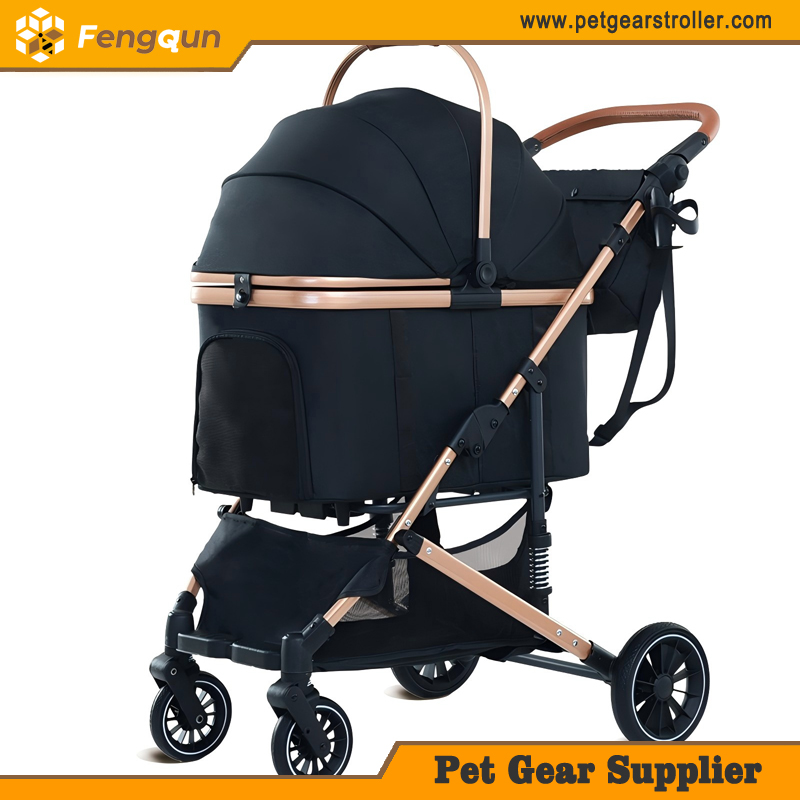
How to Maintain an All-Terrain Dog Stroller
Outdoor adventures expose gear to mud, grit, moisture, and organic debris. Proper maintenance ensures your all terrain dog stroller performs season after season:
Post-Trail Cleaning: Rinse off mud, salt, and sand from the frame and wheels using a damp cloth or low-pressure hose. Avoid high-pressure washers near wheel bearings.
Wheel and Axle Care: Periodically remove hair and debris wrapped around the axle hubs. Apply a silicone-based lubricant to moving joints and pivot points to prevent squeaking.
Tire Pressure Maintenance: If using pneumatic tires, check the PSI monthly using a standard bicycle pump to maintain optimal rolling efficiency.
Fabric and Mesh Inspection: Check zippers, seams, and safety tethers regularly for wear and tear to ensure your dog remains secure during transit.
By investing in a high-quality, properly engineered all terrain dog stroller, you open up a world of outdoor freedom for your canine companion, ensuring every adventure is safe, comfortable, and memorable.
What specific outdoor terrain or breed size are you shopping for to find the ideal stroller match?
Recommended linking:
Dog Stroller: Complete Guide to Choosing the Right Stroller for Your Dog
Recommend related products:





