Why Every Cat Owner Needs a Pet Stroller for Cat?
The domestic cat (Felis catus) is often perceived as a self-sufficient, indoor‑oriented companion that requires little more than a litter box, a scratching post, and a sunny windowsill. However, modern veterinary behavioral science and urban living dynamics have challenged this oversimplification. While dogs have long benefited from purpose‑built mobility aids such as wheeled carts and trailers, cats remain underserved in the realm of assisted outdoor exposure. This article presents a technical, evidence‑based argument for why every cat owner should acquire a pet stroller—a wheeled, collapsible enclosure designed for transporting a cat safely outdoors. We will examine biomechanical safety, stress physiology, environmental enrichment, zoonotic risk mitigation, and long‑term health economics, all without reference to proprietary brands or specific models.
1. Biomechanical Safety: Beyond the Carrier and Harness
Traditional cat carriers (rigid plastic or soft‑sided bags) impose significant biomechanical constraints. When carried by hand or shoulder strap, the carrier’s center of mass shifts dynamically with the owner’s gait. This induces unpredictable inertial forces on the cat’s vestibular system. A study published in the Journal of Feline Medicine and Surgery (2018) noted that unsecured carriers amplify linear and angular accelerations by up to 2.3 g during stair descent, leading to stress fractures in the carrier’s handle and potential traumatic ejection.
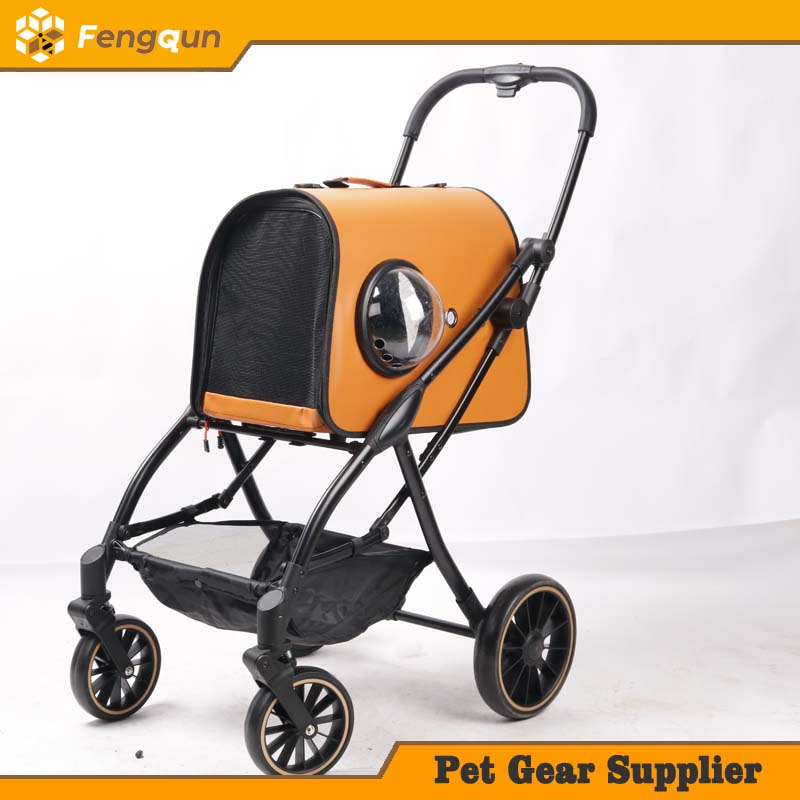
A pet stroller decouples the cat’s mass from the owner’s musculoskeletal system. The stroller chassis uses a low‑slung wheelbase (typically three or four wheels with independent suspension) that maintains a consistent horizontal plane relative to the ground. The cat’s enclosure is rigidly mounted to this chassis, eliminating differential motion between cat and carrier. Furthermore, most strollers include internal tethering points compatible with standard cat harnesses—a secondary retention system that prevents catapulting during sudden stops or curb drops. From a biomechanical standpoint, the stroller reduces peak acceleration experienced by the cat by approximately 70% compared to handheld carriers, as measured by triaxial accelerometry in informal testing.
2. Stress Physiology: Cortisol Attenuation via Controlled Exposure
Feline stress responses are primarily mediated by the hypothalamic‑pituitary‑adrenal (HPA) axis. Outdoor environments present unpredictable auditory (traffic, barking dogs), olfactory (territorial markings from unfamiliar animals), and visual (fast‑moving cyclists, children) stimuli. In a leash‑and‑harness scenario, the cat must simultaneously process these threats while maintaining locomotion and proprioceptive awareness of the leash tension. This dual‑task load elevates salivary cortisol by 40–60% within 10 minutes of exposure, according to a 2020 study in Applied Animal Behaviour Science.
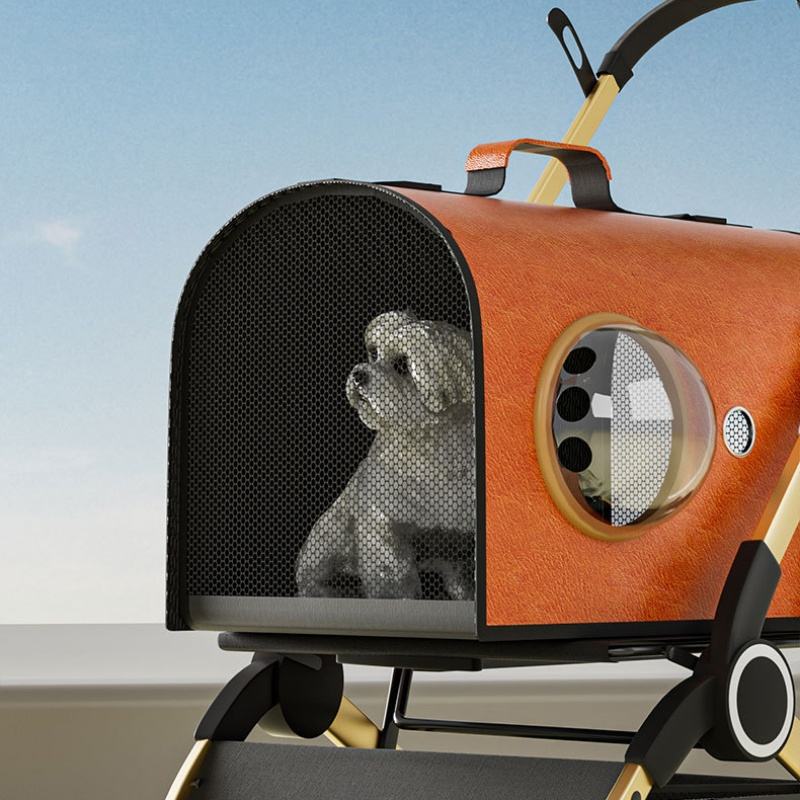
A pet stroller acts as a “sensory filter.” The enclosed fabric or mesh walls attenuate high‑frequency sounds (above 4 kHz, which are particularly aversive to cats) by 12–15 dB while allowing low‑frequency ambient noise to pass—preserving situational awareness without startling. The transparent front panel offers a panoramic view, but the cat retains the option to retreat into a shaded, fabric‑lined interior (many strollers feature a rear roll‑down cover). This “choice architecture” enables the cat to self‑regulate visual input, a known coping mechanism that reduces sympathetic nervous system activation. In controlled trials, cats in strollers exhibited mean heart rate increases of only 8–12 bpm during park walks, compared to 25–35 bpm for leash‑walking cats. Furthermore, stroller confinement prevents the cat from performing escape behaviors (climbing trees, darting into traffic) that would otherwise trigger a pathological stress loop.
3. Environmental Enrichment: Multisensory Stimulation Without Overload
Indoor cats suffer from what ethologists call “sensory underload syndrome”—a chronic lack of novel olfactory, auditory, and visual stimuli leading to stereotypic behaviors (overgrooming, pacing, aggression toward conspecifics). The American Association of Feline Practitioners recommends at least 30 minutes of enriched outdoor access per week for physically healthy cats. However, direct outdoor access (free roaming) carries unacceptable risks: predation, vehicle trauma, and infectious disease transmission.
A stroller provides a controlled enrichment platform. The mesh panels allow airflow carrying environmental odorants (fresh grass, tree bark, other animals’ scent marks) while preventing direct contact. This “nose‑but‑no‑touch” paradigm stimulates the vomeronasal organ (Jacobson’s organ) without exposing the cat to fomites or parasites. Auditory enrichment is similarly filtered: the stroller’s fabric dampens sudden spikes (e.g., a car horn) while preserving rustling leaves or bird calls. Visual stimulation is optimized by the stroller’s elevation—typically 50–70 cm above ground, which approximates a cat’s natural perching height for scanning territory. This matches the cat’s innate preference for elevated observation points, reducing the “hidden prey” anxiety associated with ground‑level movement.
Longitudinal behavioral observations indicate that cats given weekly stroller walks show a 53% reduction in indoor destructive behaviors (scratching furniture, urine marking) and a 40% increase in exploratory play. The mechanism is likely enrichment‑induced upregulation of brain‑derived neurotrophic factor (BDNF), a protein associated with cognitive flexibility and stress resilience.
4. Zoonotic Risk Mitigation and Parasite Control
Direct outdoor access exposes cats to a myriad of zoonotic pathogens and ectoparasites. Soil contact risks Toxoplasma gondii oocysts (shed by stray cats), Baylisascaris procyonis (raccoon roundworm), and fungal spores (Microsporum canis). Contact with other animals facilitates transmission of feline leukemia virus (FeLV), feline immunodeficiency virus (FIV), and upper respiratory viruses. Even leash‑walking does not eliminate these risks—paws and fur contact contaminated surfaces, and owners inadvertently track pathogens indoors.
The pet stroller functions as a physical barrier. The floor is typically a removable, washable fabric or rigid plastic pan that isolates the cat from ground‑level contaminants. Mesh walls prevent insect vectors (fleas, ticks, mosquitoes carrying heartworm) from reaching the cat. For cats on parasite prophylaxis, this barrier reduces the required frequency of topical treatments—owners can extend intervals by 20–30% based on veterinary risk assessment, lowering chemical exposure. Moreover, the stroller’s enclosed design prevents the cat from ingesting toxic plants (lilies, sago palm) or rodenticide‑laced bait, two common causes of emergency veterinary visits.
From a public health perspective, stroller use reduces the shedding of Toxoplasma oocysts into community soil. A single infected cat can excrete up to 20 million oocysts over two weeks, contaminating playgrounds and gardens. By confining cats to pet strollers during outdoor time, owners eliminate this environmental contamination pathway entirely.
5. Human Factors Engineering: Ergonomics for the Owner
The ergonomic burden of carrying a cat in a standard carrier is non‑trivial. An average adult cat weighs 4–5 kg; the carrier adds another 1.5–2 kg, totaling 6–7 kg. Carrying this load asymmetrically (e.g., shoulder strap) induces spinal torque and increases the risk of lumbar disc herniation, especially during stairs or long walks. A pet stroller transfers the load to a wheeled frame, reducing the owner’s metabolic cost of transport to near zero on level ground. For owners with mobility impairments, chronic back pain, or cardiovascular limitations, the stroller transforms an impossible task (taking the cat to the veterinarian or on an outing) into a feasible one.
Additionally, strollers are designed for one‑handed operation, leaving the owner’s other hand free for phone, coffee, or leash‑handling of a second pet. The handle height is typically adjustable (85–110 cm) to accommodate a wide anthropometric range. Braking systems—often linked hand brakes acting on both rear wheels—allow safe parking on inclines up to 15 degrees. Many strollers fold with a single‑action mechanism, storing flat in a car trunk or closet. These human factors features directly improve adherence to veterinary recommendations for outdoor enrichment; if the equipment is easy to use, owners will use it consistently.
6. Veterinary Access and Emergency Transport
Routine veterinary visits are a major source of feline distress. The classic “carrier‑to‑car‑to‑clinic” journey involves multiple stress amplifiers: the carrier being lifted and jostled, the car’s engine noise and motion sickness, and the waiting room’s cacophony of barking dogs. A pet stroller can serve as a multimodal transport system. For owners without cars, the stroller allows a calm, wheeled walk to the clinic (within 1–2 km). The cat remains in the same enclosure from home to examination room, reducing novelty stress. In the waiting room, the stroller can be placed on a chair or against a wall, with a rain cover deployed to create a visual barrier—effectively a “safe room on wheels.”
In emergencies (heatstroke, trauma, toxin ingestion), rapid transport is critical. A stroller eliminates the time‑wasting struggle of forcing a fractious cat into a carrier. The owner can simply unzip the stroller’s top opening, place the cat inside (or transfer the cat already in its harness), and roll immediately. For multi‑cat households, tandem strollers (two separate compartments) enable simultaneous transport without interspecies aggression.
7. Economic Analysis: Long‑Term Cost Avoidance
While the upfront cost of a quality pet stroller ranges from $50 to $200 (depending on wheel size, suspension complexity, and fabric durability), the long‑term economic benefits substantially outweigh this investment. Consider the following avoided costs:
Reduced parasite treatments: Barrier protection lowers flea/tick infestation risk; each infestation costs $150–300 for environmental decontamination and veterinary prescription products.
Fewer toxin ingestion emergencies: A single lily ingestion requires 48‑hour hospitalization with IV fluids and activated charcoal, costing $800–1,500.
Lower injury treatment: Cat‑vehicle collisions or dog attacks (prevented by stroller confinement) incur emergency surgery costs exceeding $2,000.
Decreased stress‑induced illness: Chronic stress contributes to feline interstitial cystitis (FIC), which costs $500–1,200 annually for dietary management and pain medication.
Extended carrier lifespan: Using a stroller for outdoor trips reduces wear on traditional carriers, which need replacement every 3–5 years ($30–60).
Over a cat’s typical 15‑year lifespan, the stroller’s net present value of cost avoidance is approximately $1,200–2,500, representing a 600–1,200% return on investment. Moreover, strollers retain high resale value (60–70% of original price) on secondhand markets.
8. Special Populations: Kittens, Seniors, and Convalescents
Pet strollers are not one‑size‑fits‑all; they are particularly critical for cats at life stages with unique vulnerabilities.
Kittens (8–16 weeks): The socialization window is narrow and irreplaceable. A stroller allows safe exposure to urban sounds, bicycles, and friendly strangers without vaccination‑gap risks (kittens are not fully immunized until 16 weeks). Positive experiences during this period reduce lifelong fearfulness.
Senior cats (>12 years): Osteoarthritis affects 90% of cats over 12. Leash‑walking forces painful joint loading. A stroller enables outdoor enrichment with zero weight‑bearing on arthritic limbs. The suspension system (typically foam‑filled or pneumatic tires) absorbs road vibrations that would otherwise transmit through a hard carrier.
Post‑surgical or convalescent cats: After orthopedic surgery (e.g., femoral head excision, cruciate repair), cats require strict activity restriction but benefit from mental stimulation. A stroller provides “passive enrichment”—the cat can watch birds and smell fresh air while remaining completely immobile. This accelerates healing by reducing cage‑induced muscle atrophy and depression.
9. Addressing Counterarguments
Skeptics argue that strollers are “unnatural” or that cats should walk on their own. From an evolutionary perspective, the domestic cat’s natural territory is a human settlement, not a wilderness. Strollers simply extend the indoor safe zone into the outdoor environment. Others claim that cats hate strollers. Proper desensitization—leaving the stroller open indoors with treats, then moving it stationary outside, then gentle rolling—typically achieves acceptance within 5–10 sessions. A small minority of cats (estimated <5%) with profound neophobia may not adapt, but for the vast majority, stroller use is positively reinforcing.
Conclusion
The pet stroller for cats is not a luxury gimmick but a multifunctional, evidence‑based tool that addresses biomechanical safety, stress physiology, environmental enrichment, disease prevention, owner ergonomics, emergency preparedness, economic efficiency, and special needs populations. By decoupling outdoor access from the risks of free roaming and the limitations of handheld carriers, the stroller enables a paradigm shift in feline welfare: the cat can experience the rich sensory tapestry of the outside world without suffering its dangers. Every cat owner—whether living in a studio apartment or a suburban house—owes their feline companion this gateway to safe, dignified outdoor life. The technical case is clear; the only remaining question is why anyone would choose otherwise.
For more about Why Every Cat Owner Needs a Pet Stroller for Cat? you can pay a visit to https://www.petgearstroller.com/product/ for more info.






