Which Features Are Most Important When You Choose a Pet Stroller?
The image of a dog trotting obediently beside its owner is a classic one. Yet, in our evolving urban landscapes and with our deepening understanding of pet welfare, a new accessory has rolled firmly into the mainstream: the pet stroller. Far from a frivolous luxury, a modern pet stroller is a functional tool that enhances mobility, safety, and quality of life for a wide variety of animals and their people. However, with a market bursting with options—from sleek, compact designs to rugged, all-terrain behemoths—selecting the right one can be overwhelming. Cutting through the marketing requires a disciplined focus on the features that truly matter. The most important features when choosing a pet stroller are not merely about aesthetics or novelty; they form a hierarchy of needs, starting with fundamental structural integrity and safety, moving through pet-centered comfort and security, and finally addressing handler ergonomics and practical utility.
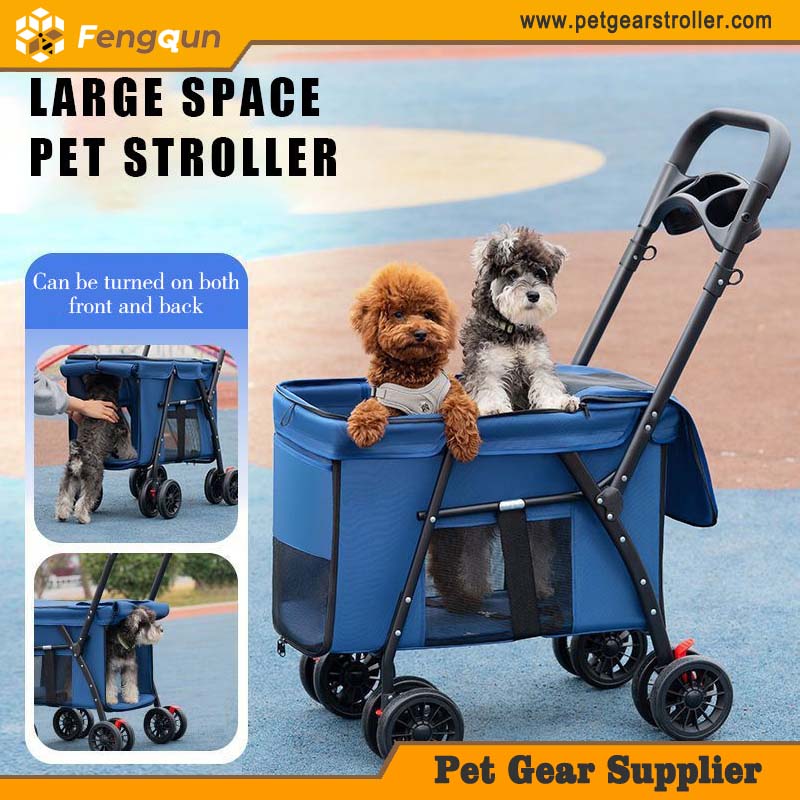
The Non-Negotiables – Chassis, Wheels, and Safety
The foundation of a good pet stroller is one you hope never to notice: a frame that doesn’t wobble, wheels that roll true, and mechanisms that don’t fail. Compromising here is compromising your pet’s safety.
1. Frame Construction and Weight Capacity:
The stroller’s skeleton determines its durability and stability. Look for frames made from aluminum or reinforced steel alloys, which offer an optimal balance of strength and weight. Critically, you must exceed your pet’s weight when checking the manufacturer’s capacity. If your pet weighs 20 pounds, select a stroller rated for at least 30-35 pounds. This provides a margin for error, the occasional extra toy or blanket, and ensures the frame isn’t operating at its stress limit, which can lead to premature failure or dangerous collapses. A sturdy frame also minimizes disturbing vibrations and jolts for your pet.
2. Wheel System: The Interface with the World
Wheels are arguably the most important functional component, dictating where and how smoothly you can travel.
Size and Type: Larger wheels (8 inches and above) are superior for overcoming obstacles like curbs, cracks, and uneven pavement. They provide a smoother ride and require less effort to push. All-terrain, air-filled (pneumatic) tires are the gold standard for shock absorption, akin to a car’s suspension system.They make trails, gravel, and rough sidewalks manageable. Smaller, solid rubber wheels are suitable only for perfectly smooth indoor surfaces like malls or hospitals.
Swivel vs. Fixed: A front swivel wheel is essential for maneuverability in tight spaces like store aisles or crowded sidewalks. The best models include a locking mechanism to convert the front wheel to a fixed position for stability during long, straight walks or on uneven terrain, preventing the stroller from veering off course.
Bearings: Sealed, precision ball bearings ensure wheels spin freely and quietly. Cheap strollers with simple plastic bushings create drag, produce noise, and wear out quickly.
3. Primary Safety Features:
These are the non-negotiable systems that keep your pet contained and secure.
Internal Tether/Leash Clip: A sturdy D-ring or short leash inside the main compartment is essential. Your pet’s harness should always be clipped to this, preventing them from jumping out unexpectedly if a zipper fails or the door is momentarily opened.
Multiple Closure Points: The main entry should have a robust zipper, preferably with two sliders, plus a secondary secure closure like snaps, buckles, or a sturdy flap. This redundancy is a critical failsafe.
Braking System: A reliable, easy-to-engage parking brake is mandatory. Look for a central brake that acts on both rear wheels simultaneously. Some advanced models have hand-operated brakes on the handlebar for controlled descents on hills.
The Pet-Centric Domain – Interior, Comfort, and Climate
Once the stroller is structurally sound and safe, the focus shifts inward to the passenger’s experience. A stroller that is secure but terrifyingly uncomfortable is a failed purchase.
1. Interior Space and Design:
The compartment must allow your pet to sit, stand, turn around, and lie down comfortably without crouching. Consider their adult size, not just their puppy dimensions. A removable, washable, padded floor mat is crucial for hygiene and comfort. It should have a non-slip bottom to prevent sliding during movement. Ventilation is perhaps the most overlooked yet vital comfort feature. Look for 360-degree mesh panels—on the sides, front, and often the top. This creates a "buggy" experience, allowing your pet to see out and ensuring maximum airflow to prevent overheating and reduce anxiety. The mesh should be a durable, fine weave to prevent claws from snagging.
2. Weather and Visibility Management:
The stroller must adapt to changing conditions. A retractable, waterproof rain cover that can be deployed quickly is essential for sudden showers. Conversely, a peek-a-boo window or panel in this cover allows for ventilation and visual contact when the cover is mostly on. For sun protection, a front canopy that extends to shield your pet from direct rays is important. Some models include UV-resistant fabric. In colder climates, the ability to add a cozy liner or blanket to the interior becomes a key comfort factor.
3. Access and Multi-Compartment Flexibility:
How you get your pet in and out matters. A front-entry design is most intuitive and least stressful for many pets. However, a top-entry option can be invaluable for pets with back issues or for those who are nervous, as it allows you to lift them in and out without forcing them through a narrow opening. Many strollers now feature a secondary rear or side compartment. This is exceptionally useful for separating pets on multi-pet outings, carrying supplies (water, poop bags, treats), or isolating a wet/muddy item from the main cabin.

The Handler’s Experience – Usability and Practicality
A stroller that is safe and pet-friendly but a nightmare to use will gather dust in the closet. Its design must account for the human at the helm.
1. Folding Mechanism and Storage:
This is a prime differentiator. The fold should be intuitive, quick (ideally one or two steps), and self-standing when collapsed. A stroller that folds into a tidy, flat package is easier to store in a closet or trunk. Check the folded dimensions against your car’s storage space. Weight is also a key factor here; a lighter aluminum frame is much easier to lift in and out of a vehicle repeatedly.
2. Handlebar Ergonomics:
The handle is your point of contact for miles of walking. An adjustable handlebar is essential to accommodate handlers of different heights, preventing back and shoulder strain. Padded handles improve comfort. A locking wrist strap is a small feature that provides huge peace of mind, preventing the stroller from rolling away if you inadvertently let go on a slope.
3. Storage and Additional Functionality:
Convenience features for the handler enhance utility. A underside storage basket is invaluable for carrying groceries, a purse, or a jacket. Ensure it’s easily accessible and has a decent weight limit. Cup holders for the handler, toy loops, and attachment points for extra bags are thoughtful additions. For urban dwellers or those using public transport, a compact, agile design with excellent maneuverability is more important than all-terrain capability.
Synthesis: Aligning Features with Need
The hierarchy of features must be applied through the lens of your specific use case:
The Urban Dweller: Prioritize a compact fold, excellent maneuverability (swivel wheels), and a sturdy frame for pavement. Aesthetic design might play a bigger role.
The Trail Adventurer: All-terrain pneumatic tires, a locking front wheel, a robust braking system,and superior suspension are non-negotiable. Weather protection is key.
The Senior or Anxious Pet: Superior shock absorption, a plush, removable bed, excellent ventilation to reduce stuffiness, and easy, stress-free access (top entry) are paramount.
Multi-Pet Households: Weight capacity and interior volume are critical first checks. A multi-compartment design or a stroller specifically rated for two pets is essential.

Conclusion
Choosing a pet stroller is an exercise in prioritizing engineering and design empathy over whimsy. The most important features begin with the unshakeable fundamentals of a solid chassis, a capable wheel system, and redundant safety closures—these form the non-negotiable foundation. Upon this, the pet-centric features of spacious, ventilated comfort and adaptable climate control build a secure and pleasant mobile haven. Finally, the handler-focused elements of effortless folding, ergonomic pushing, and practical storage ensure the tool is a joy to use, not a burden.
Investing time in understanding this hierarchy prevents the common pitfall of choosing based on a trendy color or a single clever gimmick. By starting with safety, building on comfort, and refining for usability, you select more than a product; you select a reliable, compassionate mobility solution that expands the world for your pet while providing you with unparalleled peace of mind. The right stroller doesn’t just carry your pet; it carries your confidence, allowing you both to explore further, more often, and with greater shared comfort.
For more about which features are most important when you choose a pet stroller, you can pay a visit to FengQun Pet Gear Supplier for more info.






