What are the Restrictions on Flying with a Pet Stroller in the United States?
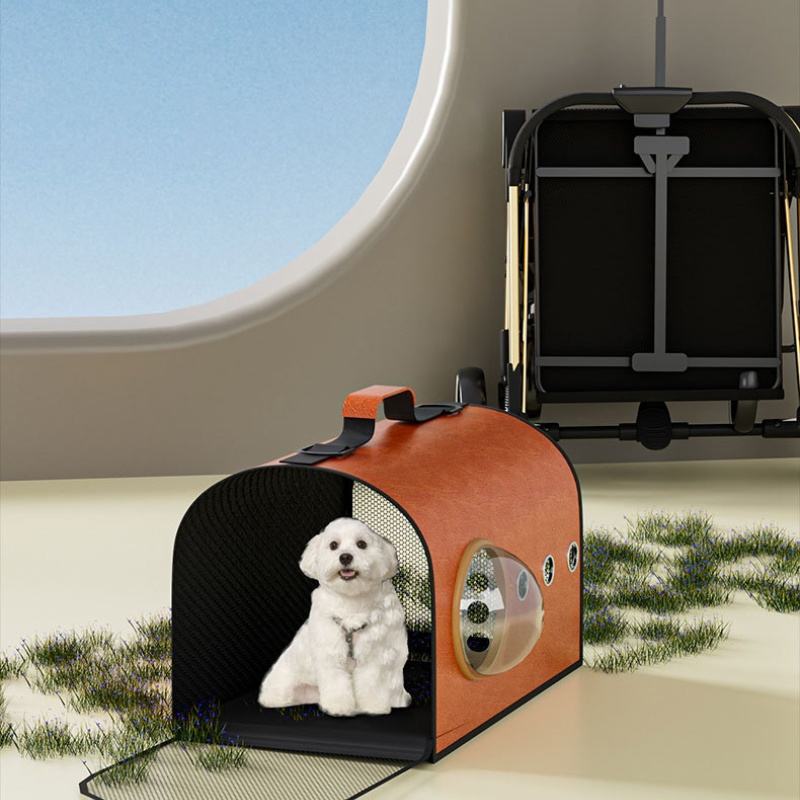
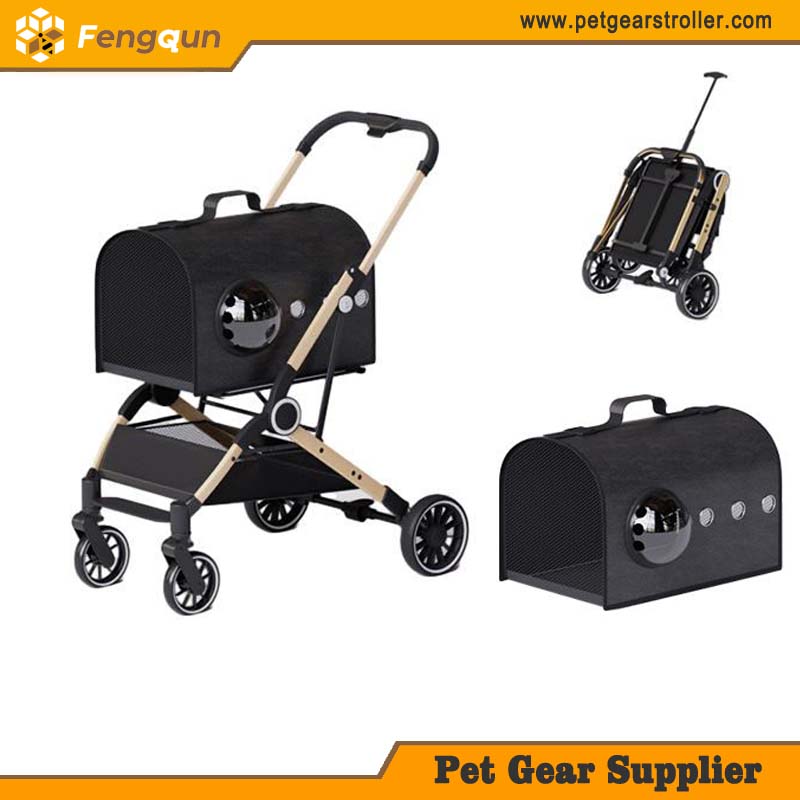
Traveling by air with pets has become a common practice for many Americans, whether for vacations, relocations, or family visits. In the United States, where pet ownership is at an all-time high—with over 70% of households owning at least one pet as of 2025—airlines have adapted their policies to accommodate furry companions. However, when it comes to pet strollers, which offer convenience for transporting pets through sprawling airports, the rules can be surprisingly restrictive. Pet strollers, essentially wheeled carriers resembling baby prams, allow pets to move comfortably without being carried, but they introduce unique challenges in the confined spaces of aircraft cabins and security checkpoints.
Understanding these restrictions is essential to avoid last-minute surprises, additional fees, or even being denied boarding. The Federal Aviation Administration (FAA) and Transportation Security Administration (TSA) set baseline guidelines, but individual airlines enforce their own policies, often treating pet strollers as checked baggage rather than in-cabin items. This article delves into the key restrictions on flying with pet strollers in the US, covering general federal rules, airline-specific policies, fees, size limits, and practical tips. We'll focus on domestic flights within the contiguous US, as international travel adds layers of complexity like CDC import requirements. By the end, you'll have a comprehensive guide to navigate these rules smoothly, ensuring a stress-free journey for both you and your pet. Note that policies can evolve, so always verify with your airline closer to your travel date.
The rise in pet travel post-pandemic has led to more pet-friendly innovations, including strollers designed for air travel. These often feature foldable frames, mesh enclosures for ventilation, and wheels for easy maneuvering. However, airlines prioritize safety, space, and passenger comfort, leading to stringent limits. For instance, while small pets in approved carriers can often fly in the cabin, strollers are bulkier and rarely qualify as carry-on items. Instead, they are typically required to be checked or gate-checked, which means you might need to transfer your pet to a separate carrier for the flight. This distinction is crucial, as mishandling it could result in extra costs or logistical headaches.

Federal Guidelines: FAA and TSA Overview
Before diving into airline specifics, it's important to understand the overarching federal regulations that shape pet travel policies. The FAA oversees air travel safety and allows airlines to set their own pet policies, provided they comply with animal welfare standards under the Animal Welfare Act. The FAA emphasizes that pets must not pose a risk to passengers or crew, and carriers (including strollers if used as such) must be secure, ventilated, and humane. However, the FAA does not explicitly address pet strollers; instead, it defers to airlines for baggage classifications.
The TSA, responsible for airport security, has clearer protocols for pet-related items. At security checkpoints, pets must be removed from their carriers or strollers and carried through the metal detector while the empty item is X-rayed. TSA officers may request to swab the stroller for explosives, and any modifications like added pockets could trigger additional screening. Importantly, pet strollers are treated similarly to baby strollers: they can be used in the airport terminal but must often be collapsed or checked before boarding. TSA advises that if a stroller doesn't fit through the X-ray machine, it may require a pat-down or visual inspection. For pets, this process can be stressful, so acclimating your animal to being handled is recommended.
Age and health restrictions also apply federally. The U.S. Department of Transportation notes that some carriers impose minimum age requirements, typically 8 weeks for puppies and kittens, to ensure they can withstand travel stresses. Additionally, the Centers for Disease Control and Prevention (CDC) mandates that dogs entering or re-entering the US must be at least 6 months old, microchipped, and vaccinated against rabies, with documentation like the CDC Dog Import Form required. These rules indirectly affect stroller use, as non-compliant pets may not travel at all.
Temperature embargoes are another federal-influenced restriction. Airlines often halt pet transport (in cargo or checked baggage) when temperatures exceed 85°F or drop below 45°F at any point in the itinerary, to prevent heatstroke or hypothermia. This can impact stroller users if the device is checked, as pets might need to be in cargo holds during such conditions.
Overall, federal guidelines prioritize containment and safety, classifying pet strollers more as luggage than pet accommodations. This sets the stage for airline variations, where strollers are rarely permitted in cabins due to space constraints.
Airline-Specific Policies on Pet Strollers
US airlines have diverse approaches to pet travel, but a common thread is that pet strollers are not typically allowed in the cabin. They must be checked, gate-checked, or treated as baggage, often incurring fees. Let's examine major carriers.
l Delta Air Lines
Delta allows small dogs, cats, and household birds in the cabin for domestic flights, but only in approved carriers that fit under the seat (maximum dimensions around 18" x 11" x 11", varying by aircraft). Pet strollers are not mentioned in Delta's policies, implying they do not qualify as in-cabin carriers. Instead, strollers would likely be checked as baggage, subject to standard fees starting at $30 for the first bag. For pet travel, the carry-on fee is $95-$150 per way (depending on ticket date), but this applies to the carrier, not the stroller.
Restrictions include: pets must be at least 8 weeks old domestically (6 months for international entries); only one pet per carrier generally, with exceptions for litters; and seating limits (no bulkhead or exit rows). Delta caps pets per cabin (e.g., 4 in main cabin), so book early. For strollers, if used in the airport, they must be gate-checked if oversized, potentially free like baby strollers, but confirm with gate agents. Cargo options via Delta Cargo exist for larger pets, but strollers aren't accommodated there either.
l American Airlines
American permits carry-on pets (cats and dogs) on flights under 12 hours within the US, Canada, and select international spots, but only in carriers fitting under the seat. Explicitly, pet strollers must be checked at the ticket counter and count toward checked baggage allowance, with fees of $150 per kennel for carry-on pets (stroller separate). This means if your stroller is your pet's transport, you'll need a separate carrier for the flight.
Checked pets are limited to military personnel, with $200 fees. Cargo via American Pet
Embark is for oversized pets, but strollers would be standard baggage. Breed restrictions apply (e.g., no brachycephalic breeds in cargo), and temperature embargoes are strict. Users report using strollers in airports then checking them, but American's policy emphasizes ticket counter check-in for strollers.
l United Airlines
United allows up to two pets per passenger in the cabin (requiring an extra seat purchase for the second), but only in carriers no larger than 17.5" x 12" x 7.5". Pet strollers must be checked in the lobby and count as checked baggage, potentially incurring $35+ fees. Cabin pet fees are $125 each way, plus $125 for layovers over 4 hours domestically.
Restrictions: Pets must be 8 weeks old; no cargo for pets except service animals; and breed bans in cargo. United's policy aligns with treating strollers as luggage, allowing airport use but requiring check-in before boarding. Gate-checking may be possible, but official stance is lobby check-in.
l Southwest Airlines
Southwest is pet-friendly for small cats and dogs in carriers (max 18.5" x 13.5" x 8.5"), with a $125 fee per way (updated from $95 in 2025). For reservations before May 27, 2025, pet strollers or crates could be checked free. Post that date, standard baggage rules apply, meaning strollers might incur fees if exceeding allowances. Southwest doesn't allow pets in cargo, so strollers are purely for airport navigation, then gate-checked—often free, similar to baby strollers.
No seating restrictions beyond exit rows, and up to 6 pets per flight. This makes Southwest more flexible for stroller users, as gate-checking is common practice.
l Alaska Airlines
Alaska permits pets in the cabin for $100-$150 fees, in carriers fitting under seats (17" x 11" x 7.5" soft-sided max). Strollers aren't mentioned, so they fall under baggage: checked for $35+ or gate-checked possibly free. Baggage compartment travel is $150, with embargoes and breed restrictions.
For Hawaii and international, extra rules apply. Alaska's Pet Connect via cargo is an option, but strollers are treated as standard items.
l JetBlue and Frontier
JetBlue allows small pets in carriers (17" x 12.5" x 8.5") for $125, with no stroller specifics—likely checked baggage. Frontier permits cabin pets for $99, but strollers must be checked, as cabin space is limited.
l Other Considerations: Low-Cost and Regional Carriers
Budget airlines like Spirit and Allegiant have stricter rules: Spirit allows cabin pets in carriers for $125, but no cargo; strollers checked with fees. Allegiant bans pets entirely except service animals. Regional carriers often follow major partners' policies.
Fees and Size Limits for Pet Strollers
Fees for pet strollers vary: $0 for gate-check on some (e.g., Southwest pre-2025), up to $150+ if counted as checked baggage. Size limits aren't standardized for strollers, but if foldable and under 62 linear inches, they qualify as standard bags. Oversized strollers may incur $75+ extra.
Cabin carriers have strict dims (e.g., 18" x 11" x 11" average), so strollers rarely fit. Weight limits: 20-25 lbs combined for cabin pets.
Practical Tips for Flying with Pet Strollers
· Preparation: Choose airline-approved, foldable strollers (e.g., Ibiyaya or HPZ brands) that double as carriers. Train your pet for transfers.
· Airport Navigation: Use strollers pre-security; post-security, comply with checks.
· Alternatives: Soft carriers or slings for cabin; cargo for large pets.
· Documentation: Carry vet certs, rabies proof; book pet spots early.
· Contingencies: Have backup plans for denials; consider driving for short trips.
· 2025 Updates: With rising pet travel, some airlines may relax rules—check sites.
Social media anecdotes highlight success with gate-checking, but always confirm.
Conclusion
Flying with a pet stroller in the US involves navigating a patchwork of restrictions focused on safety and space. While strollers enhance airport mobility, they must typically be checked, with fees and limits varying by airline. By understanding federal baselines and carrier policies, you can plan effectively. Prioritize your pet's comfort and verify details for a seamless trip.
For more about what are the restrictions on flying with a pet stroller in the united states, you can pay a visit to FengQun Pet Gear Supplier for more info.






