What Waterproof and Wear-Resistant Coating Technology Is Used in the Stroller Shopping Cart Frame?
In today's fast-paced urban lifestyle, stroller shopping carts—hybrid devices that combine the functionality of a baby stroller with a compact shopping basket—have become indispensable for parents navigating outdoor shopping environments. These frames, typically constructed from lightweight metals like steel or aluminum, face constant exposure to harsh elements. Rain can lead to corrosion and rust, while rough pavements cause abrasion, scratches, and structural weakening over time. Without proper protection, these frames degrade quickly, compromising safety, aesthetics, and longevity. This is where advanced coating technologies come into play. Waterproof and wear-resistant coatings not only shield the metal from moisture and physical damage but also enhance durability in real-world scenarios like wet markets, uneven sidewalks, or park outings.
This article explores various coating technologies suitable for stroller shopping cart frames. We will delve into their mechanisms, benefits, limitations, and applicability, drawing on established industry practices. By understanding these options, manufacturers and consumers can make informed choices to ensure these essential tools withstand the rigors of outdoor use. The focus will be on coatings that provide robust protection against water ingress and mechanical wear, ultimately extending the product's lifespan and reducing maintenance costs.

The Challenges of Outdoor Exposure for Stroller Shopping Cart Frames
Stroller shopping carts are designed for mobility, often featuring foldable frames made from tubular steel or extruded aluminum for strength and lightness. However, outdoor scenarios present unique challenges. Rain introduces moisture that accelerates oxidation, leading to rust on steel frames or pitting on aluminum. Rough pavements, gravel, or urban debris cause frictional wear, eroding the surface and exposing the underlying metal to further damage. Additionally, UV radiation, salt from de-iced roads, and chemical pollutants can exacerbate degradation.
According to industry insights, unprotected metal frames can lose up to 20% of their structural integrity within two years of regular outdoor use due to corrosion alone. Wear from abrasion can add another layer of vulnerability, making frames prone to bending or cracking under load. Effective coatings must therefore offer dual protection: hydrophobicity to repel water and hardness to resist scratches and impacts. The ideal coating should adhere strongly, remain flexible to accommodate frame movements, and be environmentally safe, especially since these products are used around children.
Powder Coating: A Versatile and Durable Option
Powder coating stands out as one of the most widely adopted technologies for outdoor metal equipment, including stroller frames. This process involves electrostatically applying a dry powder—typically a mix of polyester, epoxy, or hybrid resins—to the metal surface, followed by curing in an oven at high temperatures. The result is a thick, uniform layer that bonds chemically with the substrate.
For waterproofing, powder coatings excel by creating a seamless barrier that prevents moisture penetration. They are highly resistant to chipping and fading, making them ideal for rainy conditions. In terms of wear resistance, the coating's hardness (often comparable to baked enamel) withstands abrasion from rough pavements, reducing scratches and maintaining the frame's integrity during daily use.
Advantages include environmental friendliness, as the process produces minimal volatile organic compounds (VOCs), and a wide range of colors for aesthetic appeal. For stroller shopping carts, powder coating can protect against UV rays, preventing color fade on exposed parts. However, it requires specialized equipment for application, which can increase manufacturing costs. It's less suitable for very thin frames where heat curing might cause warping. In practice, companies like those refurbishing shopping carts use powder coating to renew and enhance durability, extending service life by years.
Case studies show powder-coated frames performing well in coastal areas with high humidity and salt exposure, where traditional paints fail quickly. For parents pushing carts over bumpy terrain, this coating minimizes noise from metal-on-metal contact and preserves smooth operation of wheels and hinges.
Anodizing: Enhancing Aluminum Frames for Long-Term Protection
For aluminum-based stroller shopping cart frames, anodizing offers a specialized solution. This electrochemical process thickens the natural oxide layer on aluminum, creating a porous surface that can be sealed with dyes or sealants for added protection. The resulting coating is integral to the metal, not just a surface layer, which prevents peeling.
Waterproofing is achieved through the sealed oxide layer, which resists corrosion even in prolonged rain exposure. Wear resistance is significantly improved, with anodized aluminum being up to 60% harder than untreated metal, making it suitable for rough pavements where impacts are common. Hard anodizing variants, with thicknesses of 25-50 microns, provide exceptional abrasion resistance, ideal for high-traffic outdoor use.
Key benefits include lightweight retention—crucial for portable strollers—and eco-friendliness, as anodizing uses the base metal without adding heavy layers. It's particularly effective in marine environments, outperforming stainless steel in saltwater resistance while being lighter. Drawbacks include limited color options and higher costs for thick layers. Anodizing isn't ideal for steel frames, restricting its use to aluminum-dominant designs.
In stroller applications, anodized frames maintain their sheen and functionality after repeated folding and exposure, reducing the risk of allergens from rust particles. Innovations like nickel-filled anodizing further boost wear resistance by filling pores for better adhesion and durability.

Epoxy Coatings: Robust Defense Against Harsh Elements
Epoxy coatings, often applied as two-part systems, form a hard, glossy finish that's excellent for both steel and aluminum frames. They cure through a chemical reaction, creating a cross-linked polymer network that's impervious to water and chemicals.
In rainy scenarios, epoxy's low permeability ensures no moisture reaches the metal, preventing rust and blistering. For wear, epoxies offer high abrasion resistance, with some formulations designed for industrial plants enduring rough terrain and chemical spills. Moist Metal Grip, a specialized epoxy, can even be applied to damp surfaces, making it practical for repairs in wet conditions.
Advantages encompass strong adhesion, flexibility to handle frame vibrations, and resistance to UV degradation when top-coated. They're cost-effective for mass production and can be pigmented for branding. Limitations include potential yellowing over time and the need for proper surface preparation to avoid delamination. In outdoor shopping, epoxy-coated frames resist scratches from shopping bags or curbs, maintaining safety for child passengers.
High-build epoxies, like those used in bridges, provide thick layers (4-6 mils) for enhanced protection, suitable for carts navigating uneven paths.
Polyurethane Coatings: Flexible and Weatherproof Solutions
Polyurethane (PU) coatings provide a flexible, rubber-like barrier that's highly effective for dynamic frames like those in strollers. Applied as sprays or dips, they cure to form a seamless film.
Waterproofing is a standout feature, with PU repelling water through hydrophobic properties, making it ideal for rain-soaked outings. Wear resistance comes from elasticity, absorbing impacts from rough pavements without cracking. Single-component PUs are user-friendly for touch-ups, though two-component versions offer superior durability.
Benefits include crack-bridging ability, UV stability, and health safety for potable water contact, extending to child-safe applications. They're versatile for textiles too, like stroller canopies. Downsides involve sensitivity to application conditions and potential VOC emissions. For stroller shopping carts, PU coatings prevent moisture seepage into joints, reducing squeaks and jams.
Elastuff systems, breathing yet impervious to bulk water, exemplify PU's adaptability for outdoor metal.
Ceramic Coatings: High-Performance Wear Guardians
Ceramic coatings, applied via thermal spraying or chemical deposition, offer extreme hardness for severe wear scenarios. Composed of materials like alumina or titania, they form a dense, inert layer.
Waterproofing occurs through non-porous structures that block moisture and corrosives. Wear resistance is unparalleled, with ceramics enduring high temperatures and abrasion up to 1000°F. Plasma-sprayed variants are common for industrial tools but adaptable to consumer frames.
Advantages include superior scratch resistance and longevity, outlasting peers in tests. For rough pavements, ceramics reduce friction, easing maneuverability. Limitations are high cost and brittleness under flexing. Novocoat SP2000AR demonstrates abrasion resistance for damp surfaces.
Nanocoatings: Cutting-Edge Protection for Modern Frames
Nanocoatings use nanoparticles to create ultra-thin, invisible barriers. They enhance hydrophobicity, causing water to bead off, and provide anti-corrosion properties.
For wear, nano layers improve surface hardness without adding weight. They're ideal for lightweight strollers, protecting against UV, salt, and dirt. Benefits include easy application and multi-surface compatibility. Drawbacks: Higher initial cost and need for periodic reapplication. NanoSlic offers fouling resistance for outdoor metals.
Future Trends and Recommendations
Emerging hybrids, like nano-enhanced epoxies, promise even better performance. For stroller frames, prioritize powder or anodizing for cost-effectiveness, epoxy/PU for flexibility, and ceramics/nano for premium durability.
Conclusion
Selecting the right coating transforms stroller shopping carts into reliable outdoor companions. By addressing rain and rough pavements through these technologies, we ensure safety and sustainability. Manufacturers should test combinations for optimal results, ultimately benefiting families worldwide.
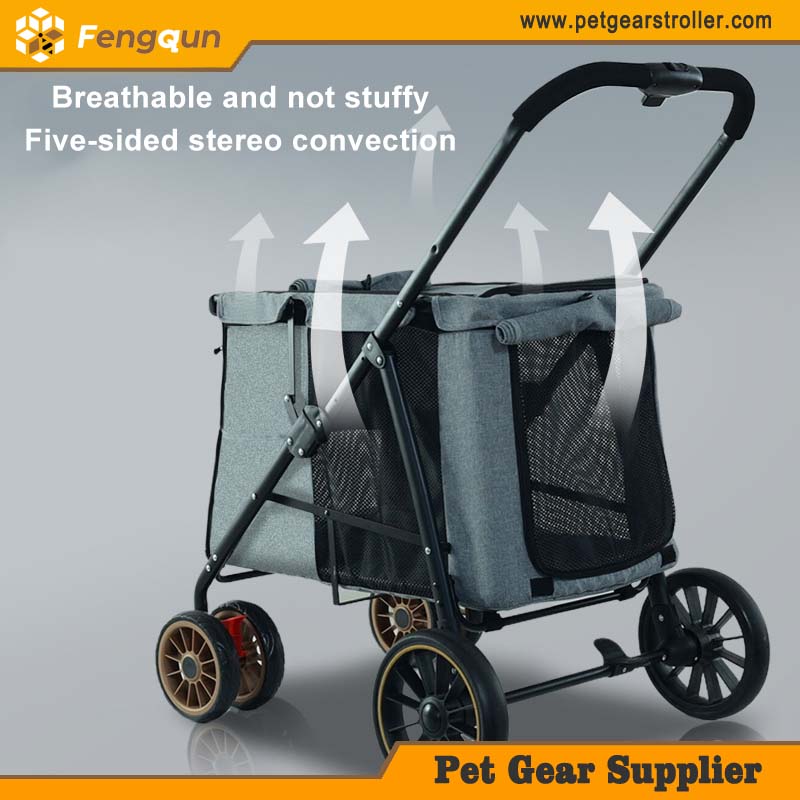
For more about what waterproof and wear-resistant coating technology is used in the stroller shopping cart frame, you can pay a visit to FengQun Pet Gear Supplier for more info.






