What Standards Must a Stroller Shopping Cart Meet to Balance Pet Safety and Shopping Functionality?
The rise of pet-friendly spaces has ushered in a novel hybrid product: the stroller shopping cart. Combining the functionality of a traditional grocery cart with the secure, comfortable transport of a pet stroller, these units are increasingly appearing in retail stores, farmers' markets, and even large home improvement centers. However, merging these two purposes isn't as simple as adding a cushion to a wire basket. Designing a stroller shopping cart requires meeting a rigorous set of technical standards that balance the non-negotiable safety of a living animal with the practical demands of a commercial shopping vehicle. This article explores the critical technical standards—from load-bearing capacity to wheel shock absorption—that such a product must meet to be both safe and functional.
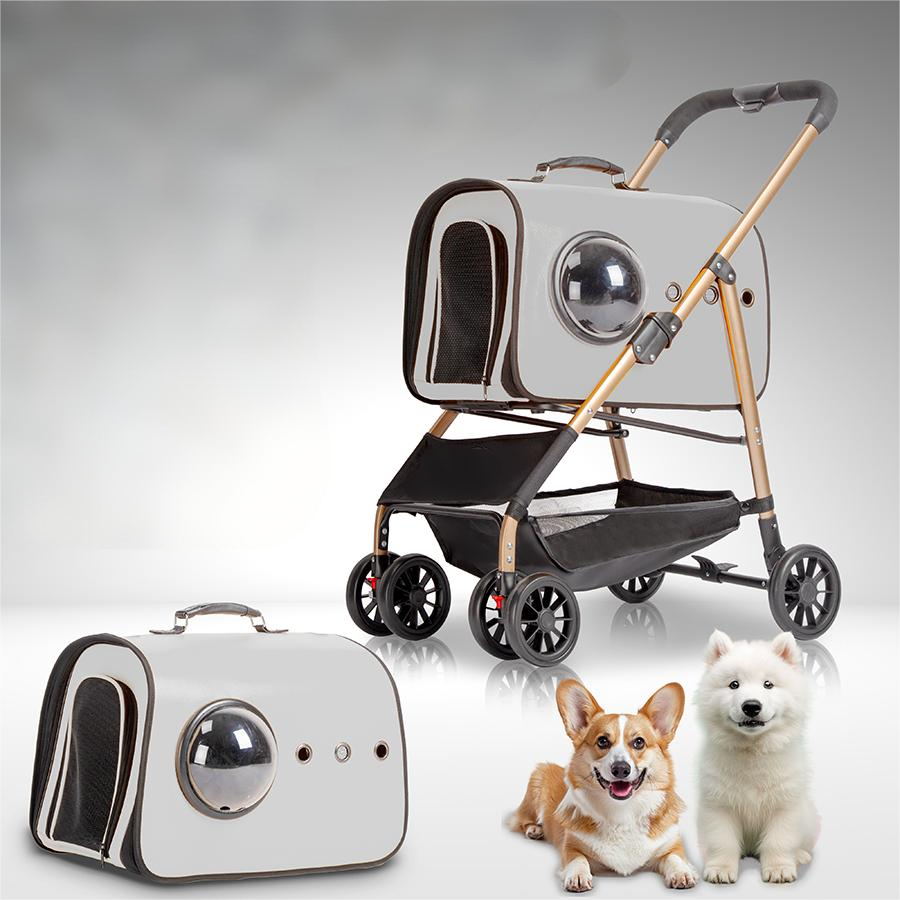
1. Load-Bearing Capacity and Structural Integrity: The Foundation of Safety
The most fundamental technical standard for any cart is its load-bearing capacity, but for a pet stroller cart, this calculation becomes dual-layered.
1.1 Dynamic vs. Static Load Requirements:
A standard shopping cart might be rated for 100-150 lbs (45-68 kg) of static groceries. A pet stroller cart must account for a dynamic, living load. The cart must withstand not just the pet's weight, but the forces generated by the pet moving, shifting, standing up, or lying down. Engineering standards like ASTM F833 (Standard Consumer Safety Specification for Carriages and Strollers) provide a framework. These often require testing with a dynamic surrogate (a weighted bag that shifts) and mandate a safety factor—typically the structure must hold 3-5 times the maximum intended load without permanent deformation or failure.
1.2 Weight Distribution and Center of Gravity:
Unlike groceries placed low in a basket, a pet is carried higher up, raising the cart's center of gravity. This dramatically increases the risk of tipping, especially when turning or on sloped surfaces. Standards must mandate a low and wide wheelbase and a tipping angle test (e.g., the cart must not tip when on a 15-degree inclined plane with the pet compartment loaded). The structural frame, often aluminum or reinforced steel, must be digitally modeled and physically stress-tested to ensure it can handle this elevated, moving load without flexing or buckling.
1.3 Compartment-Specific Ratings:
A well-designed unit will have separate, clearly marked load ratings for the pet compartment and the lower shopping basket. This prevents overloading either section, which could compromise stability or the pet's safety cage.
2. Wheel, Suspension, and Shock Absorption Systems: Ensuring a Smooth Ride
This is arguably the most critical differentiator from a standard cart. A grocery cart's primary function is to roll smoothly on indoor flooring. A pet stroller cart must absorb shocks from curbs, cracks, and uneven outdoor surfaces to protect the pet's spine and joints.
2.1 Wheel Design and Material:
Size: Larger wheels (8-12 inches) traverse obstacles more easily than small, swiveling grocery cart wheels.
Material: A hybrid material is ideal. Pneumatic (air-filled) tires or polyurethane foam-filled tires offer superior shock absorption compared to solid plastic. However, they must be durable enough to resist punctures from debris in parking lots.
Swivel vs. Fixed: Dual-swivel front wheels provide the maneuverability needed in tight store aisles, while a fixed front wheel with a suspension system offers better straight-line stability and shock damping. A locking swivel mechanism offers the best of both worlds.
2.2 Integrated Suspension Standards:
While rare in standard strollers, a premium pet stroller cart may incorporate a spring or coil suspension system at the axle or pet compartment mount. Technical standards here would relate to damping coefficient and travel distance—ensuring the suspension absorbs impacts without becoming so bouncy that it destabilizes the cart or makes the pet queasy. Testing would involve repeated drops over a standardized curb-like obstacle while measuring G-forces transmitted to the pet compartment.
2.3 Maneuverability and Braking:
Standards must ensure the cart remains easy to push with one hand, even when fully loaded. Rotational resistance measurements are key. Furthermore, a reliable, parking-brake system is non-negotiable. It must hold the cart securely on an incline to prevent roll-away accidents, meeting or exceeding tests like those in stroller standards (e.g., holding on a 10-degree slope).
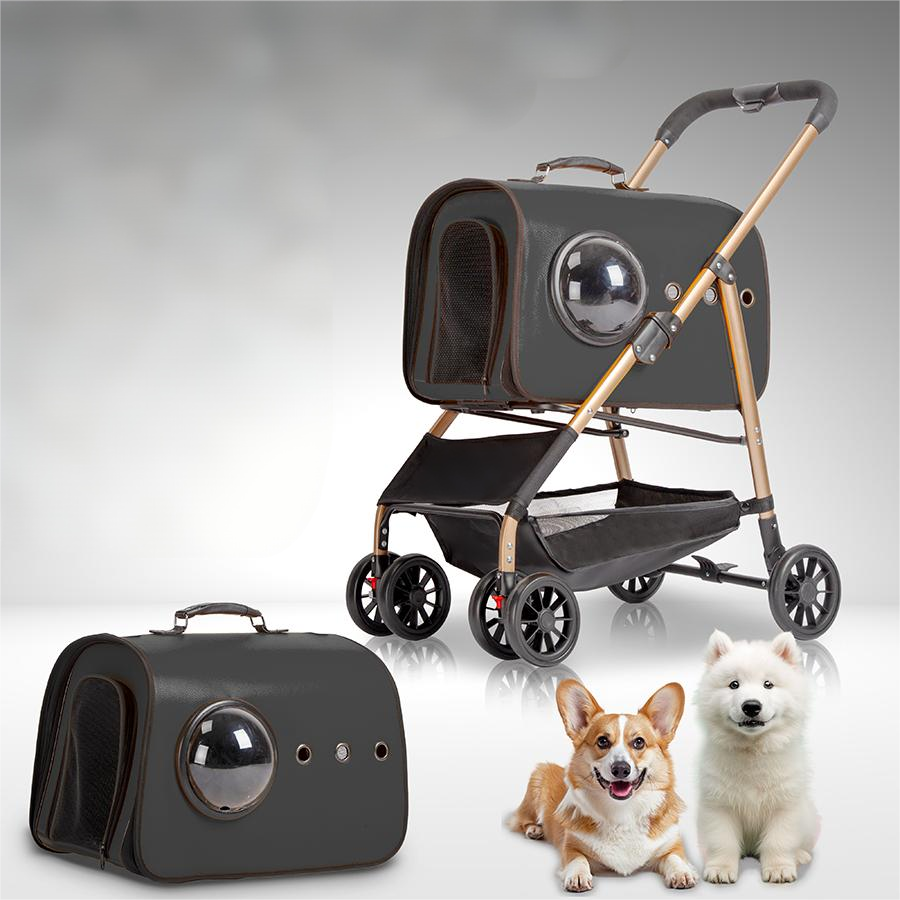
3. Pet Compartment Safety and Containment: A Mobile Habitat
The compartment itself is a mobile crate and must meet crate safety standards while allowing for visibility and ventilation.
3.1 Materials and Construction:
Non-Toxic Materials: All fabrics, plastics, and metals in the pet zone must be certified non-toxic and meet CPSIA (Consumer Product Safety Improvement Act) lead and phthalate limits.
Chew and Scratch Resistance: Materials should be tested for resistance to pet damage without creating sharp edges or splinters.
Secure Fastenings: Zippers, latches, and clips must withstand sudden force from inside. Standards should require child/pet-resistant zippers and locking mechanisms that cannot be accidentally opened by a paw or nose.
3.2 Ventilation and Climate Control:
Minimum ventilation area standards (often a percentage of compartment wall area) must be enforced to prevent overheating. This is a direct application of kennel and carrier standards (ISO 17720). Furthermore, designs must allow for passive airflow even when a weather cover is partially deployed.
3.3 Restraint System Integration:
The compartment should include a secure anchor point for a pet harness, preventing the pet from jumping out or being thrown within the compartment during a sudden stop. This aligns with crash-test principles from automotive pet safety.
4. Shopping Functionality and Ergonomic Standards
If the cart fails as a shopping vehicle, it will not be adopted by stores or consumers.
4.1 Basket Capacity and Accessibility:
The lower shopping basket must have a meaningful capacity—likely 40-60 lbs—and be easily accessible. Its design must not be compromised by the pet compartment’s structure overhead. Ease of loading and unloading groceries, tested via user experience panels, is a key functional standard.
4.2 Cart Dimensions and Store Compliance:
The cart’s overall footprint, height, and turning radius must be designed to navigate standard store aisles (often a minimum of 36-42 inches wide), checkout lanes, and doorways. It must also be compatible with standard cart corrals and escalator/lift systems.
4.3 Hygiene and Cleanability:
This is a paramount concern for retailers. The pet compartment must have a removable, machine-washable liner and a frame that can be easily wiped down with disinfectant. Standards could define liquid-resistant barriers and specify anti-microbial fabric treatments that are safe for pets.
5. Certification, Testing, and Liability
A legitimate stroller shopping cart should not be a modified hobby project. It requires rigorous third-party testing and certification.
ASTM International: Standards like F833 (Strollers) and F404 (Baby Carriers) provide the closest existing frameworks for safety and performance.
ISO (International Organization for Standardization): Standards for shopping trolleys (ISO 3005) and animal transport containers offer relevant guidelines.
Third-Party Certification: Look for certifications from organizations like the Juvenile Products Manufacturers Association (JPMA), which independently verifies compliance with ASTM standards.
Conclusion
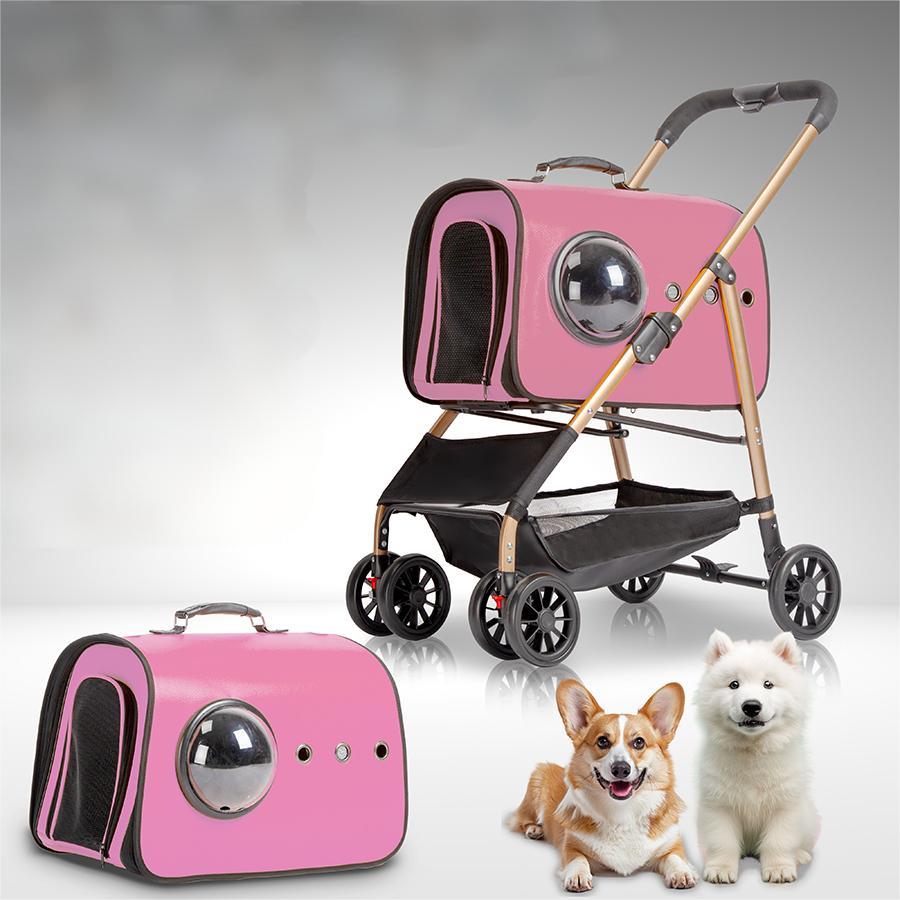
The successful stroller shopping cart is a symphony of engineering disciplines—structural, mechanical, ergonomic, and material science—all conducted to the tune of animal welfare and commercial utility. It is not merely a cart with a basket on top. It must meet the load-bearing and tip-resistance standards of a premium stroller, the shock-absorption and durability standards of all-terrain mobility, the containment and ventilation standards of a travel kennel, and the maneuverability and hygiene standards of commercial retail equipment.
As this market grows, the development of a dedicated, comprehensive technical standard—perhaps an ASTM FXX.XX "Standard Specification for Combined Pet Stroller and Shopping Carts"—will be essential. Such a standard will ensure that these innovative products truly deliver on their promise: enabling pets to join their owners on errands without compromising their safety, comfort, or the practical task at hand. Until then, manufacturers, retailers, and consumers must critically evaluate these hybrid products against the highest benchmarks from each of their component worlds. The well-being of our pets, and the efficiency of our shopping trips, depend on it.
For more about what standards must a stroller shopping cart meet to balance pet safety and shopping functionality, you can pay a visit to FengQun Pet Gear Supplier for more info.






