What Core Safety Standards Must a Pet Stroller That Meets All-Terrain Usage Requirements Comply With
In recent years, pet strollers have surged in popularity as essential accessories for pet owners who want to include their furry companions in outdoor adventures. These wheeled carriers provide a safe and comfortable way to transport pets, especially those that are elderly, injured, small, or simply prefer not to walk long distances. All-terrain pet strollers, in particular, are designed for rugged use, featuring enhanced wheels, shock absorbers, and sturdy frames to handle uneven paths, gravel, grass, or even light off-road conditions. However, with this versatility comes a heightened need for safety compliance to prevent accidents that could harm pets or users.
Unlike baby strollers, which are heavily regulated, pet strollers lack dedicated federal or international standards tailored specifically to animals. Instead, manufacturers often voluntarily adopt established safety benchmarks from human infant products, such as the American Society for Testing and Materials (ASTM) F833 standard in the U.S. or the European Standard EN 1888. These standards ensure structural integrity, stability, and reliable braking—critical for all-terrain models that may encounter slopes, slippery surfaces, or unpredictable terrain. This article explores the core safety standards that an all-terrain pet stroller must comply with, drawing from these adapted frameworks. It also delves into the specific braking performance requirements, including one-foot dual brakes, on challenging surfaces like slopes or wet/slippery ground. By understanding these, pet owners can make informed choices, and manufacturers can prioritize compliance to minimize risks.
The absence of pet-specific regulations doesn't mean safety is optional. Organizations like the Consumer Product Safety Commission (CPSC) in the U.S. oversee general consumer products, and pet stroller incidents—though less documented than those for babies—can involve tip-overs, brake failures, or structural collapses. For instance, voluntary compliance with ASTM F833 has been claimed by some pet stroller brands, ensuring they meet rigorous tests for durability and hazard prevention. Similarly, EN 1888 provides a robust European counterpart, emphasizing dynamic testing on inclines. As we proceed, we'll break down these standards, focusing on their applicability to all-terrain pet strollers.

Core Safety Standards for All-Terrain Pet Strollers
To be deemed compliant for all-terrain use, a pet stroller must adhere to comprehensive safety standards that address potential hazards in diverse environments. Since pets can be more active or unpredictable than infants, these standards are particularly vital. The primary frameworks are ASTM F833 (U.S.) and EN 1888 (EU), which cover structural integrity, materials, stability, latching mechanisms, and more. While not mandatory for pets, many reputable manufacturers certify their products to these to assure quality and safety.
1. Structural Integrity and Materials
Structural integrity forms the foundation of any safe pet stroller. Under ASTM F833, the frame must withstand static loads without collapsing or creating hazards like sharp edges or pinching points. For a single-pet stroller, this means supporting at least 100 pounds (45.4 kg) in the seating area—far exceeding typical pet weights to account for dynamic forces in all-terrain scenarios. Test methods involve placing a weighted block in the center of the carrier and applying force gradually for 60 seconds. No tip-over, breakage, or exposure of small parts (which could be choking hazards for pets) is allowed.
EN 1888 echoes this with dynamic strength tests, simulating real-world jolts. The stroller is loaded with up to 15 kg (33 lbs) per pet space and propelled over obstacles at 4.5 m/s (about 10 mph), repeating 100 times forward and backward. This ensures the frame doesn't fracture on uneven terrain, a common all-terrain challenge. Materials must be durable and non-toxic; for example, fabrics should be water-resistant and free of harmful chemicals, as pets may chew or lick them. Frames, often aluminum for lightweight strength, must avoid splintering woods or exposed coils that could injure paws or tails.
All-terrain models require additional rugged features: shock-absorbing suspensions to mitigate vibrations and robust tubing to prevent deformation. Impact tests in ASTM F833 involve dropping the loaded stroller down a 20° slope to hit a rigid stop, simulating curb drops or rough paths. Failure criteria include no frame breakage or detachment of components. These tests are crucial for pet strollers used off-pavement, where structural failures could lead to escapes or injuries.
2. Stability Requirements
Stability is paramount for all-terrain pet strollers, as uneven ground or inclines can cause tip-overs. ASTM F833 mandates no tipping on a 12° inclined plane when loaded with a test dummy (simulating pet weight and position). This is tested in multiple orientations, including with seats upright or reclined, to cover worst-case scenarios. For multi-pet or convertible models, all positions must comply.
EN 1888 goes further with lateral stability on a 12° incline and longitudinal on a 22° incline, applying additional forces to mimic pet movement or wind. The stroller must not tip or roll, even with swiveling wheels unlocked. This is especially relevant for all-terrain use, where grassy hills or sandy beaches introduce instability. Pet-specific adaptations might include lower centers of gravity to accommodate jumping or shifting pets, but standards require secure harness clips to prevent escapes during tips.
Front stability tests in ASTM prevent forward tipping if a pet leans over the edge, applying 40 lbf (178 N) downward on the footrest. All-terrain wheels—often larger and pneumatic—enhance stability but must not detach under stress, as tested by pulling with 100 lbs on axles.
3. Latching and Folding Mechanisms
Folding pet strollers must have reliable latching to prevent accidental collapse, a risk amplified on bumpy terrain. ASTM F833 requires dual-action latches for folding, tested by applying 67 lbf (298 N) five times without disengagement. Scissoring or pinching hazards are prohibited; probes simulate pet limbs to ensure no entrapment during folding.
EN 1888 similarly tests for unintentional folding under load, ensuring mechanisms endure 5,000 cycles. For all-terrain models, which often feature quick-fold designs for portability, these standards prevent failures that could trap a pet's tail or paw.
4. Wheel and Terrain-Specific Standards
All-terrain pet strollers distinguish themselves with wheels designed for varied surfaces: large, air-filled tires for shock absorption and traction. ASTM F833 requires wheels to withstand detachment tests, including 360° rotations under 100 lbs. EN 1888 includes an irregular surface test with 2,000 cycles over 50 mm blocks, simulating rough paths and ensuring no wheel failure or loss of control. Swivel locks are mandatory for stability on uneven ground, with tests applying torque to confirm durability.
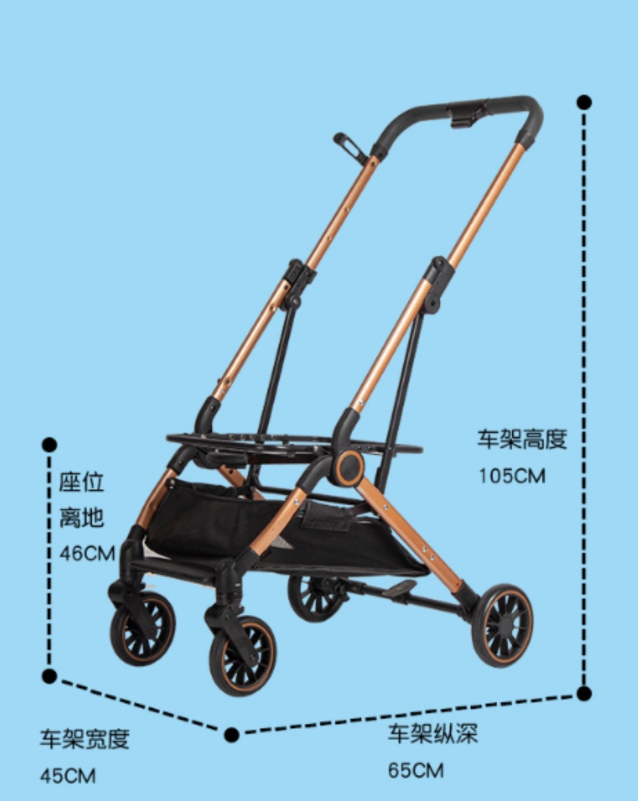
Braking Systems in Pet Strollers
Braking systems are a critical safety feature, especially for all-terrain pet strollers navigating hills or wet paths. Most models feature one-foot dual brakes, which lock both rear wheels with a single pedal press for convenience and reliability. Standards like ASTM F833 and EN 1888 outline performance to prevent runaway incidents.
Under ASTM F833, brakes must engage securely and remain functional post-testing. They cannot be disengaged by a secured occupant (adapted for pets, meaning no easy paw access). EN 1888 requires automatic or single-action engagement, withstanding 5,000 cycles without damage.
Braking Performance on Slippery or Sloped Surfaces
Slippery or sloped surfaces pose unique challenges, where inadequate braking can lead to dangerous rollaways. Standards simulate these to set compliance levels.
1. Slippery Surfaces
ASTM F833 tests brakes on a horizontal surface covered with 60-grit sandpaper to mimic low-friction conditions like wet pavement or ice. The stroller is loaded (40 lbs or max weight), and a force F (0.34 times total weight) is applied forward and rearward in cycles. Braked wheels must rotate no more than 90° in the fifth cycle, with no slide over 5 inches during application. This ensures one-foot dual brakes hold on slippery flats, crucial for urban all-terrain use like rainy sidewalks.
EN 1888 doesn't have a direct slippery test but implies performance through dynamic braking: at 3 m/s, the stroller must stop within 500 mm on level ground, adaptable to low-traction via material choices.
2. Sloped Surfaces
On slopes, ASTM F833 integrates braking with stability: brakes must hold on a 12° incline without tipping, though not directly pulling on slopes. The CPSC-modified version emphasizes this for rollaway prevention. Impact tests on 20° slopes ensure brakes don't fail post-jolt.
EN 1888 is more explicit: on a 10° incline, with 14 kg load, the parking brake must prevent movement over 25 mm under 100 N force (forward/back/side). For active braking, 200 N is applied without motion. This sets a clear threshold for one-foot dual brakes on sloped, potentially slippery hills—e.g., no rolling on a 10° wet incline under moderate push.
For all-terrain compliance, brakes should achieve zero unintended movement on up to 12° slopes (ASTM) or 10° (EN), with rotation limits on slip. Pet strollers claiming compliance often exceed this with rubberized pedals and linked systems locking both wheels.
All-Terrain Considerations and Best Practices
All-terrain pet strollers must integrate these standards with practical features: 360° swivels for maneuverability, reflective strips for visibility, and weather-resistant canopies. While standards don't mandate "all-terrain" labeling, compliance ensures safe use on varied surfaces. Owners should check for certifications like SGS or voluntary ASTM/EN adherence.
Best practices include regular inspections, using harnesses, and avoiding overloads. For braking, always engage on stops, especially slopes.

Conclusion
Compliance with core standards like ASTM F833 and EN 1888 ensures all-terrain pet strollers are safe, with braking systems achieving no-movement thresholds on 10-12° slopes and limited slip on low-friction surfaces. By prioritizing these, manufacturers protect pets, and owners gain peace of mind. As the market evolves, advocating for pet-specific regulations could further enhance safety.
For more about what core safety standards must a pet stroller that meets all-terrain usage requirements comply with, you can pay a visit to FengQun Pet Gear Supplier for more info.






