The Twin Pet Stroller with Storage & Cup Holders
For the modern pet parent with multiple furry companions, the simple walk can evolve into a complex logistical operation. Leashes tangle, energy levels differ, and carrying supplies becomes a burden. Enter the twin pet stroller, a specialized piece of mobility engineering that has transformed from a niche novelty to an essential tool for urban living, senior pets, and adventurous families. This article provides a comprehensive technical examination of a pivotal variant: the twin pet stroller equipped with a storage basket and cup holders. We’ll dissect its design, functionality, and the nuanced engineering that makes it more than just a set of wheels.
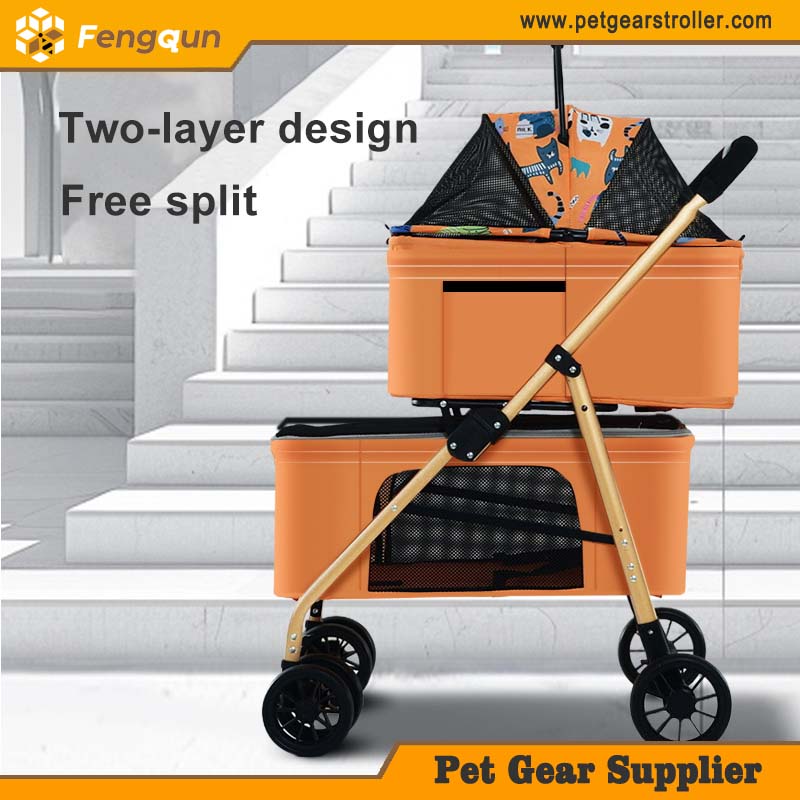
Part 1: The Core Chassis – Foundation and Mobility
At its heart, a twin pet stroller is a study in lightweight structural engineering and dynamic mobility.
Frame Architecture: The foundation is typically an aluminum or high-grade steel alloy frame. Aluminum, often aircraft-grade, offers an exceptional strength-to-weight ratio, resisting corrosion while keeping the stroller manageable when loaded. The frame design employs a combination of tubular structures for primary load-bearing (vertical forces from pets and horizontal forces from pushing) and sheet or molded components for secondary shaping. A key feature is the foldable mechanism, often a central latch system that allows the frame to collapse via a scissor or parallelogram action. This requires precisely placed pivot points and robust locking pins to ensure stability when open and compactness when folded.
Suspension and Wheel System: A smooth ride is non-negotiable for pet comfort. This is achieved through a multi-wheel suspension system.
Front Wheels: Typically swivel/caster wheels for superior maneuverability in tight spaces like store aisles or crowded sidewalks. High-quality models feature a locking mechanism to convert them to fixed wheels for stability during straight-line, high-speed walks or jogging.
Rear Wheels: Larger in diameter (often 8-12 inches), these provide drive and overcome obstacles like curbs. They are frequently paired with spring-based or elastomer suspension modules integrated into the axle or strut mounting. This system absorbs high-frequency shocks from pavement cracks and low-frequency bumps from dips in the terrain.
Tires: Options include air-filled (pneumatic) tires for the cushiest ride, which require maintenance, or never-flat foam/EVA rubber tires that are puncture-proof but offer slightly less damping.
Braking System: Safety is paramount. The system is usually a dual-mode brake on the rear axle. A foot-operated parking brake locks one or both rear wheels via a cable-actuated drum or lever system. More advanced models include a hand-operated dynamic brake (similar to a bicycle brake) on the handlebar, giving the operator immediate speed control on inclines.
Part 2: The Compartment – Secure and Comfortable Accommodation
The twin compartment is where ergonomics for pets meet materials science.
Configuration: Compartments are arranged either side-by-side or front-to-back (tandem). Side-by-side offers equal views and prevents one pet feeling isolated, but increases the stroller’s width. Tandem designs are narrower and may offer a weight distribution advantage but can lead to jealousy or limited visibility for the rear passenger.
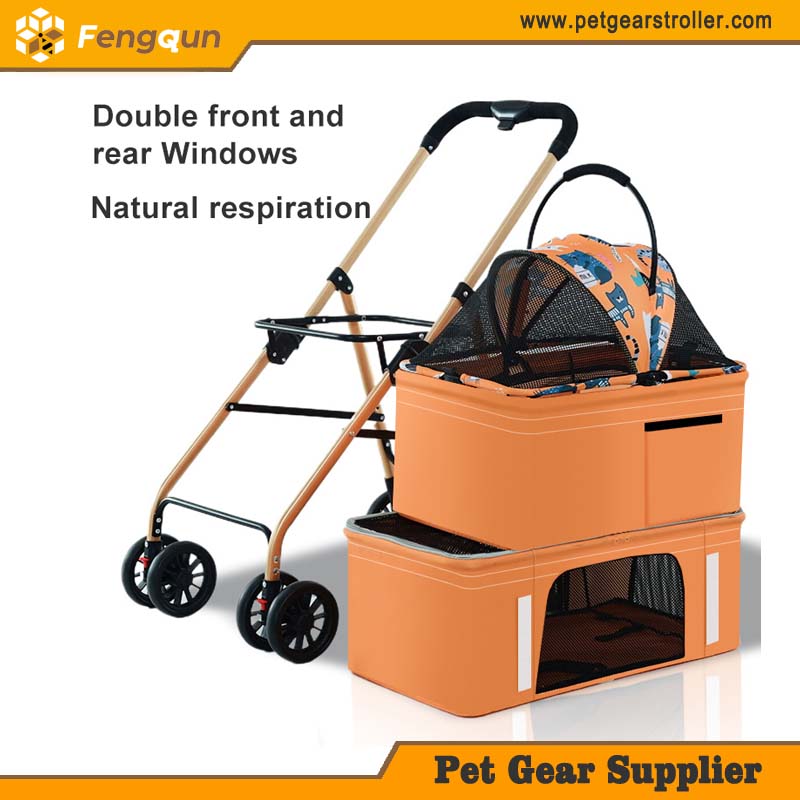
Construction and Ventilation: The compartment is a structured soft-goods system. A durable, washable fabric (like 600D polyester or Oxford cloth) is stretched over a flexible but rigid polymer or fiberglass frame that creates the canopy and side walls. Critical to this is mesh paneling—high-density, tear-resistant polyester mesh that provides continuous airflow, prevents overheating, and allows pets to see out. Zippered or magnetic entry points offer secure access.
Safety and Restraint: Integrated into the interior are attachment points for tethers or harnesses. These are not mere loops; they are reinforced webbing straps anchored directly to the stroller’s metal frame, designed to withstand sudden, high-force loads from a startled pet. A five-point safety clip system is ideal, distributing force across the chest and back.

Part 3: The Human Interface – Handle, Storage, and Cup Holders
This is where the twin pet stroller’s design acknowledges the human operator’s needs, transforming it from a pet carrier into a practical daily system.
The Handlebar: An often-overlooked ergonomic masterpiece. It must be adjustable to accommodate users of different heights, typically via a push-button mechanism with multiple height settings. The grip is padded with thermoplastic rubber (TPR) or foam for comfort and slip resistance. The angle (rake) is calculated to promote a natural wrist and arm position, reducing fatigue.
The Storage Basket: A Logistics Hub: The under-seat storage basket is a critical feature. Technically, it’s a suspended cargo net or reinforced fabric bin. Its key specifications are:
Weight Capacity: Usually 10-20 lbs, independent of the pet weight limit.
Accessibility: It must be easily reachable without disturbing the pets. A design that allows access from all sides, not just the rear, is superior.
Suspension: It often hangs from the frame on bungee cords or straps, allowing it to flex and expand without sagging onto the wheel axles.
Material: A tight weave or non-stretch fabric prevents small items from falling out. Reflective strips for visibility at night are a premium safety addition.
This basket is engineered to carry the ecosystem of a pet outing: collapsible water bowls, spare leashes, waste bags, toys, and even groceries or a personal bag, freeing the operator’s hands and back.
Cup Holders: The Detail of Convenience: Far from an afterthought, integrated cup holders represent thoughtful industrial design.
Location: Ideally, they are on the handlebar or just below it, within arm’s reach without breaking stride.
Design: They are typically molded polymer holders with a contoured shape to securely grip standard bottle and coffee cup diameters. Some feature adjustable tension arms or expandable inserts to accommodate everything from a slim water bottle to a large takeout cup.
Function: This feature eliminates the constant search for a place to set a drink, prevents spills inside the storage basket, and maintains hydration and caffeine access—a small detail with a massive impact on user experience.
Part 4: Integration and Practical Considerations
The true test of engineering is how these systems work in concert.
Weight Distribution and Stability: Engineers must calculate the center of gravity with two dynamic loads (pets that may move) and a bottom-loaded storage basket. The wheelbase and axle placement are designed to prevent tipping backward when loading pets or forward when descending curbs. The handlebar acts as a counterbalance.
Material Synergy: The choice of materials reflects a hierarchy of needs: strength (frame), comfort and breathability (compartment fabric), durability and cleanability (storage basket), and ergonomic feel (handle grips).
Weather Adaptability: A full-system view includes the removable, water-resistant rain cover that snaps or zips onto the compartment frame, and the front window flap that can be rolled up or secured with magnetic tabs. These features allow the stroller to function in variable conditions, protecting its inhabitants.
Conclusion
The twin pet stroller with a storage basket and cup holders is not merely a product; it is a mobile, integrated ecosystem designed to solve a complex set of problems. It merges the mechanical principles of mobility systems with the soft-goods engineering of portable shelters and the ergonomic insights of human-centered design.
From the shock-absorbing calculus of its suspension to the reinforced stitching of its restraint anchors, every component is the result of targeted technical choices. The storage basket solves the logistical problem of cargo, while the cup holder solves the human-factors problem of convenience. Together, they elevate the device from a simple transporter to an enabling tool that extends the range and quality of life for pets and their people.
For the tech-savvy pet owner, understanding these features is key. It’s the difference between seeing a stroller as a covered wagon and recognizing it as a sophisticated piece of personal mobility equipment—one that ensures safety, promotes well-being, and turns the challenge of a twin-pet walk into a journey of effortless enjoyment. In the evolving landscape of pet care technology, this stroller stands as a testament to how thoughtful, integrated design can profoundly enhance the shared lives of pets and their humans.
For more about the twin pet stroller with storage & cup holders, you can pay a visit to FengQun Pet Gear Supplier for more info.






