The Rise of All-Terrain Pet Strollers: Can They Truly Handle Any Environment?
In recent years, a remarkable trend has emerged in the pet care industry: the proliferation of all-terrain pet strollers. What began as a niche product for disabled or elderly animals has evolved into a sophisticated mobility solution for pet owners who refuse to let challenging environments limit their adventures with furry companions. These rugged, multi-wheeled vehicles promise to navigate everything from city sidewalks to mountain trails, but the critical question remains: Do they genuinely deliver on their ambitious "any environment" claims?
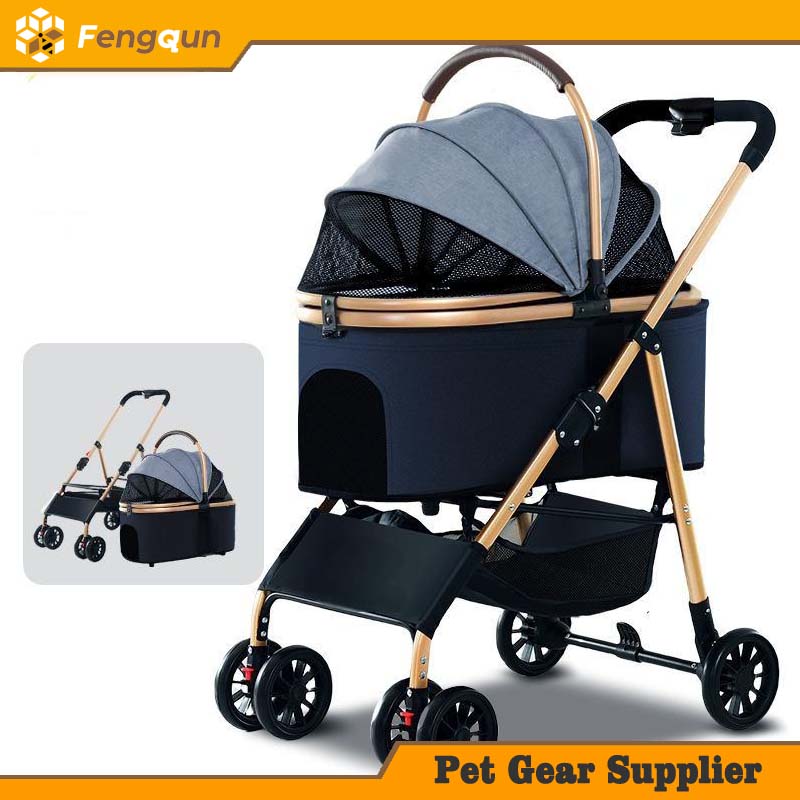
The Evolution of Pet Mobility Solutions
The pet stroller market has undergone a dramatic transformation since its inception. Early models, adapted from basic baby strollers, were limited to smooth, paved surfaces. As pet ownership culture shifted—with pets increasingly considered family members—manufacturers recognized an opportunity. The outdoor recreation boom, combined with growing awareness of pet safety and mobility needs, created demand for more robust solutions.
Today's all-terrain models represent a convergence of technologies from multiple industries: lightweight aerospace materials, suspension systems from mountain biking, and waterproof textiles from performance outdoor gear. This cross-pollination has produced strollers claiming capabilities far beyond their predecessors, marketed to active pet owners who hike, beach-comb, or navigate urban landscapes with equal frequency.
Engineering the "All-Terrain" Claim
Suspension Systems: The Core Innovation
The defining feature separating all-terrain pet strollers from conventional models is their suspension. High-end models incorporate independent suspension systems with coil or air shocks, providing 2-4 inches of travel to absorb impacts from roots, rocks, and uneven ground. Some manufacturers have adapted technologies from all-terrain jogging strollers, utilizing spring-loaded front wheel assemblies that swivel for maneuverability yet lock forward for stability at higher speeds or on declines.
Wheel and Tire Technology
Tire design represents another critical differentiator. Air-filled pneumatic tires (typically 12-16 inches in diameter) offer superior shock absorption and traction compared to solid plastic wheels. Many feature knobby, mountain-bike-style tread patterns for loose soil, sand, or gravel. Some premium models even offer interchangeable tires for specific environments—slimmer wheels for pavement efficiency, wider ones for sand stability.
Materials and Structural Integrity
Aircraft-grade aluminum frames provide strength without excessive weight, with most models weighing 15-30 pounds. Carbon fiber appears in premium offerings. The stroller bodies utilize reinforced nylon or polyester with waterproof ratings (often 300D or higher), while mesh panels ensure ventilation. Testing standards have emerged, with leading manufacturers subjecting products to vibration tests, drop tests, and load capacity evaluations exceeding 100 pounds.
Safety and Stability Engineering
Given their intended use on uneven terrain, stability engineering is paramount. Features include:
Lowered center of gravity designs
Three or four-wheel configurations with wider wheelbases
Parking brakes with multi-surface hold capability
Tethers attaching strollers to owners during steep descents
Roll bars or protective cages for pet security during tip-risk scenarios
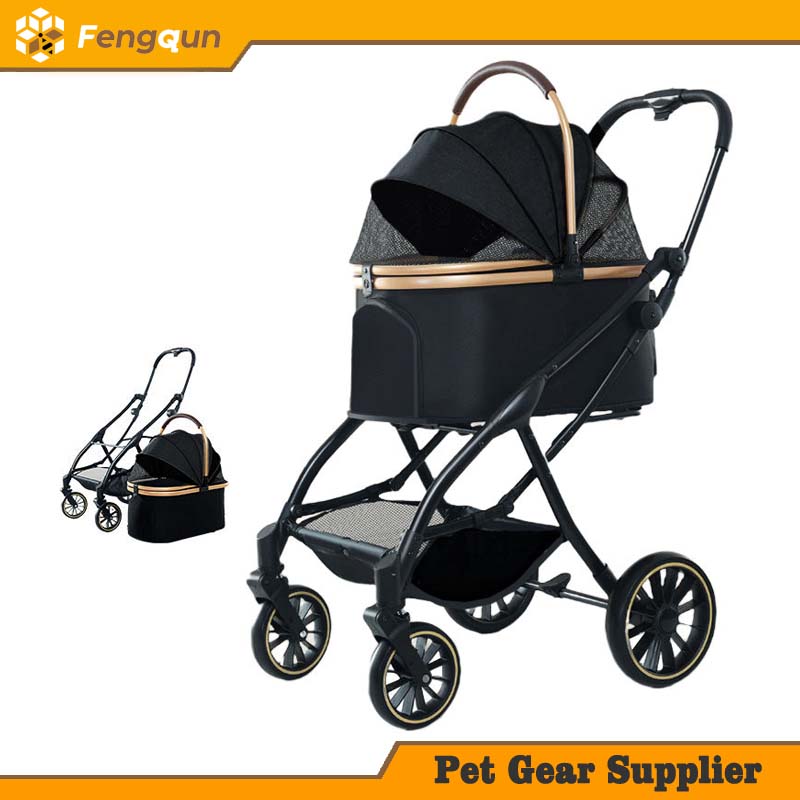
Environmental Capabilities: A Reality Check
Paved Urban Environments
Here, all-terrain strollers generally excel, though often with trade-offs. Their suspension smooths out cracks and curbs, but wider profiles can complicate navigation through crowded spaces. Pneumatic tires require maintenance that solid wheels do not. Noise levels on pavement are typically higher than with urban-specific models.
Hard-Packed Trails and Gravel Paths
This represents the ideal use case. Suspension systems effectively dampen vibrations, while tire treads provide secure traction. Most models handle moderate roots and rocks up to 2-3 inches without significant issue. Stability remains good on gentle inclines under 15 degrees.
Sand and Loose Surfaces
Performance varies dramatically here. Wide-tire models with low-pressure options can navigate firm wet sand reasonably well, but dry, soft sand presents challenges. The resistance increases significantly, requiring considerable pushing effort. Strollers with front-wheel drive assist (an emerging feature) perform notably better in these conditions.
Snow and Ice
Limited testing suggests cautious capability in packed snow with appropriate tire tread. Ice poses significant safety concerns regardless of design. Waterproofing protects pets from moisture, but cold air circulation remains a challenge without insulated modifications.
Technical Terrain: Steep Inclines and Obstacles
Claims of handling "any" terrain meet their limits here. While marketing imagery often shows strollers on mountain trails, practical handling on slopes exceeding 20 degrees becomes problematic. Downhill braking capacity, uphill traction, and side-slope stability present engineering challenges not fully solved at consumer price points. Large obstacles (steps, logs) generally require manual assistance.
Water Crossings
Water resistance differs from water capability. While most models withstand splashing and rain, few are designed for stream crossings. Submerged wheel bearings seize, and few offer true waterproof compartments for pet protection during water exposure.
The Human and Animal Factors
Pet Acceptance and Safety
No matter how capable the machine, success requires pet acclimation. Anxiety behaviors can lead to unsafe weight shifting. Proper restraint systems (harness attachments) are crucial. Ventilation and temperature regulation vary significantly between models—a critical factor since pets cannot regulate stroller environments themselves.
Owner Capability
All-terrain strollers still require pushing power, especially on slopes or resistant surfaces. Average force needed on moderate trails can reach 15-20 pounds of push force, challenging for some users. Maneuvering 30+ pound loads (stroller plus pet) around tight switchbacks demands strength and coordination frequently underestimated in marketing.
Market Segmentation and Specialization
Recognizing that "any terrain" might be an overreach, manufacturers are increasingly specializing:
Urban-All-Terrain Hybrids: Prioritize compact folding with moderate trail capability
Adventure Models: Focus on backcountry trails with enhanced suspension and cargo capacity
Beach/Sand Specialists: Feature ultra-wide tires and easily cleanable materials
Small-Dog vs. Large-Dog Designs: Differ in stability approaches—wider frames for larger pets
Testing and Endurance: What the Data Reveals
Independent testing organizations have begun evaluating claims. Controlled studies measure:
Vibration damping on standardized obstacle courses
Stability angles before tipping
Braking effectiveness on inclines
Durability through mileage simulations
Results indicate that while premium models (often $300+) significantly outperform basic strollers on uneven terrain, all have limitations. Waterproof claims generally hold, but zipper failures occur under particulate exposure (sand, dust). Suspension components show wear after 200-300 miles of aggressive use. The "any environment" claim remains aspirational rather than absolute.
The Future of All-Terrain Pet Mobility
Emerging technologies suggest next-generation improvements:
Electric assist drives reducing user effort on hills and soft surfaces
Active suspension systems adjusting to terrain in real-time
Integrated climate control using solar-powered ventilation
Modular designs allowing wheel, cargo, or seating configuration changes
Smart features like stability sensors, GPS tracking, and terrain mapping integration
Sustainability concerns are driving development of recyclable materials and longer-lasting components to offset the environmental impact of manufacturing and eventual disposal.
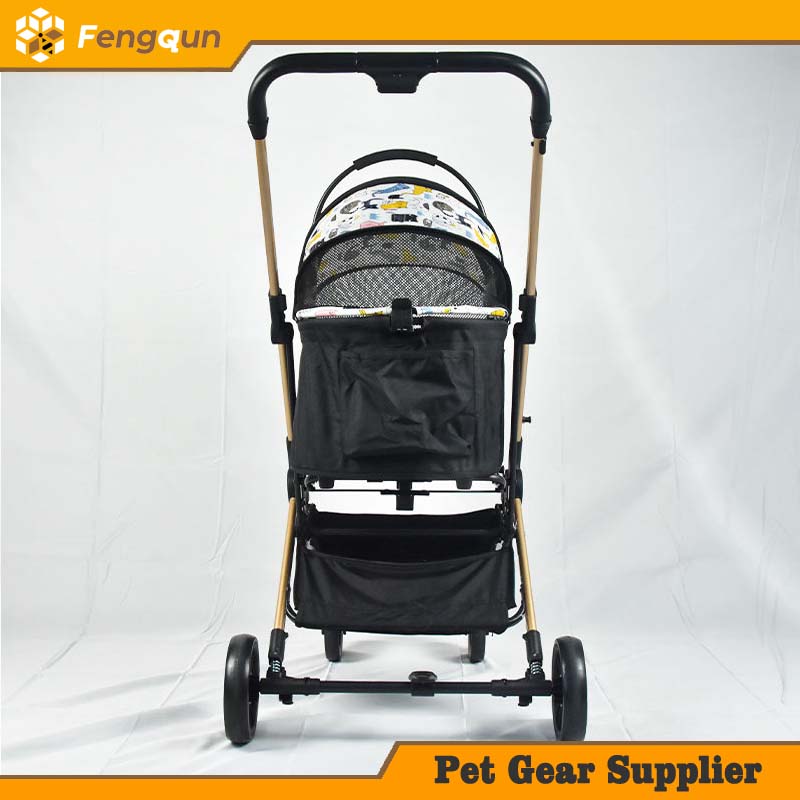
Conclusion
All-terrain pet strollers represent a significant engineering achievement, expanding accessibility for pets and owners to share outdoor experiences. They successfully bridge the gap between paved path convenience and trail adventure capability far better than previous generations of pet mobility products.
However, the "any environment" promise should be interpreted with reasonable expectations. These strollers excel on maintained trails, packed surfaces, and moderate terrain. They struggle with genuinely technical obstacles, deep soft substrates, and extreme angles. Their true value lies not in limitless capability, but in dramatically expanded range compared to standard models.
For the active pet owner, selecting an all-terrain stroller requires honest assessment of typical environments, pet size and temperament, and personal physical capability. Within those parameters, today's models offer remarkable freedom—allowing dogs with mobility limitations, small pets, or simply pampered companions to join adventures previously inaccessible to them. As technology advances, the gap between marketing promise and reality will likely narrow, but for now, the all-terrain pet stroller stands as a highly capable—if not omnipotent—tool for modern pet companionship in the great outdoors.
The revolution in pet mobility continues, driven by equal parts engineering innovation and the enduring human desire to include every family member in life's adventures, regardless of the terrain ahead.
For more about the rise of all-terrain pet strollers: can they truly handle any environment, you can pay a visit to FengQun Pet Gear Supplier for more info.






