The Frame Structure and Materials of Large Pet Strollers
The image of a pampered pet cruising in a stroller is no longer an urban oddity but a growing trend, especially for larger canine companions. For breeds like Golden Retrievers, German Shepherds, or Bulldogs, a simple harness and walk aren’t always sufficient. Age, injury, urban density, heat, or crowded events necessitate a mobile sanctuary. At the heart of this mobile sanctuary lies its most critical component: the frame. The design and material selection for a large pet stroller’s frame is a sophisticated exercise in mechanical engineering, balancing unprecedented loads with the demands of safety, maneuverability, and user experience. This article delves into the architectural blueprints and material science that make modern, large-capacity large pet strollers possible.
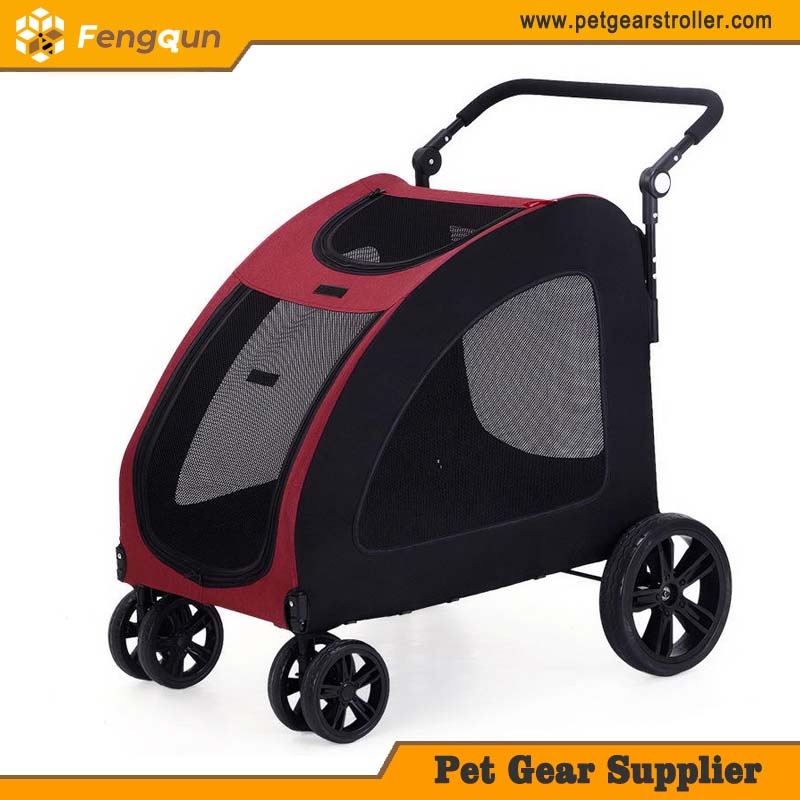
I. The Architectural Backbone: Frame Structures
Unlike their lightweight, umbrella-fold counterparts for small pets, large pet strollers are akin to all-terrain vehicles (ATVs) or robust jogging strollers. Their frame structures must contend with dynamic loads of 40kg (88lbs) or more, distributed across a moving, sometimes shifting, living weight. The primary structural philosophies can be categorized into several key designs.
1. The Monocoque/Unibody Chassis:
Inspired by automotive and aerospace design, the unibody approach integrates the frame and body into a single, cohesive structural unit. Often constructed from molded high-density polymers reinforced with metal inserts, this design offers exceptional rigidity and torsional stability. The load is distributed across the entire shell, minimizing flex points. This architecture is common in strollers with hard-sided, capsule-like cabins. Its advantages include excellent protection from the elements and inherent strength. However, it can be heavier and its folding mechanism, if present, is more complex, often involving a clamshell design rather than a simple collapse.
2. The Space Frame/Tubular Skeleton:
This is the most prevalent and versatile structure, reminiscent of bicycle frames. It utilizes a network of interconnected tubes—typically aluminum or steel alloy—to create a lightweight yet strong three-dimensional lattice. The load-bearing points—axle hubs, handlebar stem, cabin suspension mounts—are reinforced nodes within this lattice.
Triangulation: The key to a space frame’s strength is triangulation. Engineers strategically place tubular members to form triangles, the most stable geometric shape, which prevents the frame from parallelogramming (racking) under side loads or torsion.
Modular Design: This structure allows for clear modularity: a lower chassis module that holds the wheels and cargo basket, a central cabin module that defines the pet’s space, and an upper handlebar module. This facilitates manufacturing, repair, and even customization.
3. Hybrid Frame Systems:
Most high-end large pet strollers employ a hybrid approach. A primary tubular space frame defines the core chassis and handlebar, while a secondary structure—often a combination of reinforced polymer panels, fabric tension members, and lightweight alloy rods—forms the cabin. This optimizes the strength-to-weight ratio, using the rigid frame for critical stress points and lighter materials for enclosure.
Critical Frame Components & Joints:
Axle & Hub Assembly: Forlarge loads, the axle is either a solid, continuous bar running through the frame or a paired, independent axle system for each wheel. The hub must contain robust bearings (sealed cartridge bearings are ideal) to ensure smooth rolling under weight.
Folding Mechanisms: The engineering pinnacle of a pet stroller frame is its folding joint. For large models, single-point, quick-release mechanisms are inadequate. Systems like central folding locks or double-action hinges are used. These often involve a slider mechanism that, when activated, allows the frame to pivot at two points simultaneously, collapsing evenly without pinching hazards. All locking pins and latches are over-engineered with safety catches to prevent accidental collapse.
Suspension Integration: Frame design must accommodate suspension systems. This involves designing dedicated mounting points for spring or elastomer shock absorbers. The frame members leading to these points must be reinforced to handle the cyclical compressive and rebound forces without fatigue.
II. The Element of Strength: Material Selection
The choice of material directly dictates the frame’s weight, durability, corrosion resistance, cost, and ride quality. For large pet strollers, the debate centers on advanced alloys and composites.
1. Aluminum Alloys: The Gold Standard
Series 6061 & 7005: These are the workhorses of quality strollers. 6061-T6 aluminum (heat-treated) offers an excellent combination of strength, weldability, and corrosion resistance. It’s lighter than steel and sufficiently rigid for tubular frames. 7005 alloy is often used in higher-stress applications like handlebar stems or axle supports, as it can be drawn into thinner, stronger tubes.
Advantages: High strength-to-weight ratio, naturally corrosion-resistant (though often anodized for extra protection), and provides a good degree of vibration damping, leading to a smoother ride.
Disadvantages: More expensive than steel, and can be prone to fatigue at welded joints if not properly designed and treated.
2. Steel Alloys: The Durable Contender
High-Tensile Carbon Steel: Used in more economical or heavy-duty “tank-like” models. It’s incredibly strong in terms of pure load-bearing capacity and impact resistance.
Chromoly (4130 Steel): A premium option. This alloy, with chromium and molybdenum, offers strength comparable to high-tensile steel but with significantly reduced weight and superior fatigue resistance. It’s often found in high-end bicycle frames and top-tier pet strollers where weight is a critical factor.
Advantages: Superior tensile strength, high impact resistance, generally lower material cost, and excellent durability.
Disadvantages: Significantly heavier than aluminum, prone to rust if the coating (powder coating is essential) is compromised, and transmits more road vibration.
3. Advanced Composites: The Future Frontier
Carbon Fiber Reinforced Polymer (CFRP): While rare due to cost, carbon fiber is beginning to appear in ultra-premium stroller components like handlebars or specific frame members. Its anisotropic strength (strong in the direction of the fibers) allows engineers to place material precisely where loads are highest.
Fiberglass & Reinforced Polymers: Molded fiberglass or engineering plastics like ABS or polypropylene, often glass-filled for strength, are used for non-structural or semi-structural body panels, fenders, and cargo baskets. They offer shape flexibility, light weight, and good impact resistance without corrosion.
4. Material Synthesis in Practice:
A typical high-performance large pet stroller might use:
A 7005 aluminum space frame for the main chassis.
Chromoly steel for the critical axle and folding hinge pins.
Glass-filled Nylon for the wheel hubs and latch mechanisms.
Molded ABS plastic for the cabin base and fenders.
Anodized aluminum rods for the cabin’s window and door frames.
This multi-material approach, known as a heterogeneous structure, leverages the best properties of each material where they are needed most.
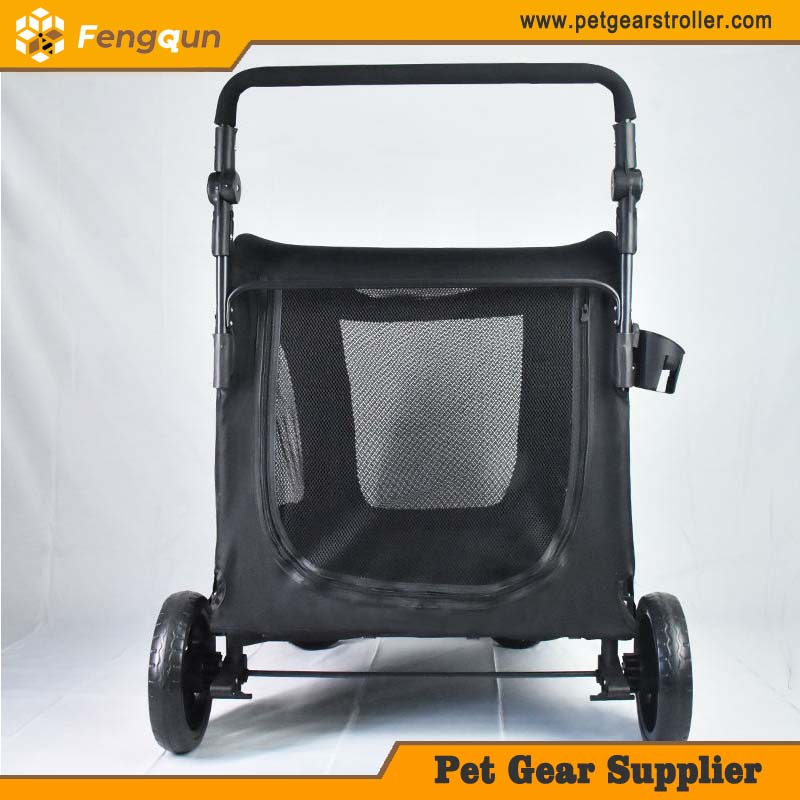
III. Engineering for the Real World: Load, Dynamics, and Safety
Designing the frame goes beyond static weight capacity. Engineers must model dynamic forces.
Dynamic Load Factor: A 40kg dog does not sit still. A quick shift, a jump, or a sudden stop can multiply the force exerted on the frame. Engineers use a dynamic load factor (often 1.5x to 2x the static load) in their Finite Element Analysis (FEA) simulations to ensure the frame can withstand real-world use.
Fatigue Analysis: A stroller frame undergoes thousands of stress cycles from bumps and vibrations. Materials and weld points are analyzed for fatigue strength to prevent failure from repeated loading below the ultimate tensile strength.
Center of Gravity & Stability: The frame geometry must place the pet’s weight low and between the axles. A long wheelbase and a wide track (distance between wheels) are crucial to prevent tipping during turns. The handlebar attachment is often angled to provide leverage without lifting the front wheels unintentionally.
Safety Standards: While no universal ISO standard exists specifically for pet strollers, reputable manufacturers borrow from standards for human strollers (like ASTM F833 for carriage stability and performance) and apply rigorous in-house testing for weight capacity, tip-over, brake hold, and folding mechanism integrity.
IV. Comparison & Evolution: A Material and Structural Dialogue
Frame Type | Primary Materials | Advantages | Ideal Use Case |
Unibody/Chassis | Reinforced Polymers, Composites | Superior rigidity, all-weather protection, integrated look. | Urban use, smaller breeds, maximum enclosure. |
Tubular Space Frame | Aluminum Alloys (6061, 7005), Chromoly Steel | Excellent strength-to-weight, modular, repairable, versatile. | All-terrain use, large/active breeds, jogging. |
Heavy-Duty Steel Frame | High-Tensile Carbon Steel | Maximum load capacity, impact resistance, cost-effective. | Giant breed transport, rugged, non-frequent use. |
The evolution is clear: the trend is moving toward lighter, stronger materials and more intelligent frame geometries. The use of hydroformed aluminum tubes (shaped with high-pressure water for complex, strength-optimized shapes) is increasing. We also see integration of composite leaf springs into the frame itself, blurring the line between structure and suspension.
Conclusion
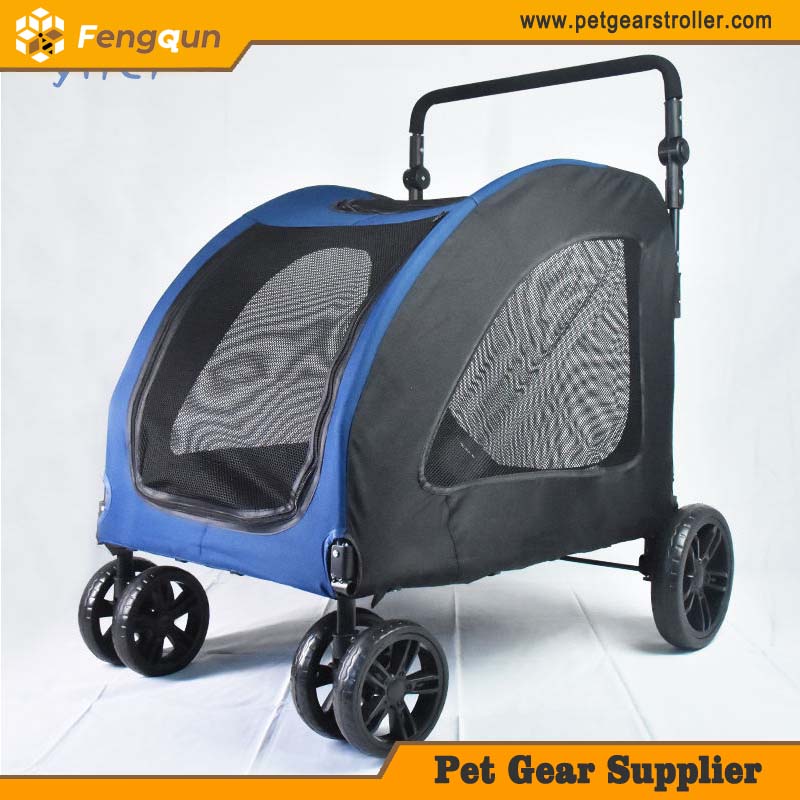
The frame of a large pet stroller is far more than a simple basket carrier. It is a meticulously engineered platform where structural design and advanced material science converge to solve a unique set of challenges: safely cradling a precious, dynamic load through a world not built for it. From the triangulated nodes of a space frame to the molecular bonds of a heat-treated alloy, every detail is calculated to ensure stability, durability, and peace of mind. As the market for pet mobility grows, so too will the innovation in this field, likely bringing more aerospace-derived materials and smart, adaptive structures to the sidewalks and parks, ensuring our large canine companions can accompany us in comfort and safety for miles to come.
For more about the frame structure and materials of large pet strollers, you can pay a visit to FengQun Pet Gear Supplier for more info.






