Smart Companions: Sensor Technologies Transforming Pet Stroller Shopping Carts
The modern pet owner seeks not just convenience but seamless integration of their companion’s needs into daily routines. Enter the next-generation pet stroller shopping cart—a hybrid solution designed for the eco-conscious, multitasking urban pet parent. Beyond a simple rolling crate, this innovative concept can become a hub of smart functionality, enhancing safety, efficiency, and the overall shopping experience. Key to this transformation are advanced sensor technologies, which can enable critical features like anti-collision reminders and real-time weight monitoring of shopping items. This article explores the specific sensors that can bring these intelligent functions to life.
Part 1: The Vision of an Integrated Smart Cart
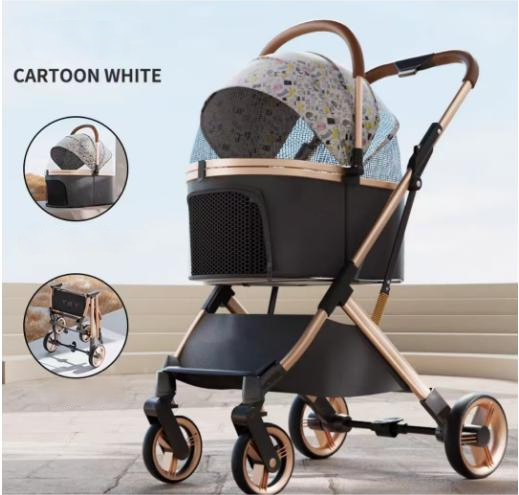
Imagine a shopping trip where your pet rides comfortably in a ventilated, secure compartment atop a pet stroller shopping cart. As you navigate aisles, the cart gently alerts you to obstacles behind or in your blind spots. When you add items to the basket, a digital display updates the total weight and estimated cost in real-time, preventing overload and streamlining checkout. This is the promise of the sensor-integrated pet stroller cart. It addresses core concerns: pet and public safety through collision avoidance, and shopping efficiency through load management and data integration.
Part 2: Sensor Suite for Anti-Collision and Proximity Awareness
The anti-collision system is paramount for preventing bumps with shelves, other carts, or, most importantly, people and children. A robust solution would likely employ a sensor fusion approach, combining the strengths of multiple technologies.
Ultrasonic Sensors: The Affordable Workhorse
Function: These sensors emit high-frequency sound waves and measure the time taken for the echo to return. This calculates the distance to objects within a cone-shaped field of view.
Integration: Small ultrasonic modules could be embedded at strategic points: on the rear bumper, and potentially on the sides of the cart’s lower basket. They are excellent for detecting solid objects at short to medium ranges (2 cm to 4 meters).
Application: Perfect for low-speed, close-quarter maneuvering. When an object is detected within a pre-set "warning zone" (e.g., 0.5 meters), the system can trigger a gentle auditory beep or a visual LED indicator on the handle. As the object enters a "critical zone," the beep could become continuous or a haptic vibration could engage in the handle.
Infrared (IR) and Time-of-Flight (ToF) Sensors: Precision and Speed
Function: IR sensors can detect proximity, while ToF sensors (a more advanced type) use a modulated light signal to precisely measure distance by calculating the time light takes to bounce back.
Integration: These are compact, fast, and ideal for integration into a sleek design. A ToF sensor could be positioned on the front of the pet compartment to prevent the owner from accidentally pushing the cart into a shelf at chest level.
Application: They offer better directionality than ultrasonic sensors and are less susceptible to acoustic noise. They excel at detecting specific, sudden obstacles directly in the cart’s path.
Wide-Angle LiDAR (Light Detection and Ranging): For Comprehensive 2D Mapping
Function: While automotive LiDAR creates 3D point clouds, smaller, lower-power 2D LiDAR modules can scan a horizontal plane around the cart.
Integration: A single, rotating LiDAR module mounted at the base of the cart could create a 270-degree "safety map" of its immediate surroundings.
Application: This is the most comprehensive solution, capable of distinguishing between stationary shelves and moving people, and even predicting potential collisions based on relative speed. While currently more expensive, miniaturization is making it feasible for consumer applications. It could enable advanced features like "follow-me" mode in designated store areas.
Data Fusion & Alert Systems: Data from these sensors would feed into a central microcontroller (like an ARM Cortex-M series). Using simple algorithms, the system would classify threats (e.g., stationary vs. moving) and decide on alert levels. Alerts would be delivered via:
Visual: LED strips that change color (green to yellow to red).
Auditory: Adjustable volume beepers or voice prompts ("Object close behind").
Haptic: Vibration motors in the handle—a crucial, discreet alert in noisy environments.
Part 3: Sensor Technologies for Real-Time Weight Monitoring
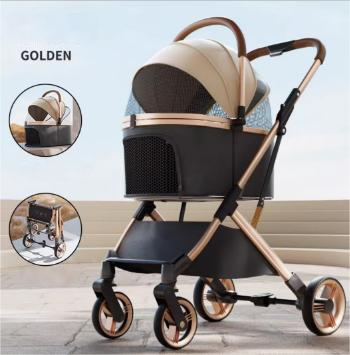
This function transforms the cart from a carrier to an intelligent shopping assistant, addressing pet stroller shopping cart overload, budget tracking, and checkout speed.
Strain Gauge Load Cells: The Gold Standard for Accuracy
Function: These are the most likely candidates. A load cell is a transducer that converts force (weight) into an electrical signal. When placed under mechanical stress (like the weight of groceries), the electrical resistance of its internal strain gauges changes proportionally.
Integration: Multiple miniature load cells would be installed at the critical support points of the shopping basket—for instance, at the four corners where the basket frame attaches to the main chassis. Their readings would be summed to get the total weight.
Application: They offer high accuracy (down to ±10 grams with proper calibration) and can handle large weight capacities. The system would "tare" (zero out) the weight of any permanent basket liner. As a customer adds a bag of apples, the weight change is instantly calculated.
Capacitive Weight Sensing: A Sleeker, Integrated Alternative
Function: This technology measures changes in capacitance. A capacitive sensor grid could be embedded into a flexible, durable mat lining the bottom of the shopping basket.
Integration: As weight is applied, the distance between conductive layers in the mat changes,altering the capacitance. This change is correlated to weight.
Application: This offers a more seamless, low-profile design without obvious mechanical parts. It can also map weight distribution. However, it may require more complex calibration to achieve the same level of accuracy as load cells across varying temperatures and object placements.
Data Processing & Value-Added Features: The weight data is just the beginning. Integrated with a simple user interface (a small LCD or Bluetooth connection to a smartphone app), it enables powerful features:
Real-Time Total: Display of the cumulative weight and estimated cost (if linked to item scanning or barcode recognition via an integrated scanner or smartphone camera).
Budget Alert: The user can set a spending limit. The system estimates the cost and provides a warning when approaching the limit.
Itemization Assist: By weighing items before and after placement, the cart could prompt,"Item added: ~450g. Please scan to identify." This bridges the physical and digital shopping list.
Pet Compartment Monitoring: A separate, smaller load cell under the pet compartment could monitor the pet's weight for health tracking or even detect if the pet has moved unexpectedly.
Part 4: Integration Challenges and Future Synergies
Bringing this vision to market involves overcoming several hurdles:
Power Management: A robust rechargeable battery pack (e.g., lithium-ion) is needed to power sensors, processors, and displays for a full shopping trip. Low-power sensor modes and efficient wake-on-proximity circuits are essential.
Durability & Cost: Sensors and electronics must withstand outdoor weather, vibrations, and physical impacts. The cost must be justified for retailers (as a rental/loaner asset) or consumers (as a premium purchase).
Data Connectivity: Bluetooth Low Energy (BLE) is ideal for pairing with a user's phone for advanced features. For in-store integration, RFID or Wi-Fi could allow the cart to communicate with store systems for navigation, promotions, and automated checkout.
The Future Ecosystem: Looking ahead, sensor integration opens doors to an ecosystem:
Health Monitoring: Non-contact infrared sensors in the pet compartment could monitor ambient temperature and even the pet's breathing rate.
Automated Checkout: Combined with RFID tags on products, the weight sensor acts as a verification tool, making "just walk out" technology more robust.
Navigation & Analytics: Store-wide sensor networks could interact with the cart, guiding the user to items on their list and providing retailers with anonymized heatmap data of cart movement.
Conclusion
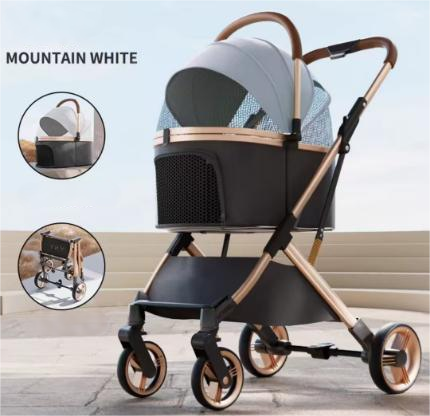
The pet stroller shopping cart represents a fascinating convergence of IoT, robotics, and consumer goods design. By strategically integrating a suite of sensors—ultrasonic, IR, LiDAR for safety, and load cells or capacitive sensors for intelligence—this everyday object can be transformed into a proactive assistant. It promises to make errands safer for pets and the public, more efficient for shoppers, and more data-informed for retailers. The technology is not speculative; it is readily available and awaiting clever, user-centric design. The smart pet stroller cart is more than a novelty; it is a glimpse into a future where our tools are not just passive containers, but active, aware partners in our daily lives.
For more about smart companions: sensor technologies transforming pet stroller shopping carts, you can pay a visit to FengQun Pet Gear Supplier for more info.






