Pet Strollers vs. Traditional Pet Backpacks: Which Is Better for Your Pet?
The modern pet parent is presented with an array of products designed to integrate animal companions into daily life beyond the confines of the home. Among these, pet strollers and traditional pet backpacks represent two dominant solutions for mobile pet transportation. This article provides a technical and welfare-focused comparison, evaluating each modality across parameters of animal physiology, safety, human ergonomics, and contextual utility. The objective is to equip owners with a data-driven framework to select the optimal system based on their pet's specific needs, their lifestyle, and the intended operational environment.
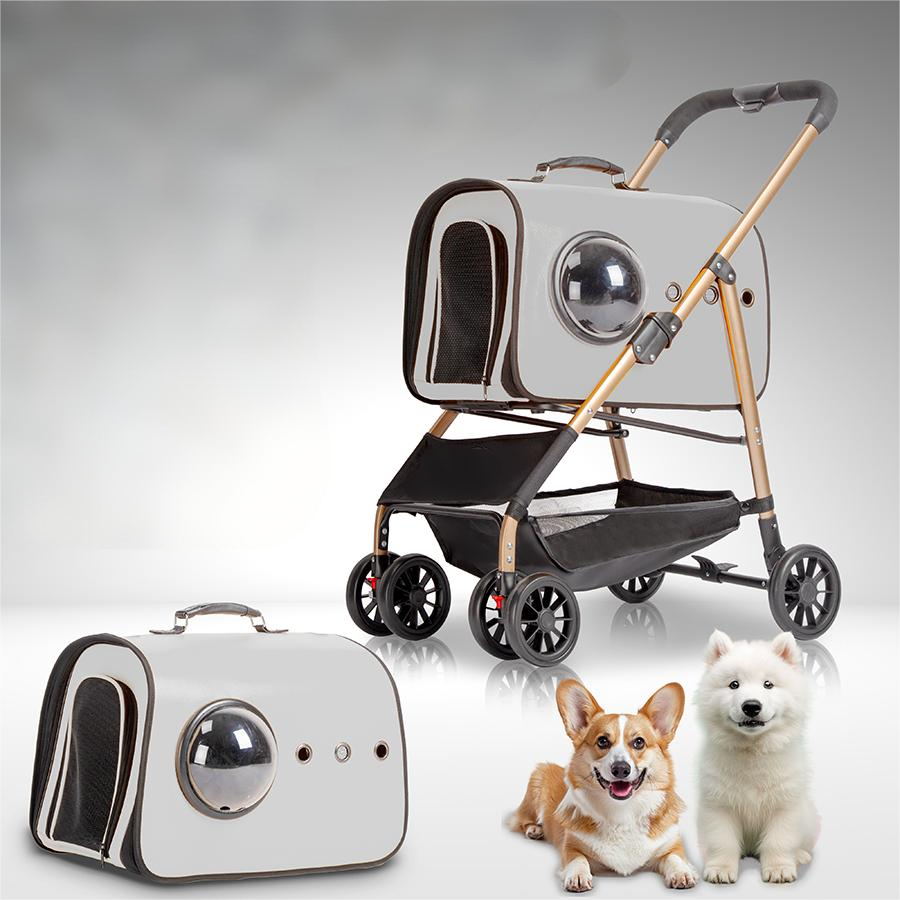
Beyond the Leash – The Rise of Assisted Pet Mobility
Urbanization, increased awareness of animal safety, and the desire for constant companionship have fueled a market for pet transportation devices. Traditional leashes, while sufficient for many, are inadequate for scenarios involving crowded spaces, long-distance travel, injured/convalescing animals, or petite breeds with limited endurance. Two engineered solutions have emerged: the pet stroller, a wheeled chassis with a enclosed cabin, and the pet backpack, a wearable carrier system. The choice between them is often aesthetic or assumptive. However, a deeper technical analysis reveals significant differences that directly impact animal welfare and owner convenience. This article deconstructs both, moving beyond marketing to examine material science, biomechanical impact, and situational efficacy.
Functional Deconstruction: Design and Engineering
1. Pet Strollers: The Mobile Habitat
A pet stroller is a complex system comprising:
Chassis & Suspension: Typically aluminum or steel frames with folding mechanisms. Higher-end models feature shock-absorbing suspensions (spring or coil-based) to dampen vibrations from uneven terrain.
Enclosure: A semi-rigid or soft-sided structure with mesh panels (often no-see-um mesh for insect protection) for ventilation and visibility. It provides a 360-degree protective barrier.
Safety Systems: Includes leash tethers inside, zippered or locking entry points, and parking brakes. Top-tier models offer weather shields and elevated bases for ground separation.
Ergonomics: Adjustable handlebars, swiveling/lockable front wheels for maneuverability, and undercarriage storage.
Technical Advantages: Creates a stable, spacious micro-environment. The pet can sit, stand, turn around, and lie down naturally. The enclosure mitigates stressors like aggressive dogs, loud noises, and environmental hazards (e.g., broken glass, hot asphalt).
2. Traditional Pet Backpacks: The Wearable Transport
A pet backpack is an integrated wearable system:
Frame & Load Distribution: A rigid internal frame (often lightweight aluminum or plastic) channels weight to the wearer's hips via a waist belt (crucial for loads >10 lbs), mimicking hiking backpack technology. Sternum straps enhance stability.
Carriage Compartment: A soft-sided "bubble" or structured compartment with mesh windows. Compartment design varies: front-carrying (for small pets), back-carrying, or side-carrying.
Ventilation & Access: Relies heavily on mesh panels and strategic airflow. Top or side entry points vary in accessibility.
Materials: High-denier nylon, polyester, or canvas for durability, often with waterproof coatings.
Technical Advantages: Frees the user's hands completely, enables navigation in tight spaces (crowds, public transit, trails), and integrates the pet directly into the wearer's movement.
Comparative Analysis: Key Parameters
1. Pet Biomechanics and Welfare
Stress & Anxiety: Strollers offer a familiar "crate" environment, which many pets find calming. The separation from direct stimuli can reduce anxiety. Backpacks involve constant, direct physical contact with the owner's movement and a more immersive sensory experience, which can be comforting or overwhelming, depending on the pet.
Physical Impact: Strollers provide a near-zero impact ride, ideal for senior pets, those with arthritis, or post-operative recovery. Backpacks subject the pet to the gait cycle of the human wearer—a constant, rhythmic bouncing. For most healthy pets, this is acceptable for moderate durations, but can be problematic for pets with spinal issues or vertigo.
Thermoregulation: Both rely on passive ventilation. Strollers, with larger mesh panels, often have superior airflow but can be warmer on still days as heat rises. Backpacks have a smaller air volume and the pet's body heat is in closer proximity to the wearer's back, raising the risk of overheating without meticulous attention to breathable materials and climate.
Space & Posture: Strollers unequivocally win on space allowance, permitting natural postures. Backpacks require the pet to be in a more confined, curled position for extended periods.
2. Safety & Security
Containment: Pet strollers offersuperior containment, making escapes extremely unlikely when properly secured. Backpacks, while secure, present a higher risk if a zipper fails or is improperly closed, especially in crowded areas.
Environmental Hazards: Strollers elevate the pet away from ground-level dangers (dirt, water, traffic exhaust). Backpacks keep the pet at a higher elevation but expose them to side-level hazards (bushes, passing objects).
Stability: A parked stroller with brakes engaged is a stable platform. A backpack's stability is entirely dependent on the wearer's balance; a stumble directly impacts the pet.
3. Human Ergonomics and Practical Logistics
User Physical Demand: Backpacks place direct physical load on the wearer. Proper weight distribution (hip belt) is critical to avoid back and shoulder strain. Strollers transfer the load to the ground, requiring only pushing/pulling effort, which is less taxing over distance and ideal for users with mobility concerns.
Mobility and Navigation: Backpacks excel in high-density environments (public transportation, crowded festivals, narrow hiking trails) where a stroller is impractical or prohibited. Strollers are superior for long, continuous walks on paved paths, in parks, or shopping centers with wide aisles.
Storage & Portability: Backpacks are inherently portable, folding into luggage or a car trunk easily. Strollers require storage space and, even when folded, are bulkier.
Multi-tasking: Strollers allow for easy access to the pet (for hydration, treats) without removal. Interacting with a pet in a backpack requires taking the entire system off.
Decision Matrix: Matching Tool to Task and Subject
The optimal choice is not universal but a function of variables:
Parameter | Pet Stroller is Likely Superior | Pet Backpack is Likely Superior |
Pet Size | Small to medium (up to ~50 lbs), multiple pets, or large breed puppies. | Very small to small (up to ~20 lbs for extended wear). |
Pet Health & Age | Senior, disabled, recovering, anxious, or brachycephalic (pugs, etc.) breeds. | Young, healthy, agile, and confident pets. |
Primary Use Case | Long leisure walks, shopping trips, vet visits (as a waiting room "safe space"), recovery from surgery. | Hiking, running, cycling (as passenger), use on public transit, air travel (as carry-on, if compliant). |
Terrain | Paved paths, sidewalks, indoor floors. Models with large wheels handle packed dirt trails. | Uneven trails, stairs, dense crowds, areas with physical barriers. |
Owner's Physical Capacity | Those with back/shoulder issues, or who cannot carry weight for long periods. | Individuals with good physical fitness and core strength. |
Climate | Better in hot climates due to potential for greater airflow (when moving). | Can be equipped with rain covers; pet shares body heat in cooler weather. |
Synergistic Use and Hybrid Solutions
An either/or dichotomy is unnecessary for many owners. A hybrid approach is often optimal:
Use a backpack for the commute to the park or on a hiking trail.
Use a stroller for extended exploration once at the park, allowing the pet to rest while remaining present.
This approach maximizes the benefits of both systems, catering to different phases of an outing.
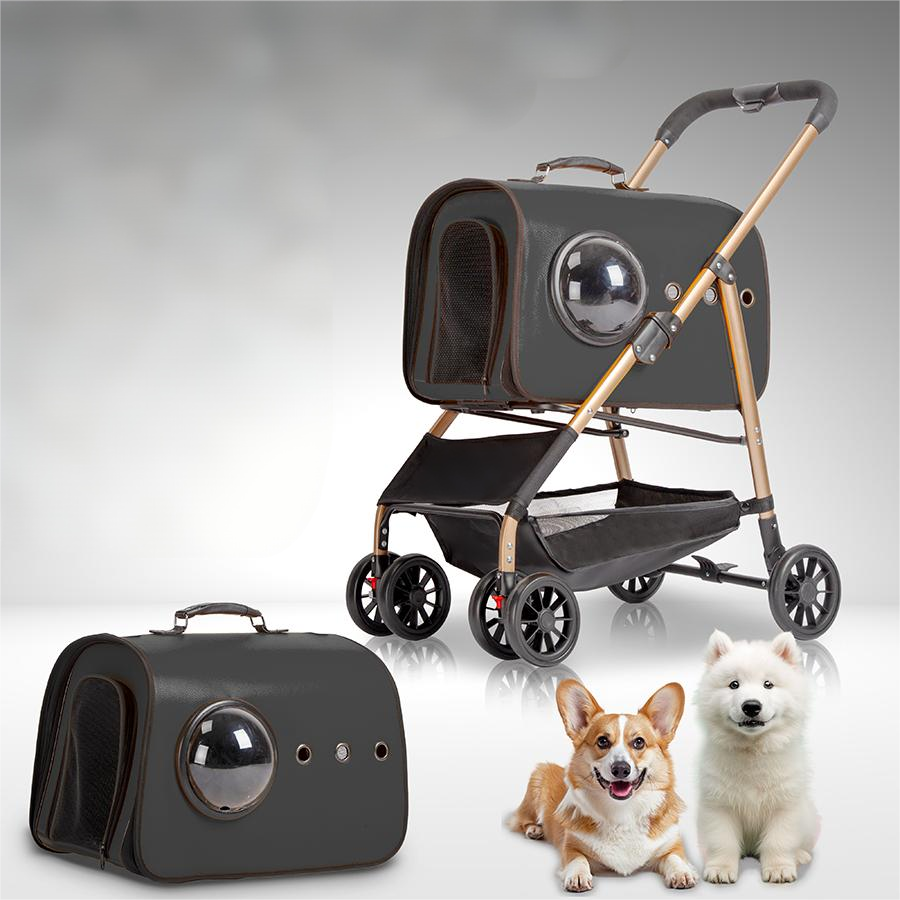
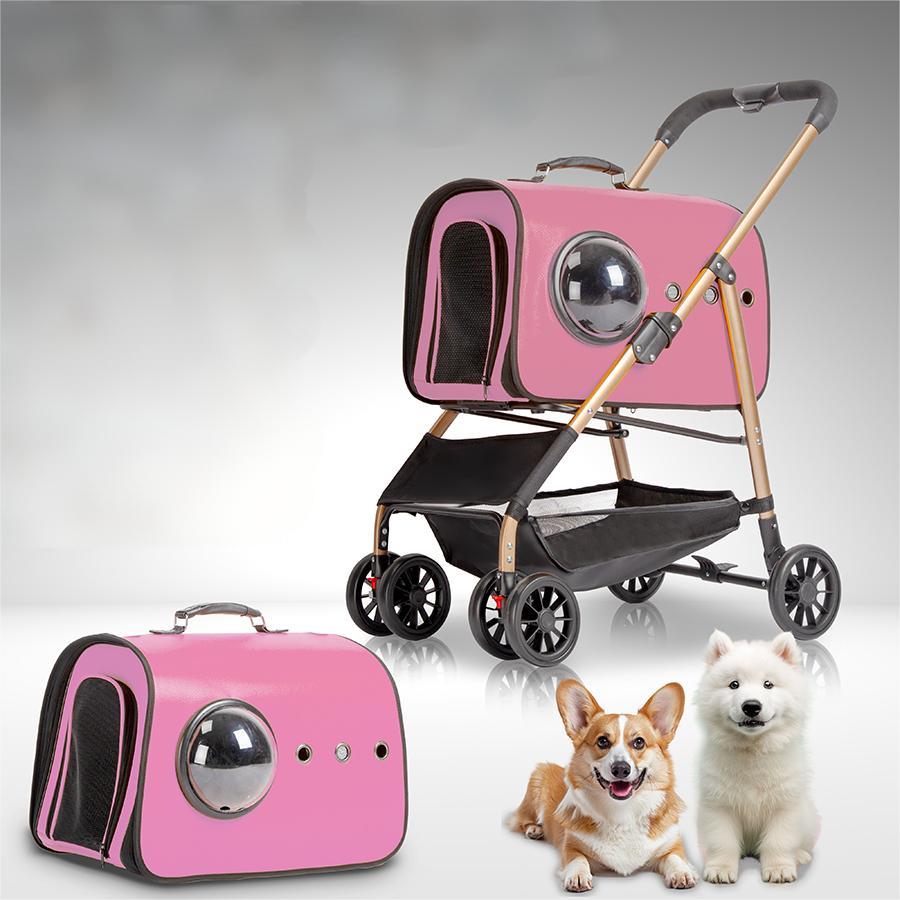
Furthermore, the market is innovating with hybrid products, such as strollers with highly compact, backpack-like fold configurations, or heavy-duty backpacks with wheeled frames that can be converted for pulling. These aim to bridge the functionality gap.
Conclusion
The question of "which is better" is resolved not by declaring a universal winner, but by applying a systematic evaluation. The pet stroller stands out as a mobile sanctuary, prioritizing pet comfort, safety from environmental variables, and low physical impact. It is an engineering solution optimized for animal welfare in permissive terrains. The traditional pet backpack is a tool for active integration, prioritizing logistical flexibility, access to restrictive environments, and hands-free operation for the owner.
For more about pet strollers vs. traditional pet backpacks: which is better for your pet, you can pay a visit to FengQun Pet Gear Supplier for more info.






