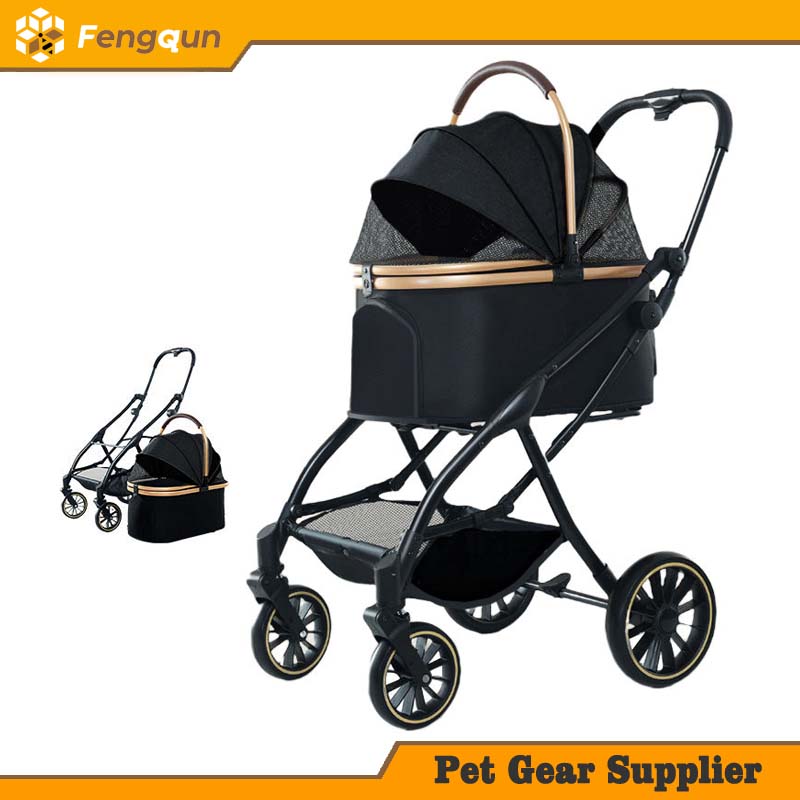
Pet Stroller vs Carrier: Which Is Better for Cats?
The selection between pet strollers and carriers for feline transport represents a significant decision impacting cat welfare, owner convenience, and the quality of shared outdoor experiences. This technical article examines both options through the lenses of feline physiology, behavioral science, safety engineering, and ergonomics. Drawing upon veterinary expertise, animal behavior research, and empirical user data, this analysis concludes that for the majority of cats and usage scenarios, the pet stroller offers superior outcomes across multiple dimensions, including environmental enrichment, thermal regulation, containment security, and the reduction of transport-induced stress. The article provides technical specifications for proper stroller selection, acclimation protocols optimized for feline psychology, and guidance for identifying scenarios where carriers remain appropriate.
1. Introduction: The Feline Transport Dilemma
The question of how best to transport cats outside the home environment has gained increasing relevance as more owners seek to enrich their feline companions’ lives through outdoor experiences. Unlike dogs, who typically accept walking on leash, cats present unique challenges in transport due to their evolved prey-predator duality, heightened sensitivity to environmental stimuli, and strong preferences for controlled, elevated vantage points.
Two primary transport modalities dominate the market: the traditional carrier—typically a rigid or soft-sided enclosed container—and the pet stroller, a wheeled vehicle with an elevated pet compartment. While carriers have long served as the default option for veterinary visits and short-distance transport, the emergence of purpose-built pet strollers has introduced new possibilities for extended outdoor engagement.
This technical analysis evaluates both options against objective criteria derived from feline behavioral science, veterinary medicine, and engineering principles to determine which configuration better serves the needs of cats and their owners across diverse usage scenarios.
2. Feline Behavioral and Physiological Considerations
2.1 The Feline Predisposition for Height
Understanding the cat’s natural behavioral ecology is fundamental to evaluating transport options. Felines are ambush predators that evolved to occupy elevated positions that provide strategic advantages: enhanced visual surveillance of potential prey and predators, physical separation from ground-level threats, and psychological security derived from the ability to observe without being observed.
In the vertical hierarchy of feline space use, elevation directly correlates with perceived safety and control. A cat positioned at ground level—as occurs when confined within a carrier placed on the floor—experiences a fundamental violation of this evolved preference. The carrier occupant cannot survey the surrounding environment, cannot predict approaching stimuli, and exists within the vulnerable zone where predators (including unfamiliar dogs and humans) operate.
The stroller fundamentally resolves this issue by positioning the cat at approximate human waist height, providing a vantage point that aligns with the cat’s evolutionary preference for elevated observation. This elevation alone constitutes a significant welfare advantage, reducing the hypervigilance and startle responses commonly observed in ground-level transported cats.
2.2 Visual Access and Predictability
The relationship between visual access and stress reduction in felines is well-documented in veterinary behavioral literature. Cats experiencing involuntary confinement—such as during transport—exhibit significantly lower stress markers when they can see their surroundings and, critically, their human companion.
Traditional carriers, particularly rigid plastic models, severely restrict visual access. Even carriers with wire doors or mesh panels provide only limited, forward-facing visibility that prevents the cat from maintaining visual contact with the owner. This restricted perspective contributes to the panting, vocalization, and elimination frequently observed in carrier-transported cats.
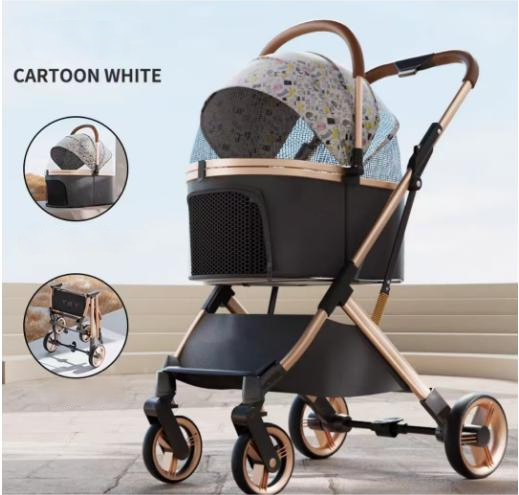
Pet strollers typically feature full-perimeter mesh construction, offering 360-degree visibility while maintaining containment. This design allows the cat to observe approaching stimuli, predict movement patterns, and maintain continuous visual contact with the owner—factors that collectively enhance the cat’s sense of predictability and control over the environment.
2.3 Thermal Regulation and Ventilation
Feline thermoregulation differs significantly from canine physiology. Cats possess a higher baseline body temperature (100.5–102.5°F) and a narrower thermal neutral zone than dogs. Their dense fur coats and limited sweat gland distribution make them particularly susceptible to heat stress during confinement.
Carrier ventilation is typically limited to front-facing mesh panels and occasional side perforations. During solar exposure or warm weather, the enclosed carrier interior can rapidly exceed ambient temperatures by 10–15°F, creating conditions that may precipitate hyperthermia. The dark plastic construction common in many carriers absorbs and retains solar radiation, compounding this effect.
Strollers offer substantially superior ventilation architecture. Multiple mesh panels distributed across all four sides and the roof facilitate cross-ventilation that maintains interior temperatures close to ambient. The elevated position increases air circulation compared to ground-level carriers, while the canopy provides adjustable solar protection without compromising airflow.
3. Safety Engineering Comparison
3.1 Impact Protection and Structural Integrity
Carrier safety engineering focuses primarily on compression resistance—the ability to withstand being stacked or placed under seats. Rigid plastic carriers excel in this metric, providing a protective shell that distributes impact forces and prevents compression of the occupant. This design proves essential for air travel and vehicle transport where external forces may be applied to the container.
Strollers are not designed for compression scenarios and would not provide equivalent protection in stacking or overhead bin contexts. However, for outdoor ambulatory use, strollers offer safety advantages that carriers cannot match:
Protection from underfoot hazards: The elevated compartment eliminates the risk of accidental stepping, tripping, or being struck by bicycles and other wheeled devices that pose constant threats to ground-level pets.
Pavement thermal protection: Strollers completely eliminate paw contact with hot asphalt or cold, chemically treated surfaces—hazards that persist even when cats are carried in carriers, as carriers do not prevent ground contact during transitions.
Escape prevention: Both carriers and strollers rely on closure mechanisms for containment. However, carrier doors can be forced open by determined cats during stress-induced escape attempts. Strollers typically incorporate dual-layered containment: zippered mesh enclosures plus internal leash attachments that provide redundancy.
3.2 Vehicle Transport Considerations
For automobile transport, the safety calculus shifts. Carriers designed with seatbelt routing capabilities can be secured in vehicle seats, providing crash protection through the vehicle’s restraint systems. Strollers, unless specifically designed with automotive safety features, are not intended for use as vehicle restraints and should not be used to transport cats in moving vehicles.
This distinction is critical. The optimal feline transport solution may be a hybrid approach: stroller for outdoor ambulation, carrier for vehicle transport, with the stroller serving as the primary outdoor engagement tool while the carrier fulfills its traditional role for veterinary visits and car travel.
4. Environmental Enrichment and Quality of Life
4.1 The Case for Supervised Outdoor Access
Indoor-only cats, while protected from outdoor hazards, face significant environmental deprivation compared to their free-roaming counterparts. The absence of multisensory stimulation—varied scents, sounds, visual stimuli, and temperature gradients—contributes to obesity, cognitive decline, and behavioral issues in strictly indoor cats.
Veterinary behaviorists increasingly recommend supervised outdoor access as an enrichment intervention for indoor cats, provided it can be accomplished safely. The stroller emerges as the optimal tool for this purpose, enabling cats to experience the full sensory richness of outdoor environments while remaining fully contained and protected.
4.2 Active vs. Passive Transport Modes
Carriers inherently position cats as passive cargo. The cat is carried, with no agency in the movement or pacing of the experience. The carrier’s opaque walls prevent the cat from engaging with the environment in any meaningful way beyond auditory and olfactory stimulation.
Strollers transform the outdoor experience from passive transport to active engagement. The cat can see approaching stimuli, watch passersby, observe birds and squirrels, and maintain orientation to the owner’s position. For cats who demonstrate interest in outdoor environments, stroller rides can become anticipated enrichment activities rather than dreaded disruptions.
User reports consistently describe cats who, after acclimation, voluntarily enter strollers and display calm, curious behavior during outings—including tail-up postures, relaxed ear positions, and slow blinking—indicating positive emotional states.
4.3 Social Facilitation and Human-Feline Bonding
The Pet stroller functions as a social catalyst, rendering the feline passenger visible and accessible to human interaction partners in ways that carriers do not. Cats in carriers are typically hidden from view, their presence often unknown to passersby. Stroller-riding cats frequently attract positive attention, providing social stimulation for cats comfortable with human approach.
For the owner, the stroller eliminates the physical strain of carrying a carrier containing a cat—often 10–20 pounds of combined weight—over any significant distance. This ergonomic advantage enables longer, more frequent outings, strengthening the human-feline bond through shared positive experiences.
5. Stress Response Comparative Analysis
5.1 Carrier-Associated Aversion
Clinical observation reveals that many cats develop strong negative associations with carriers, viewing them as predictors of aversive experiences (veterinary procedures, car travel, unfamiliar environments). This conditioned aversion manifests as hiding when the carrier appears, resistance to entering, and stress behaviors during transport.
The stroller, being a novel object without pre-existing negative associations, offers the opportunity to establish positive conditioned responses from the outset. Through systematic acclimation using positive reinforcement, owners can create strong positive associations with the stroller, transforming it from a transport device into an anticipated enrichment tool.
5.2 Control and Predictability Factors
Feline stress responses are modulated by the cat’s perception of control over its environment. Carriers offer minimal control: the cat cannot see approaching stimuli, cannot retreat from perceived threats, and cannot communicate its desire to depart.
Strollers provide enhanced control through visibility and owner proximity. The cat can observe approaching dogs or unfamiliar humans before they reach the stroller, reducing startle responses. The owner’s ability to stop, change direction, or adjust the canopy in response to the cat’s body language creates a responsive environment that supports the cat’s sense of agency.
6. Acclimation Protocols for Stroller Success
6.1 Feline-Specific Introduction Strategies
Success with strollers requires methodical introduction respecting feline psychology. Unlike dogs, who often accept strollers readily, cats require gradual desensitization protocols that preserve their sense of safety and control.
Phase 1: Static Exploration
Place the stroller in a familiar room with all entrances open. Allow the cat to explore voluntarily at its own pace. Scatter high-value treats inside and around the stroller. Do not close the cat inside during this phase. Duration: several days or until the cat freely enters without hesitation.
Phase 2: Contained Familiarization
Once voluntary entry occurs reliably, begin closing the stroller briefly while remaining in the room. Start with seconds, gradually extending to minutes. Provide continuous treat reinforcement through the mesh openings. The cat must learn that containment does not predict aversive events.
Phase 3: Indoor Movement
With the cat contained, push the stroller slowly through familiar indoor spaces. Monitor stress indicators (flattened ears, tail lashing, vocalization). If distress occurs, return to the previous phase. Progress at the cat’s pace.
Phase 4: Controlled Outdoor Introduction
Begin with brief outings in quiet, familiar outdoor areas (backyard, quiet sidewalk). Keep outings short initially, gradually extending duration as the cat’s comfort increases.
6.2 Pheromone and Enrichment Adjuncts
Synthetic feline facial pheromone sprays applied to the stroller interior can accelerate acclimation by creating a familiar, secure chemical environment. Placing familiar bedding inside the stroller provides olfactory familiarity. Novel treat delivery during stroller sessions further strengthens positive associations.
7. Scenario-Based Selection Framework
7.1 When Strollers Are Superior
Strollers represent the optimal choice for:
Recreational outdoor outings: Parks, neighborhood walks, pet-friendly events
Cats with mobility limitations: Elderly, arthritic, or postsurgical cats who benefit from environmental enrichment without physical exertion
Multi-cat households: Strollers can accommodate multiple cats, enabling simultaneous outings
Extended duration excursions: Owners seeking to integrate cats into their outdoor activities without physical carrying burden
7.2 When Carriers Remain Appropriate
Carriers maintain their essential role for:
Automotive transport: Secured carriers provide crash protection that strollers cannot
Air travel: Carriers meeting airline specifications remain the only option
Veterinary visits: For short trips to clinical settings, carriers fulfill their traditional function
Emergency situations: Carriers are essential evacuation equipment and should be maintained regardless of stroller ownership
7.3 The Optimal Hybrid Approach
The technically optimal solution for most cat owners is to maintain both a carrier for vehicle transport and a stroller for recreational outings. This approach leverages the safety advantages of each device while expanding the range of outdoor experiences available to the cat.
8. Technical Specifications for Stroller Selection
8.1 Dimensions and Access
Cats require less horizontal space than similarly sized dogs but place greater value on vertical clearance. Look for strollers with:
Adequate standing height: The cat should be able to stand with ears erect without contacting the canopy
Multiple access points: Top-loading capability facilitates easier entry for reluctant cats
Secure closures: Zippers with dual pulls allow operation from either side
8.2 Ventilation and Visibility
Optimal feline strollers feature:
Full-perimeter mesh: Enables 360-degree visibility and cross-ventilation
Roll-up canopy: Allows sun protection without compromising airflow
Mesh density: Fine enough to prevent paw or claw protrusion
8.3 Suspension and Ride Quality
Cats are sensitive to jarring movements. Strollers intended for feline use should include:
Adequate suspension: Shock-absorbing wheel systems prevent vibration transmission
All-terrain capability: Larger wheels and sealed bearings improve ride quality on varied surfaces
9. Contraindications and Limitations
9.1 Behavioral Unsuitability
Not all cats are stroller candidates. Cats with:
Severe noise phobias
Extreme neophobia (fear of novelty)
History of trauma associated with confinement
Aggressive responses to unfamiliar humans or animals
may experience exacerbated stress rather than enrichment. For these individuals, enrichment should focus on indoor alternatives.
9.2 Health Precautions
Strollers should not be used for:
Unvaccinated cats in areas with disease risk
Cats with contagious illnesses
Immediate postoperative periods where activity restriction is required
Conclusion
The comparative analysis of pet strollers versus carriers for cats yields a nuanced conclusion: for most cats and most outdoor usage scenarios, the stroller provides superior welfare outcomes, offering enhanced environmental enrichment, reduced stress markers, and greater owner convenience. The elevated vantage point aligns with feline evolutionary preferences for height and visibility. The ventilation architecture prevents heat stress that commonly occurs in carriers. The visibility and owner proximity provide the predictability and control that modulate feline stress responses.
However, this conclusion does not render carriers obsolete. Carriers remain essential for automotive transport, air travel, and emergency preparedness. The optimal feline transport strategy is complementary rather than competitive: carriers for vehicle travel and veterinary visits, strollers for recreational outdoor enrichment.
For cat owners seeking to enrich their indoor companions’ lives through safe, controlled outdoor experiences, the pet stroller represents a significant advancement over traditional carrier transport. When selected with appropriate technical specifications and introduced through systematic, feline-appropriate acclimation protocols, the stroller becomes not merely a transport device but a gateway to expanded environmental engagement, enhanced human-feline bonding, and improved quality of life for both parties.
For more about Pet Stroller vs Carrier: Which Is Better for Cats? you can pay a visit to https://www.petgearstroller.com/product/ for more info.