Pet Stroller for Cat 2026 Buying Guide: Top Rated, Waterproof & All-Terrain Options
March 30, 2026
In 2026, selecting a pet stroller for an indoor cat demands rigorous evaluation of structural engineering, material science, kinematic performance, and environmental resilience. Indoor felines, typically weighing 8–15 lb with resting metabolic rates that limit thermoregulatory efficiency, require mobile enclosures that isolate high-frequency road vibrations (5–15 Hz), maintain internal cabin temperatures between 68–75 °F, and prevent escape while permitting 360° visual orientation. The 2026 market emphasizes two dominant performance vectors—waterproof integrity and all-terrain capability—because urban and suburban owners increasingly combine apartment living with park trails, light rain exposure, and variable pavement conditions. This technical buying guide dissects the defining engineering characteristics of each major stroller type without referencing specific implementations. Analysis centers exclusively on chassis dynamics, wheel-suspension systems, cabin enclosure materials, ventilation mechanics, restraint interfaces, and folding kinematics. At the conclusion, usage scenarios are derived directly from these quantified feature sets to align device architecture with real-world operational demands.
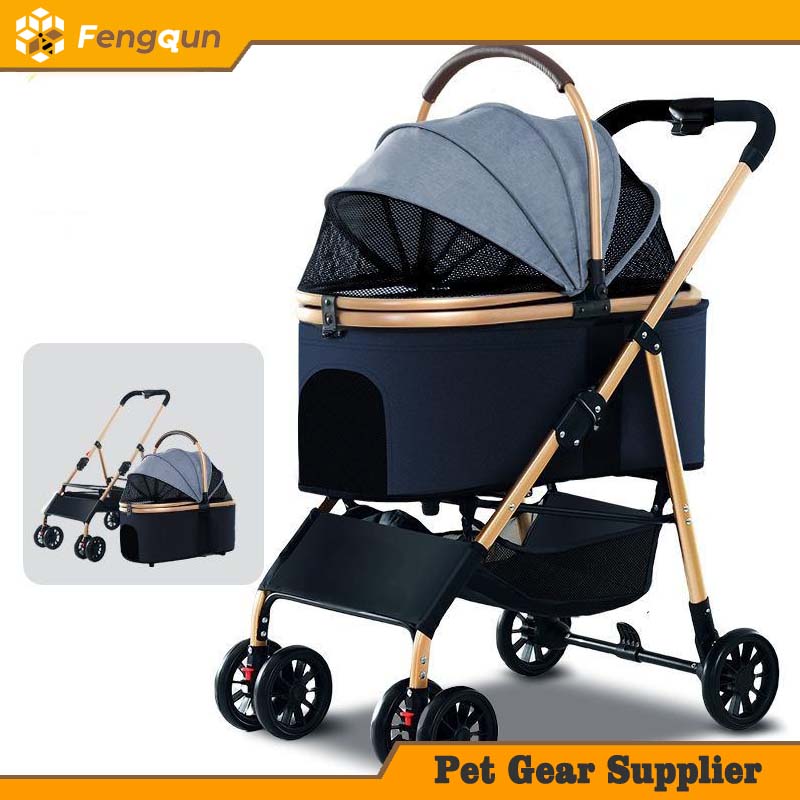
All-Terrain Stroller Configurations: Wheel Diameter, Suspension Tuning, and Frame RigidityAll-terrain strollers prioritize traversal over mixed surfaces—concrete, gravel, grass, mulch, or packed dirt—where rolling resistance and obstacle negotiation become critical. Wheel systems in these designs employ diameters of 8–12 inches, constructed from high-density EVA foam (Shore A 60–70) or pneumatic tires with inner tubes rated to 25–35 psi. Larger diameters reduce rolling resistance by 30–40 % on deformable surfaces compared with smaller casters, as contact patch length increases and peak ground pressure decreases. Tread patterns feature 4–6 mm deep lugs for mechanical interlocking with loose aggregate, delivering a coefficient of friction exceeding 0.6 on wet grass.Suspension subsystems are engineered around coil-over or elastomeric dampers tuned to a natural frequency of 1.5–2.0 Hz. This isolates vertical accelerations transmitted to the cabin floor to below 0.4 g RMS under typical sidewalk frequencies. Dual rear fixed wheels (track width 18–22 inches) combined with a single 360° swivel front wheel create a three-point contact geometry that maintains stability on lateral slopes up to 12°. Torsional stiffness of the chassis—fabricated from 6061-T6 aluminum tubing with 1.25–1.5 inch diameters and 0.065 inch wall thickness—exceeds 150 Nm/deg, minimizing frame twist under 40 lb dynamic payload. This rigidity prevents harmonic resonance that could amplify cabin motion at stride frequencies of 1–2 Hz during brisk walking.Cabin floors in all-terrain variants sit 10–14 inches above ground to clear 4–6 inch obstacles without bottoming out. Underside storage baskets (load-rated 15–25 lb) are positioned low to preserve the overall center of gravity below 18 inches, yielding a tip-over angle greater than 25° even with a 12 lb cat shifting laterally. Brake mechanisms incorporate rear drum or disc locks with one-handed lever actuation and a holding torque sufficient for 20° inclines. However, the trade-off appears in maneuverability: minimum turning radius exceeds 40 inches, and empty weight typically ranges 18–25 lb, elevating push force requirements by 15–20 % on flat surfaces relative to lighter designs. Ventilation remains secondary; side mesh panels achieve 150–200 CFM airflow under 4 mph forward motion, adequate for canine users but marginal for feline heat dissipation without auxiliary shade flaps.
Waterproof Stroller Variants: Fabric Hydrostatic Resistance, Seam Sealing, and Condensation ManagementWaterproof pet strollers address precipitation, dew, and splash exposure through multilayer fabric engineering. Primary canopy and cabin materials consist of 600–1000 denier polyester or nylon substrates coated with thermoplastic polyurethane (TPU) or polyvinyl chloride (PVC) laminates, delivering hydrostatic head ratings above 2000 mm (equivalent to sustained 2-hour rainfall at 50 mm/h). Double-stitched seams receive heat-taped or RF-welded waterproofing strips, eliminating capillary wicking at needle punctures. UV stabilizers (UPF 50+) are embedded to prevent photodegradation after 500+ hours of exposure.Cabin geometry in waterproof-focused designs emphasizes full enclosure with zippered or magnetic-seal access ports. Mesh ventilation zones are protected by overlapping storm flaps or roll-up panels that maintain 250–300 CFM airflow when partially opened while blocking direct water ingress. Internal condensation is managed via micro-perforated vapor-permeable membranes (MVTR >5000 g/m²/24 h) laminated to the roof, allowing moisture egress without compromising hydrostatic integrity. Floor liners employ antimicrobial-treated, machine-washable EVA foam (0.5–0.75 inch thick) with raised edges forming a shallow basin to contain spills or urine accidents.Chassis and wheel components receive hydrophobic powder coatings or anodized finishes to resist corrosion from road salt or puddles. Wheel bearings incorporate sealed rubber gaskets (IP65 equivalent), extending service life beyond 3000 km of wet-condition rolling. Weight remains moderate (14–20 lb empty) because waterproof laminates add only 10–15 % mass compared with standard mesh. The primary limitation is thermal buildup: sealed configurations can elevate internal temperatures by 4–7 °F within 15 minutes at ambient 80 °F unless ventilation flaps are actively managed. Maneuverability mirrors urban designs—four-wheel swivel casters (6–8 inch diameter) yield turning radii under 32 inches—but obstacle clearance drops to 2–3 inches, restricting use on tall grass or curbs exceeding 4 inches.
Hybrid Waterproof All-Terrain Strollers: Integrated Material and Kinematic SynergiesHybrid designs merge all-terrain wheel-suspension architecture with waterproof enclosure technology, representing the most complex engineering integration. Wheel assemblies combine 8–10 inch pneumatic or foam-filled tires with dual suspension arms (front and rear) tuned to 1.8 Hz natural frequency, achieving <0.35 g RMS cabin vibration on mixed terrain. Track width expands to 20–24 inches for enhanced lateral stability, while chassis tubing incorporates internal polymer dampers to attenuate both road and wheel-borne noise.Cabin fabrics employ the same TPU-laminated 1000-denier base as dedicated waterproof models, yet incorporate modular mesh panels with magnetic storm covers that transition between 80 % open-area ventilation (dry conditions) and full hydrostatic seal (wet conditions). Air exchange rates reach 280–350 CFM at 5 mph when flaps are deployed, sufficient to limit cabin ΔT to <3 °F above ambient. Floor height is optimized at 11–13 inches, balancing obstacle clearance with low center-of-gravity loading. Secondary safety features include redundant front swivel locks and harness anchors rated to 5× maximum feline weight (static tensile >150 lb).Folding kinematics utilize aircraft-grade quick-release pins and scissor hinges, collapsing the assembly to 28–32 inches length and 2.8–3.5 cubic feet volume within 20–25 seconds. Empty weight averages 20–24 lb, reflecting the additive mass of reinforced wheels and sealed fabrics. Durability metrics include frame fatigue life exceeding 5000 km equivalent and fabric abrasion resistance passing 50,000 Taber cycles. The engineering compromise is increased rotational inertia: push force on inclines rises 12–18 % versus pure urban models, yet remains manageable for operators of average strength.
Lightweight Urban Four-Wheel Strollers Adapted for Inclement or Mixed UseAlthough not inherently all-terrain or waterproof, compact four-wheel swivel-caster strollers (6–8 inch wheels, no dedicated suspension) serve as baseline platforms frequently upgraded with aftermarket wheel and fabric kits. Chassis torsional stiffness hovers at 100–120 Nm/deg with 1-inch aluminum tubing, enabling sub-30-inch turning radii and empty weights of 12–16 lb. Cabin mesh achieves >300 CFM baseline airflow but lacks factory hydrostatic protection. These variants excel in vibration isolation when fitted with viscoelastic foam pads (reducing transmitted acceleration to <0.25 g), yet require operator vigilance on uneven surfaces where 3-inch obstacle clearance becomes limiting. Waterproof retrofits involve slip-on TPU covers, while all-terrain conversion swaps casters for larger foam tires, albeit at the cost of added 4–6 lb and slightly degraded folding compactness.
Quantitative Feature Matrix and Performance Trade-offsAcross types, key metrics diverge predictably. All-terrain configurations deliver superior rolling resistance coefficients (0.02–0.04 on grass vs. 0.06–0.08 for urban casters) and obstacle clearance (>4 inches) but sacrifice maneuverability and weight. Waterproof variants guarantee zero water ingress at 2000 mm hydrostatic head and MVTR >5000 g/m²/24 h, yet constrain ventilation unless modular flaps are utilized. Hybrids balance both vectors at the expense of 15–20 % higher empty mass and push force. Vibration transmission remains lowest in lightweight urban platforms (<0.25 g RMS) and highest in basic all-terrain without tuned dampers (up to 0.5 g). Cabin volume-to-cat-mass ratio should exceed 1.8:1 for stress reduction, with headroom fixed at 12–15 inches to accommodate feline vertical exploration without escape leverage.
Recommended Usage Scenarios Derived from Feature AnalysisFor apartment dwellers in temperate climates with daily sidewalk routes and occasional drizzle, prioritize waterproof urban four-wheel strollers. Their compact folded volume (<2.8 cubic feet), low push force (<7 lb on flat), and high ventilation efficiency support 20–40 minute outings without thermal stress or storage inconvenience in elevators. Vibration isolation below 0.25 g protects senior cats with osteoarthritis, while sealed fabrics eliminate post-rain cleanup.Owners accessing suburban parks with 30–50 % grass or gravel paths require all-terrain configurations. Larger wheels and 1.5–2.0 Hz suspension maintain cabin stability and <0.4 g acceleration, enabling safe enrichment for active indoor cats that exhibit pacing or escape attempts on uneven terrain. Waterproof upgrades become essential if routes include morning dew or light showers; otherwise, standard all-terrain models suffice in dry seasons.Multi-environment households—urban commutes combined with weekend trail walks—benefit from hybrid waterproof all-terrain strollers. Integrated 280+ CFM modular ventilation, >2000 mm hydrostatic protection, and 4+ inch obstacle clearance accommodate year-round use across pavement, grass, and light rain without compromising feline thermoregulation or operator ergonomics. The 20–24 lb empty weight remains practical for car trunk storage or public transit, provided the operator accepts the modest increase in push effort on inclines.In regions with frequent heavy rainfall (>50 mm/h events) and predominantly flat urban infrastructure, dedicated waterproof strollers with four-swivel casters deliver optimal performance. Full enclosure prevents cabin flooding, while quick-deploy mesh flaps restore ventilation on demand. These units minimize daily maintenance and support short, frequent outings for heat-sensitive or neophobic cats.For senior or mobility-limited cats (reduced leaping ability <4× body length), any configuration must emphasize sub-0.3 g vibration damping and low cabin floor height. All-terrain hybrids excel here when routes include minor elevation changes, whereas lightweight waterproof models are preferred for strictly indoor-to-sidewalk transitions.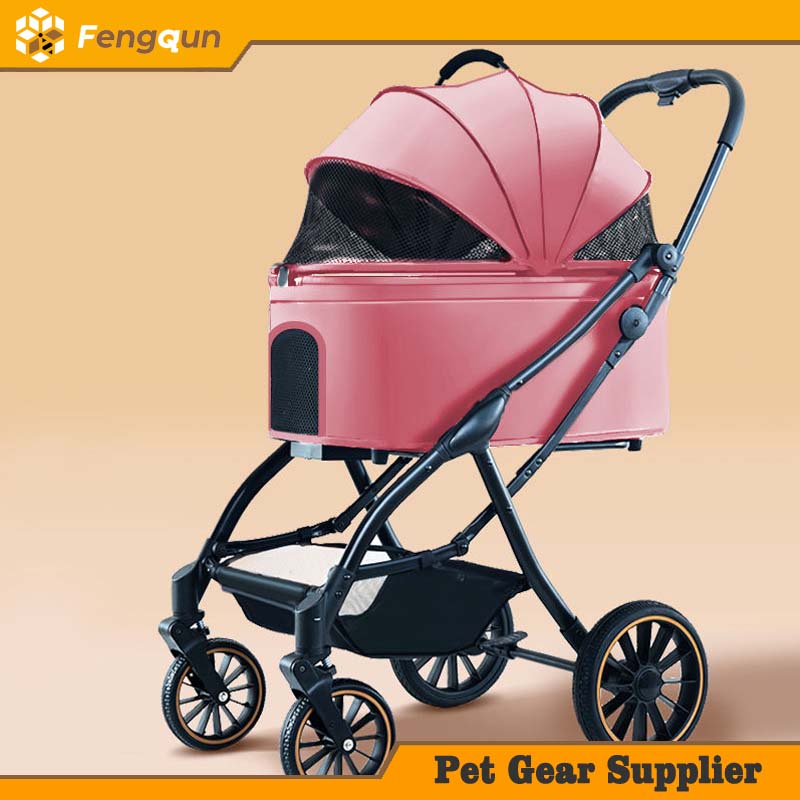
In summary, 2026 pet stroller selection for indoor cats hinges on matching chassis rigidity, wheel-suspension tuning, fabric hydrostatic and vapor-transmission properties, and kinematic compactness to the precise topography, weather exposure, and feline biomechanics of intended use. All-terrain emphasis maximizes surface versatility at the cost of weight and turning radius; waterproof emphasis guarantees environmental isolation at the cost of potential heat management; hybrids provide balanced engineering for versatile owners. By quantifying these trade-offs against daily route profiles, owners achieve a technically optimal mobile habitat that enhances feline welfare without introducing unnecessary mechanical compromises. For more about Pet Stroller for Cat 2026 Buying Guide: Top Rated, Waterproof & All-Terrain Options, you can pay a visit to https://www.petgearstroller.com/product/ for more info.






