Pet Gear 3-Wheel Jogging Stroller for Dogs: A Dive into Shock Absorbers and Lockable Front Wheels
For the active pet owner, the morning ritual has evolved beyond clipping on a leash. It now involves harnessing the same spirit of outdoor adventure for our canine companions who may be aging, injured, small, or simply in need of a break during a long run or hike. Enter the specialized world of pet jogging strollers, with models like the Pet Gear 3-Wheel Jogging Stroller standing out as a pinnacle of design tailored for performance and safety. Moving beyond the basic concept of a "cart for dogs," these strollers incorporate sophisticated engineering principles borrowed from human athletics and mobility equipment. This article provides a technical examination of two of its most critical features: the shock absorption system and the lockable front wheel, explaining how they work in concert to create a stable, smooth, and secure ride for your pet.
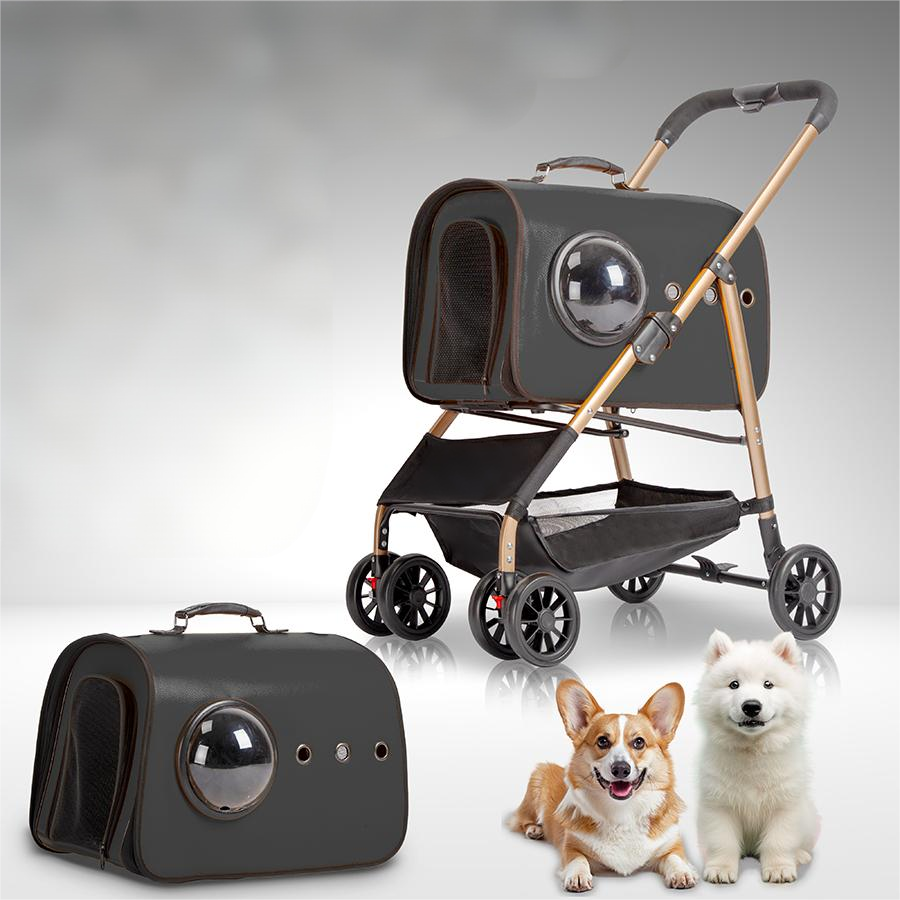
The Foundation – Why Jogging Strollers, Not Walking Strollers?
Before dissecting the components, it's essential to understand the unique demands of jogging versus walking. A standard walking pet gear 3-wheel jogging stroller is designed for low-speed, multi-directional mobility on paved surfaces. Jogging, by contrast, involves:
Higher Sustained Speeds: Increasing forward momentum and kinetic energy.
Repetitive Impact Forces: Each footfall transmits a shock wave through the frame.
Predominantly Forward Motion: With limited need for tight, low-speed cornering.
A human jogging stroller addresses these with a lightweight, aerodynamic frame, large bicycle-style wheels, and a fixed front wheel for tracking stability. The Pet Gear stroller adapts this philosophy for canine passengers, who are more sensitive to vibration and jostling than a human infant. The three-wheel configuration—typically one in front, two in the rear—provides a stable tripod base that remains balanced even when navigating minor cambers or uneven surfaces. The large, air-filled tires (often 12-16 inches) are the first line of defense against bumps, but they are only part of the solution. The real engineering magic lies in how the stroller manages the forces that get past the tires.
Technical Analysis of the Shock Absorption System
Shock absorbers, or dampers, are fundamentally energy dissipation devices. Their job is to convert the kinetic energy of an impact (a bump) into another form of energy (usually heat) that can be safely dispersed, thereby smoothing out the ride.
1. The Physics of the Ride:
When a stroller wheel hits an obstacle—a crack in the pavement, a curb, or a rock—it experiences a vertical acceleration. Without damping, this energy transfers directly through the rigid frame to the occupant, resulting in a jarring, potentially harmful bounce. For a dog, this is not just uncomfortable; it can exacerbate arthritis, injure healing surgical sites, or cause anxiety.
2. Components of the System:
In a quality pet jogging stroller like the Pet Gear, the shock absorption is a multi-layered system:
Primary Layer: Pneumatic (Air-Filled) Tires: These are the first and most effective shock absorbers.The column of air inside the tire compresses upon impact, absorbing a significant amount of the initial force. Larger tires present a greater volume of air and a longer contact patch, which rolls over small imperfections more easily than small, solid plastic wheels.
Secondary Layer: Spring-Based Suspension: This is often what is visibly marketed as the "shock absorber." A coil spring is mounted between the axle assembly and the main frame. When the wheel hits a bump, the spring compresses, absorbing the energy by converting it into potential energy stored within the spring's coils. However, a spring alone is insufficient; it would rebound with equal force, causing the stroller to oscillate up and down like a pogo stick.
Tertiary Layer: Integrated Dampers (The True "Shock Absorber"): This is the critical component that works with the spring. A damper, typically a hydraulic or elastomeric unit, controls the spring's release of energy. It forces the stored potential energy to dissipate as heat by pushing fluid through small valves (hydraulic) or flexing a polymer (elastomeric). This "damping" action prevents rebound oscillation, ensuring the frame settles quickly and smoothly after an impact. The result is a controlled, single compression-and-return cycle per bump.
3. Benefits for the Canine Passenger:
Reduced Vibration: Constant high-frequency vibration from rough pavement is fatiguing and stressful. A good suspension system filters this out.
Impact Protection: Major jolts from curbs or potholes are mitigated, protecting joints and surgical sites.
Enhanced Stability: By keeping the wheels in better contact with the ground, suspension improves overall control and reduces the risk of tipping on uneven terrain.
Comfort Equals Compliance: A smooth ride ensures your pet is relaxed and happy to use the stroller, making it a sustainable solution for their mobility needs.
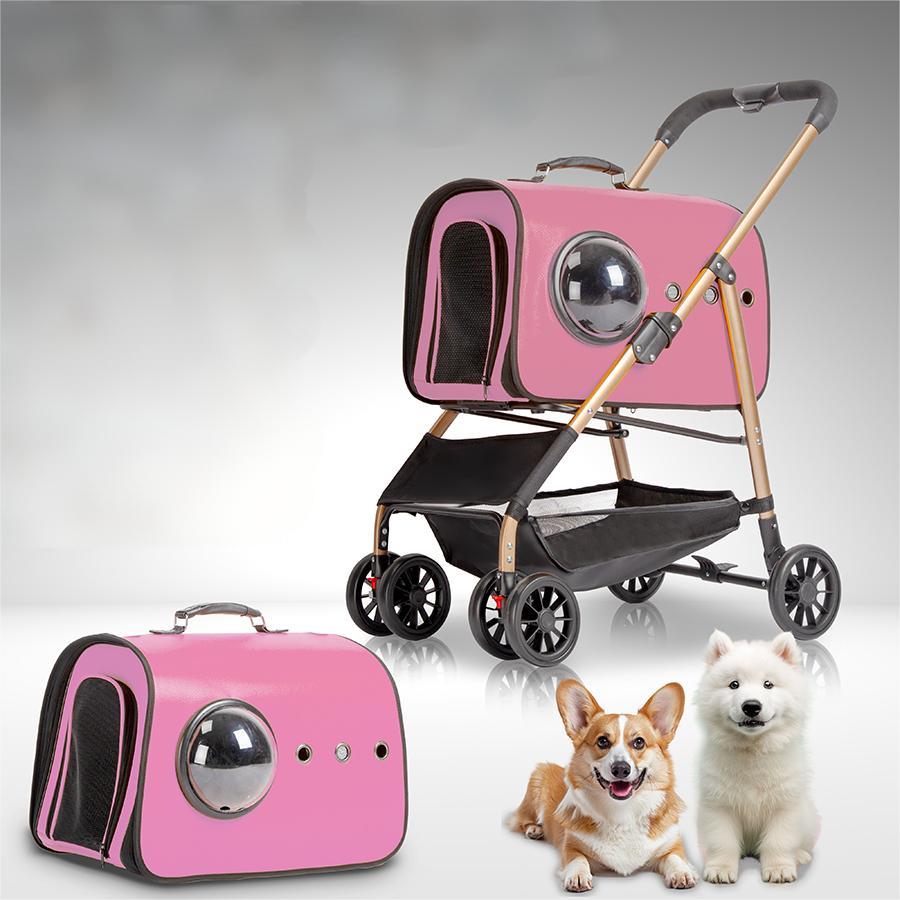
The Lockable Front Swivel Wheel: Precision Steering Dynamics
The front wheel configuration is the cornerstone of a stroller's handling character, presenting a fundamental trade-off between maneuverability and high-speed stability.
1. Swivel Mode: The Agility Configuration
Mechanism: In swivel mode, the front wheel is mounted on a pivot (kingpin) with a bearing system, allowing it to rotate 360 degrees freely, castering behind the direction of travel.
Function: This allows for zero-radius turning. You can pivot the stroller on the spot, navigate tight store aisles, or make subtle directional changes while walking at low speeds with minimal effort. The castering action means the wheel automatically aligns itself with the direction of motion, much like the wheels on a shopping cart.
Drawback at Speed: During a jog or run, this free-swiveling design becomes a liability. Any uneven force—a slight camber in the road, a one-handed push, or an uneven pavement joint—can cause the front wheel to turn unintentionally. This leads to "shimmy" or "speed wobble," where the wheel oscillates left and right. This is energetically inefficient for the runner, who must constantly correct the steering, and potentially unsafe, as it can veer off course unexpectedly.
2. Locked Mode: The Performance Configuration
Mechanism: The lockable function engages a physical pin, clamp, or brake that solidly fixes the front wheel's pivot, preventing any rotation. The wheel is now in a fixed, forward-facing position, effectively turning the stroller into a trike.
Function & Physics: A locked front wheel provides directional stability. Once aimed, it wants to continue in a straight line due to the gyroscopic effect of the rotating wheel and the trail geometry built into the fork. Trail is the distance between the point where the steering axis intersects the ground and the point where the wheel contacts the ground. Positive trail creates a self-centering force, making the stroller stable and predictable at higher speeds. Jogging with a locked wheel feels secure; the stroller tracks straight with minimal input, allowing the runner to maintain rhythm and posture.
Consideration: Turning requires a deliberate, leaning "tilt-and-steer" technique, similar to a bicycle, where you lean the stroller slightly and push on the handlebar to guide the rear wheels around the corner. This is less agile but perfectly suited for the wide arcs of jogging paths.
3. The Synergy: Adaptive Handling for Multi-Use Scenarios
The genius of the lockable swivel wheel is its adaptability. It acknowledges that a pet owner's outing is often multi-modal:
Phase 1 (Preparation): Swivel mode for easy maneuvering from house to car, through parking lots.
Phase 2 (Performance): Locked mode for a safe, stable 5-mile run on a bike path.
Phase 3 (Recovery/Errands): Unlocked back to swivel mode for a leisurely walk home or a trip through a pet-friendly market.
This single feature transforms the stroller from a specialized jogging tool into a versatile, everyday pet mobility device.
Integration and Practical Considerations
These systems do not operate in isolation. The shock absorbers and locked front wheel work together to create a cohesive performance profile. A stable, tracking front wheel (locked) allows the suspension to work most effectively, dealing purely with vertical impacts rather than being confused by lateral wheel movements.
When selecting and using a Pet Gear 3-Wheel Jogging Stroller:
Weight Capacity & Distribution: Always respect the manufacturer's stated weight limit. An overloaded stroller will overwhelm the suspension, reduce braking effectiveness, and strain the frame and wheel bearings.
Terrain Matching: While the suspension handles moderate off-road use like hard-packed gravel or grass, these are primarily designed for paved surfaces. Extreme terrain can damage components.
Maintenance is Key: Regularly check tire pressure (crucial for the primary suspension), inspect the locking mechanism for wear or debris, and ensure all frame joints are tight. Listen for new squeaks or rattles that may indicate a damper or bearing issue.
Pet Safety & Acclimation: The technical features are for nothing if your pet is insecure. Always use the integrated safety tether and harness. Acclimate your dog slowly to the stroller, starting with short, positive sessions while stationary, then walking in swivel mode, before attempting a jog with the wheel locked.
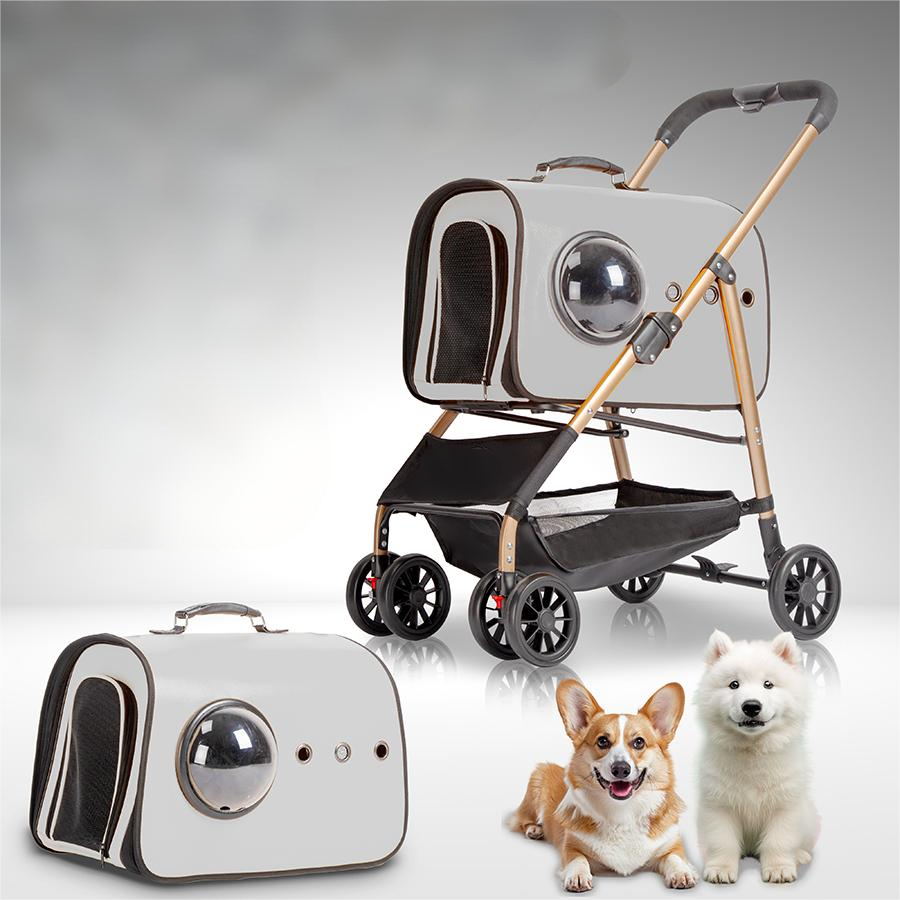
Conclusion
The Pet Gear 3-Wheel Jogging Stroller for Dogs is far more than a novelty item. It is a thoughtfully engineered piece of mobility equipment that applies fundamental principles of physics and mechanical design to solve a specific set of problems. The multi-layer shock absorption system directly addresses the biological need for a smooth, low-vibration ride, protecting the physical well-being of the canine passenger. The lockable front swivel wheel intelligently navigates the engineering trade-off between low-speed agility and high-speed stability, providing adaptive handling that mirrors the varied pace of an active pet owner's life.
Together, these features build a product that offers not just convenience, but confidence. Confidence for the owner to maintain an active lifestyle without leaving their pet behind. Confidence for the pet to enjoy the outdoors safely and comfortably, regardless of age or ability. In the end, this technical sophistication serves a simple, profound purpose: strengthening the bond of adventure between human and dog, one smooth, stable mile at a time.
For more about pet gear 3-wheel jogging stroller for dogs: a dive into shock absorbers and lockable front wheels, you can pay a visit to FengQun Pet Gear Supplier for more info.






