Optimizing the Folding Mechanism of a Pet Stroller Shopping Cart: Balancing Storage and Stability
The pet stroller shopping cart represents a convergence of two growing markets: pet ownership and urban convenience. This hybrid product must meet the demanding needs of pet owners who require a safe, comfortable transport solution for their animals while also functioning as a practical shopping aid. The central engineering challenge lies in the folding mechanism—it must allow the device to collapse into a compact form for storage and transport while maintaining robust structural stability when deployed. Achieving this balance requires careful consideration of mechanical design, material selection, and user ergonomics. This article explores the principles and practices for optimizing this critical component.
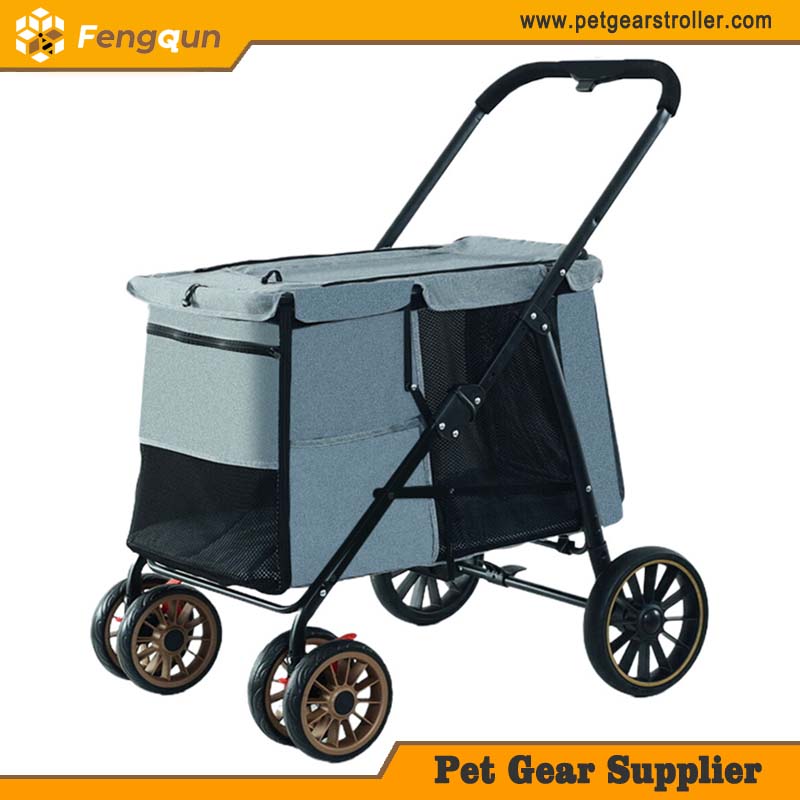
The Core Challenge: Compactness vs. Stability
The fundamental tension in designing any folding mechanism is between compactness and stability. A more compact fold typically requires more joints and smaller structural elements, which can introduce potential failure points and reduce rigidity. Conversely, an overly rigid structure may be bulky and difficult to fold.
For a pet stroller shopping cart, the stability requirements are particularly stringent. The deployed structure must support not only shopping loads (often unevenly distributed) but also the weight and movement of a pet, which can shift dynamically. Simultaneously, the folded dimensions must be manageable for apartment living, car trunks, and public transport.
Principles of Optimal Folding Mechanism Design
1. Kinematic Design and Joint Placement
The arrangement of joints determines both the folding pattern and the structural integrity. Common effective approaches include:
Scissor Mechanisms: Often used in umbrella strollers, scissor mechanisms allow for a compact fold by collapsing the frame laterally. The intersecting members provide natural triangulation in the deployed state, enhancing side-to-side stability. However, this design can sometimes compromise front-to-back rigidity.
Centralized Folding Hub: A single, robust hub where multiple frame members converge can simplify the folding process. When designed with multiple locking positions (deployed, partially folded, fully folded), this approach offers user-friendly operation and clear visual indicators of lock status.
Multi-Stage Folding: Instead of a single folding action, consider a sequential fold where different sections collapse independently. For example, the handle might fold first, followed by the chassis, and finally the wheels. This can distribute mechanical complexity while maintaining strength in critical areas.
2. Locking Systems: The Key to Deployed Stability
The locking mechanism is arguably more important than the folding joints themselves. It must be:
Fail-Safe: Designed so that any failure defaults to the locked position, never accidentally releasing during use.
User-Intuitive: Easily operable with one hand, often while holding a leash or managing a pet. Audible or tactile confirmation (a "click") is highly desirable.
Durable: Withstand thousands of cycles without significant wear.
Effective locking designs include:
Positive Pin Locks: A spring-loaded pin that engages a hole in the adjoining member. Highly reliable but can require precise alignment.
Over-Center Toggle Latches: These mechanisms snap past a central point, making them naturally resistant to vibration-induced unlocking.
Sleeve Locks: A sliding collar that surrounds the joint, preventing articulation. These distribute load well and are visually easy to verify.
3. Strategic Triangulation in the Deployed State
Even with multiple joints, stability can be achieved through intelligent geometry. The principle of triangulation—using triangular arrangements of members—is fundamental to rigid structures. The design challenge is to create triangles in the deployed state that break down elegantly during folding. This can be achieved with strategically placed telescoping braces or secondary support arms that deploy automatically when the frame is opened.
4. Load Path Management
Every force applied to the stroller—from a bouncing pet to a loaded shopping basket—must travel through a clear, uninterrupted path to the ground. Folding joints should be positioned away from high-stress areas whenever possible. Where a joint must reside in a load path, its design must ensure that forces are transmitted through the locking mechanism and bearing surfaces, not through the pivot pins alone.
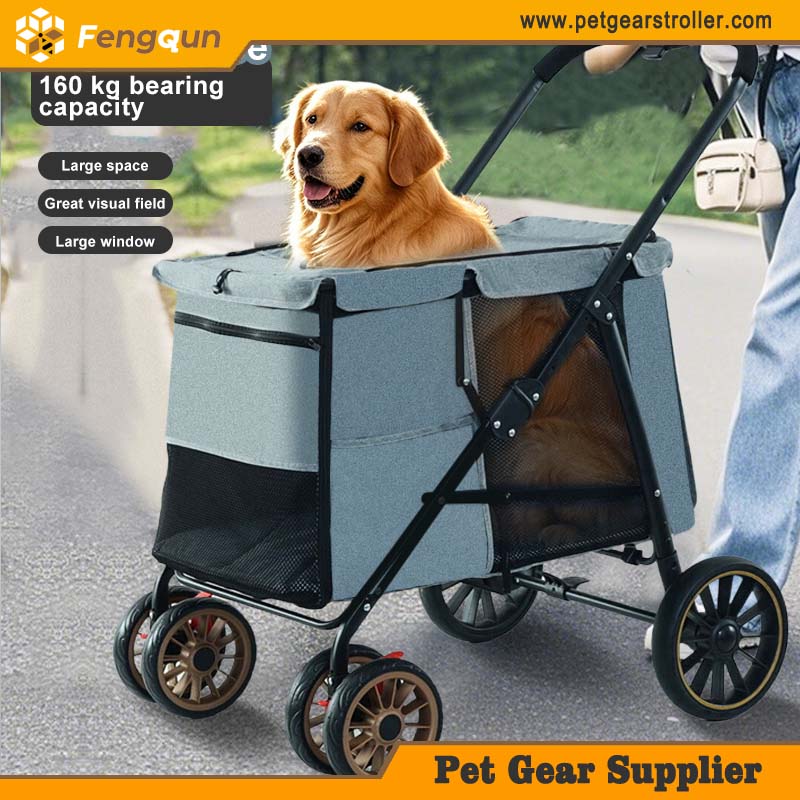
Material Selection for Hinge Components
The hinge components are the heart of the folding mechanism, subject to repeated cyclic loading, friction, and potential impact. Material selection here is critical for longevity, performance, and safety.
1. Metals: The Traditional Choice for Strength
Stainless Steel (especially 300 Series): Offers an excellent combination of strength, corrosion resistance, and fatigue life. Ideal for pivot pins, locking pins, and high-stress brackets. Its durability justifies its higher weight and cost in critical applications. Passivation treatment can further enhance corrosion resistance.
Aluminum Alloys (e.g., 6061-T6 or 7075-T6): Where weight is a premium concern, aluminum alloys provide good strength-to-weight ratios. They are suitable for lever arms and housing components. However, aluminum is prone to galvanic corrosion when in contact with dissimilar metals and has lower wear resistance than steel. Anodizing can improve surface hardness and corrosion resistance.
Brass and Bronze: Often used as bushings or bearings within hinges. Their natural lubricity reduces friction, they resist corrosion, and they dampen vibration. Phosphor bronze, in particular, is excellent for high-load, low-rotation applications.
2. Engineering Polymers: Lightweight and Corrosion-Free
Acetal (POM - Polyoxymethylene): Known by trade names like Delrin, acetal is a stiff, strong plastic with excellent fatigue resistance and low friction. It is ideal for gears, latch components, and low-load pivot bushings. It retains its properties well in wet environments.
Nylon (PA - Polyamide): Particularly glass-filled nylon (e.g., PA66 GF30), which offers increased stiffness and strength. Nylon is tough, abrasion-resistant, and can be used for complex hinge housings and locking parts. It absorbs moisture, which can slightly alter its dimensions, so this must be accounted for in design tolerances.
PEEK (Polyether Ether Ketone): A high-performance polymer with outstanding mechanical properties, chemical resistance, and ability to perform at high temperatures. While expensive, it is justified for small, critical components in premium products.
3. Composite Materials: The High-Performance Option
Carbon Fiber Reinforced Polymers (CFRP): For ultra-lightweight and extremely stiff components, CFRP is unmatched. It can be used for lever arms or structural plates within a hinge assembly. The cost is high, and design must be meticulous to handle point loads and bearing stresses.
4. Material Pairings and Wear Considerations
The interaction between moving parts is crucial. A common and effective strategy is to pair dissimilar materials to reduce galling and adhesive wear. Examples include:
A stainless steel pin rotating in a brass or acetal bushing.
An aluminum lever actuating against a hardened steel strike plate.
Surface Treatments such as nitriding (for steel), hard-coat anodizing (for aluminum), or PTFE impregnation (for polymers) can drastically improve wear resistance and service life.
Integrating Ergonomic and Safety Considerations
The best mechanical design fails if users find it difficult or unsafe. Optimization must include:
Finger Pinch Protection: Folding mechanisms should be designed to enclose moving joints or provide shields to prevent accidental pinching—a crucial feature when pets and children are nearby.
Intuitive Operation: The sequence of unlocking and folding should feel natural. Color-coding, clear symbols, and intentional detents can guide the user.
Dual-Action Unlocking: For primary safety locks, consider a two-step process (e.g., press and slide) to prevent accidental collapse.
Testing and Validation
An optimized design must be validated through rigorous testing:
Cycle Testing: A minimum of 10,000 open-close cycles without failure or significant increase in operating force.
Load Testing: Static and dynamic load tests in the deployed state, simulating maximum pet weight, shopping load, and impact forces.
Environmental Testing: Exposure to humidity, temperature extremes, and corrosive elements (like road salt) to ensure material choices are sound.
User Testing: Observing real users, especially those with limited strength or dexterity, to identify unforeseen operational hurdles.
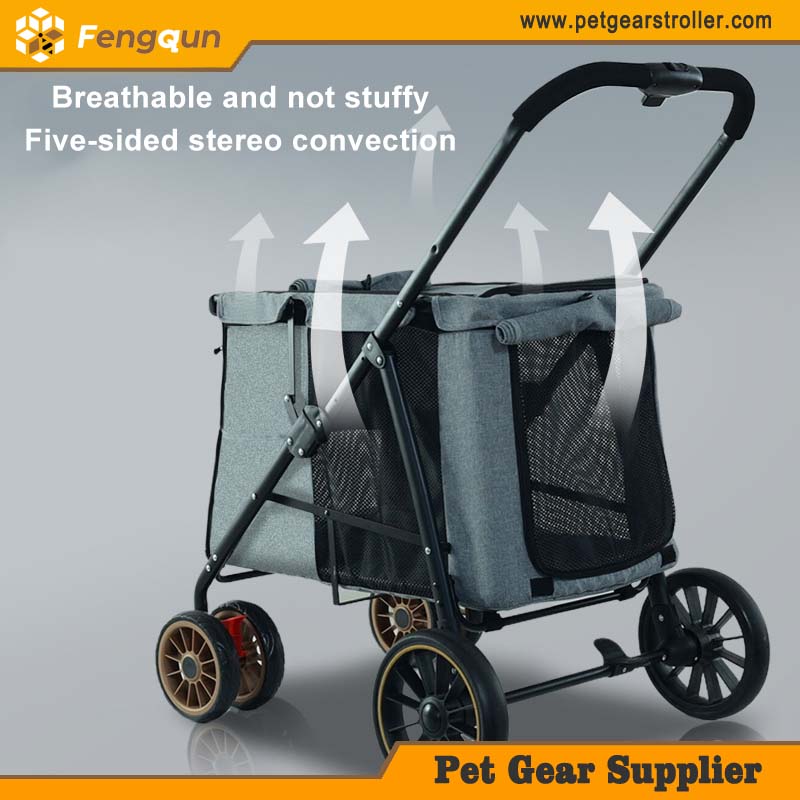
Conclusion
Optimizing the folding mechanism of a pet stroller shopping cart is a multidisciplinary exercise in mechanical design and materials science. The goal is a harmonious solution that disappears into the background for the user—offering effortless, reliable folding and unwavering stability when in use. This is achieved by employing intelligent kinematic designs that maximize rigidity through geometry, implementing robust and intuitive locking systems, and selecting material pairings that ensure longevity and smooth operation.
The ideal hinge will likely be a hybrid: using stainless steel or aluminum for high-stress structural elements, paired with engineered polymers for bushings and low-friction components, all protected by thoughtful ergonomic design. By prioritizing both the mechanical and human factors, designers can create a product that truly enhances the urban life of pets and their owners, proving that convenience and strength need not be mutually exclusive. The final product stands as a testament to thoughtful engineering—a seamless blend of form, function, and furry companionship.
For more about optimizing the folding mechanism of a pet stroller shopping cart: balancing storage and stability, you can pay a visit to FengQun Pet Gear Supplier for more info.






