Navigating Every Terrain: How the Twins Pets Stroller’s Wheel Engineering Masters Diverse Surfaces
For multi-pet owners, the promise of a simultaneous stroll with two furry companions is a game-changer. The Twins Pets Stroller makes this possible, but its true genius lies not just in its capacity, but in its mobility. The journey from smooth indoor floors to bumpy park paths presents a significant engineering challenge. At the heart of this challenge—and its solution—are the stroller’s universal wheels, specifically their steering damping and anti-slip performance. These two intertwined features work in concert to adapt seamlessly to tiles, grass, and gravel, ensuring a safe, smooth, and controlled ride for pets and a frustration-free pushing experience for the owner.
The Foundation: Understanding the Wheel System
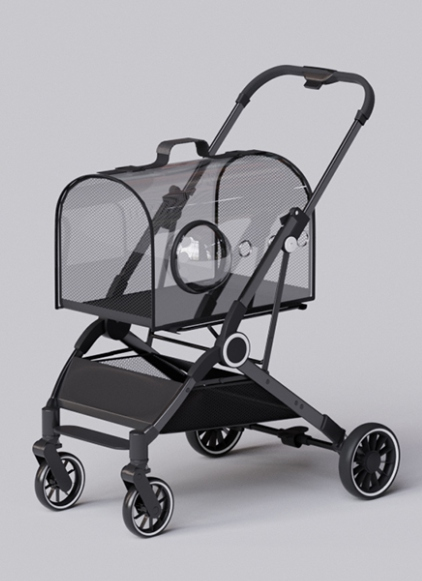
Before dissecting its performance, it’s crucial to understand the components. The Twins Pets Stroller typically employs a set of four or more 360-degree swivel universal wheels, often with a locking mechanism on the front or rear pair.
Steering Damping: This refers to a built-in resistance mechanism within the wheel’s swivel assembly. Instead of spinning freely and wildly with the slightest touch (like a flimsy office chair caster), a damped wheel requires a deliberate force to change direction. This damping provides stability and prevents the stroller from feeling “squirrelly” or uncontrollable.
Anti-Slip Performance: This is primarily a function of the tire material and tread pattern. Softer, high-friction compounds (like rubber or TPU) grip surfaces better than hard plastics. The tread design—whether subtle grooves, multi-directional patterns, or deeper lugs—acts to channel debris and bite into uneven ground, preventing skidding and spin-outs.
Suspension System: Often overlooked but critical, many advanced pet strollers incorporate a lightweight suspension, typically coil or spring-based, at the wheel axle or chassis. This works alongside wheel damping to absorb vertical shocks.
This trio—damped steering, grippy tires, and suspension—forms a holistic adaptive system for different terrains.
Surface 1: Smooth Tile & Indoor Hardwood – The Precision Test
On impeccably smooth surfaces like supermarket tiles, mall flooring, or home hardwood, the primary concerns are maneuverability, precision, and quiet operation.
Steering Damping Adaptation: Here, effective damping is paramount. With minimal rolling resistance from the surface, undamped wheels would swivel erratically, making the stroller difficult to push in a straight line. The Twins stroller’s damped wheels require a modest, intentional force to steer. This allows the owner to execute smooth, controlled arcs around displays or through doorways without awkward wobbling. The stroller feels substantial and track-straight when desired, yet remains agile when needed. The damping mechanism absorbs the minimal high-frequency vibrations from tile grout lines, translating to a quiet, gliding motion that won’t startle sensitive pets.
Anti-Slip Performance Adaptation: On dry tiles, anti-slip is less about traction for forward motion and more about braking stability and preventing lateral slides. The rubberized tire compound ensures firm contact, allowing the stroller’s brake to hold effectively. A smooth or lightly patterned tread is ideal here, as aggressive lugs would create unnecessary friction and noise (a loud, buzzing sound). The wheels maintain a quiet, confident grip.
The Outcome: On tiles, the system prioritizes polished control and silence. The damping provides predictable handling, while the tire material offers secure, quiet contact.
Surface 2: Grass & Park Lawns – The Comfort and Stability Challenge
Transitioning onto grass introduces inconsistent resistance, minor bumps, and slight softness. The goal shifts to maintaining momentum, comfort, and preventing wheel dig-in.
Steering Damping Adaptation: Grass creates drag against the wheels. If the steering damping were too high (too stiff), making subtle directional corrections would require excessive force, straining the user’s wrists. The ideal damping for the Twins stroller on grass is balanced—it must be robust enough to prevent the front wheels from being knocked off course by every blade and clump, yet fluid enough to allow for easy navigation around trees and pathways. The damping mechanism helps the wheels maintain a intended heading despite the uneven resistance from the grass, avoiding a constant fight for control.
Anti-Slip Performance Adaptation: This is where tread pattern shines. The tires likely feature a moderate, multi-directional lug pattern. These lugs dig gently into the turf to find purchase, converting pushing force into forward motion rather than spinning and tearing up the lawn. The softer rubber compound conforms slightly to the surface, increasing the contact patch. Coupled with the suspension system, the stroller absorbs small divots and bumps. The wheels' ability to grip and roll prevents them from acting like plows, ensuring the pets inside experience a rolling sensation rather than a jarring, stop-start lurch.
The Outcome: On grass, the system becomes a comfort and traction module. The damping manages directional stability against variable drag, while the tire tread and suspension work together to grip the surface and smooth out imperfections.
Surface 3: Gravel & Uneven Paths – The Ultimate Durability and Control Test
Gravel roads, packed dirt trails, or bumpy sidewalks are the most demanding. They present high vibration, potential for wheel blockage, and constant lateral instability.
Steering Damping Adaptation: On loose gravel, a wheel without damping would be deflected by every stone it rolls over, causing the stroller to jolt side-to-side unpredictably. The Twins stroller’s enhanced steering damping acts as a stabilizing gyroscope. It provides enough resistance to ensure that small, sharp impacts from stones don’t violently alter the stroller’s path. This allows the user to maintain a general direction with confidence. When a deliberate turn is needed, the applied force overcomes the damping, allowing for a controlled change. The damping is crucial in preventing “death wobbles” that can occur on highly unstable surfaces.
Anti-Slip Performance Adaptation: Here, both tread design and tire hardness are critical. The tread needs deeper, self-cleaning channels to shed small stones and prevent them from getting lodged. The rubber must be durable enough to resist punctures yet compliant enough to conform to irregular shapes for grip. The primary job is to prevent spin-out when starting on loose gravel and to provide braking traction on descents. The universal wheels’ ability to swivel is also key; when a front wheel hits a larger fixed stone, the damping allows it to deflect and roll over or around the obstacle without transferring a jarring shock directly up the chassis. The suspension works overtime here, isolating the cabin from high-amplitude shocks.
The Outcome: On gravel, the system is in fortress mode. The high damping maintains crucial directional stability against chaotic inputs, while the robust, grippy tread and active suspension ensure forward progress and cabin comfort despite the hostile terrain.
The Synergy: A Seamless Adaptive Experience
The true innovation of the Twins Pets Stroller’s design is not that the wheels simply survive these surfaces, but that the transition between them feels intuitive and effortless for the user. Pushing from a paved path onto grass isn’t a battle; it’s a slight increase in resistance met with assured traction. Rolling from a sidewalk onto a gravel driveway doesn’t threaten to wrench the handle from your grip; the damping calmly asserts stability.
This seamless adaptation is the result of meticulous calibration:
Damping Coefficient: Set to be neither too light (causing instability) nor too heavy (causing maneuverability loss).
Tread Versatility: A pattern that is a “jack-of-all-trades,” performing admirably on hard, soft, and loose surfaces without excelling detrimentally at any one.
Material Science: A tire compound that balances wear resistance on pavement with grip on softer, dewy grass.
Conclusion
The Twins Pets Stroller transcends being a mere carrier; it is a thoughtfully engineered mobility platform. Its universal wheels are not an afterthought but the cornerstone of its functionality. Through the sophisticated interplay of steering damping and anti-slip performance, the stroller actively adapts to the world beneath it. On tiles, it is a nimble, silent butler; on grass, a stable, comforting carriage; on gravel, a resilient, unflappable explorer. This intelligent design ensures that wherever the journey with your twin companions leads—from the glossy aisles of a pet store to the adventurous crunch of a forest trail—the ride is consistently secure, controlled, and smooth, making every outing a shared pleasure rather than a logistical challenge.
For more about navigating every terrain: how the twins pets stroller’s wheel engineering masters diverse surfaces, you can pay a visit to FengQun Pet Gear Supplier for more info.






