Large Pet Stroller vs Extra Large Dog Wagon: Which One Should You Buy in 2026?
TL;DR
Large pet strollers and extra large dog wagons both serve to transport big dogs (15–45 kg), but their design philosophies differ fundamentally. Strollers prioritize a secure, enclosed cabin with low entry height, suspension, and easy maneuverability for daily walks, vet visits, and senior dog care. Wagons offer open, flat‑bed utility, higher weight capacity, and rugged terrain capability, but lack pet containment, weather protection, and ergonomic pushing/pulling. After analyzing ten real‑world scenarios (senior dogs, multiple dogs, all‑terrain use, travel, etc.), this guide concludes that for 90% of pet owners, a large pet stroller provides superior safety, comfort, and value for money. A wagon is only justified for niche uses: beach sand, farm utility, or transporting very large dogs (over 45 kg) that do not need enclosure. No brand or model names are referenced.

1. Introduction: Defining the Two Product Categories
Large Pet Stroller
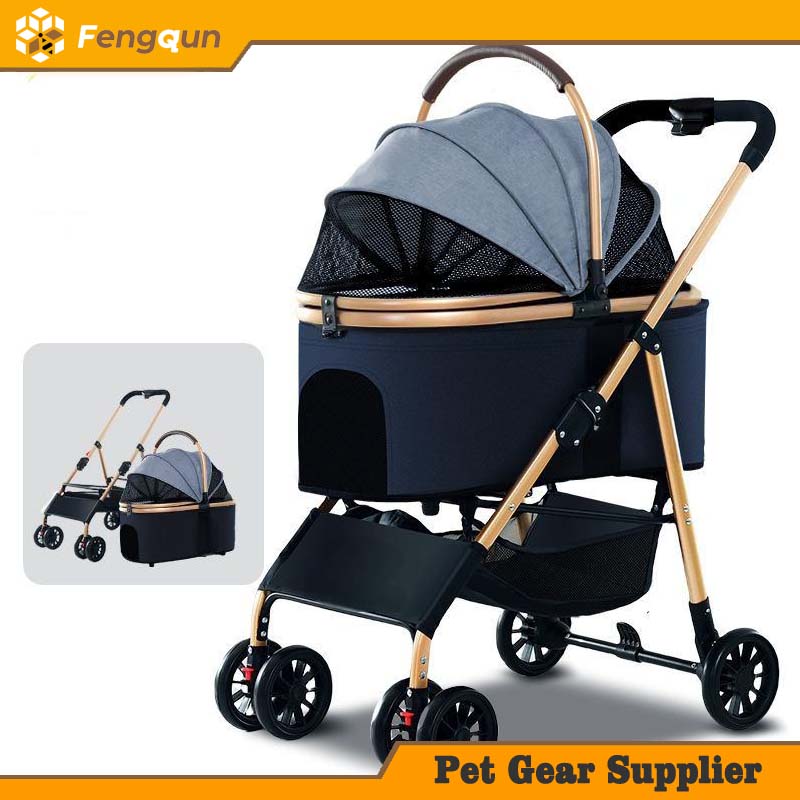
A wheeled vehicle with a rigid, enclosed cabin (fabric over a metal frame), three or four wheels (usually pneumatic), a push handle, and a canopy. Designed specifically for pet containment and comfort. Typical features: zippered or no‑zip doors, internal harness tether, padded floor, suspension, and folding mechanism. Weight capacity: 35–70 kg. Stroller weight: 10–18 kg.
Extra Large Dog Wagon
A flat‑bed or low‑sided open cart, usually with four wheels (often large pneumatic tires), a pull handle (sometimes convertible to push), and no roof or full enclosure. Originally designed for cargo or children, adapted for dogs. Typical features: steel tube frame, mesh or fabric sides (40–60 cm high), no internal tether, no suspension, and folding or collapsible design. Weight capacity: 70–150 kg. Wagon weight: 12–25 kg.
The core difference: strollers are pet‑centric enclosures; wagons are open utility carts. This distinction drives every performance difference.
2. Scenario‑Based Comparison
To determine which product suits you, evaluate your primary use cases. Below are ten common scenarios with technical reasoning.
Scenario 1: Daily Neighborhood Walks (Pavement, Sidewalks)
Stroller: Excellent. Pneumatic tires and suspension absorb cracks and curbs. The enclosed cabin keeps the dog secure and prevents bolting after squirrels. The push handle allows natural walking posture. Canopy provides sun/rain protection.
Wagon: Poor. The open top means the dog can jump out. Pulling a wagon behind you is awkward on sidewalks (the wagon cuts corners). Many dogs become anxious in open wagons because they feel exposed. No weather protection.
Winner: Stroller
Scenario 2: Senior or Arthritic Dog (Reduced Mobility)
Stroller: Excellent. Low entry height (15–20 cm) allows the dog to walk in without jumping. Padded floor (5 cm+ foam) cushions joints. The dog can lie down fully. Harness tether prevents falling during turns.
Wagon: Poor to moderate. Most wagons have side walls 40–60 cm high – the dog must be lifted over. The flat, hard floor (often just a plastic sheet) offers no joint cushioning. No tether means the dog may slide during movement.
Winner: Stroller
Scenario 3: Two Large Dogs (e.g., two Labradors)
Stroller: Wide single‑cabin double strollers (70–90 cm width) can accommodate two dogs up to 25 kg each, but total weight capacity is usually 45–50 kg. The cabin can feel cramped for two large dogs to lie down simultaneously.
Wagon: Better for sheer space. A typical extra large wagon (100 cm × 60 cm floor) can hold two 35 kg dogs. However, the lack of internal divider may lead to fighting. No tether points mean dogs can jump out.
Winner: Tie – stroller for safety and control; wagon for raw space but higher risk.
Scenario 4: All‑Terrain (Gravel, Grass, Light Trails)
Stroller: Good, if equipped with large pneumatic wheels (≥25 cm) and suspension. The push configuration gives better control on slopes. However, strollers have a higher center of gravity and can tip on side slopes.
Wagon: Very good. Large wagons often have 30–40 cm pneumatic tires with aggressive tread. The pull configuration (or push from the side) provides stability on uneven ground. The open design allows the dog to stand and shift weight. But the dog may jump out on rough terrain.
Winner: Wagon, but only if the dog is trained to stay inside and you accept the escape risk.
Scenario 5: Beach / Sand
Stroller: Poor. Standard stroller wheels (even pneumatic) sink in soft sand. The narrow wheelbase and low ground clearance cause the stroller to drag. Sand jams zippers and brakes.
Wagon: Excellent, with modifications. Extra large wagons with balloon tires (30 cm+ wide, 8–12 psi) float on sand. The open design allows the dog to get in/out easily. After beach use, rinse the wagon thoroughly.
Winner: Wagon (specifically for sand)
Scenario 6: Veterinary Visits and Travel
Stroller: Excellent. The enclosed cabin doubles as a carrier. You can roll the stroller into the vet’s waiting room, zip it closed, and the dog feels secure. Many strollers fold compactly for car trunks.
Wagon: Poor. An open wagon does not contain a dog in a waiting room – the dog can walk off. Most wagons do not fold small enough for a car trunk (folded size often >80 cm in all dimensions). You would need a separate crate for the car.
Winner: Stroller
Scenario 7: Multi‑Purpose Utility (Carrying Gear + Dog)
Stroller: Fair. Some strollers have a small under‑carriage basket (5–10 kg capacity) for leashes, water bottles, or a small backpack. The cabin is dedicated to the dog.
Wagon: Excellent. A wagon can carry the dog plus groceries, camping gear, or children. The flat floor allows stacking. Weight capacity is often 100 kg+.
Winner: Wagon, if you frequently combine dog transport with cargo.
Scenario 8: Apartment Living / Storage Space
Stroller: Good. Most large strollers fold to a self‑standing package (approx. 80×60×40 cm) that fits in a closet or car trunk. Folding takes 10–20 seconds.
Wagon: Fair to poor. Extra large wagons often fold to a flat or semi‑flat shape but can be bulky (e.g., 100×70×20 cm). Some require removing wheels. They rarely stand upright.
Winner: Stroller
Scenario 9: Dog with Anxiety or Fear of Open Spaces
Stroller: Excellent. The enclosed cabin with mesh walls and a canopy creates a “safe den.” The dog can see out but feels protected. This reduces stress during walks.
Wagon: Poor. Open sides and no roof expose the dog to all visual and auditory stimuli, increasing anxiety. Many fearful dogs will try to hide or jump out.
Winner: Stroller
Scenario 10: Extremely Large Dog (over 45 kg, e.g., Great Dane, Mastiff)
Stroller: Not available. Most large pet strollers max out at 70 kg, but the cabin dimensions (typically 80 cm length, 50 cm height) are too small for giant breeds to lie down or turn around.
Wagon: Suitable. Extra large wagons have floor dimensions up to 120×70 cm and side walls 40–60 cm. The dog can stand and lie down. However, you must train the dog not to jump out, and you need a ramp for entry/exit.
Winner: Wagon (only option for giant breeds)
3. Cost‑Effectiveness Analysis
| Factor | Large Pet Stroller | Extra Large Dog Wagon |
|---|---|---|
| Typical price range (2026) | $120 – $300 | $150 – $400 |
| Lifespan with daily use | 3–5 years | 5–8 years (steel frame) |
| Safety features included | Enclosure, tether, canopy, brakes, suspension | None (must buy separately: tether, cover, padding) |
| Additional costs | Replacement tires ($20–40/year) | Harness, tether, rain cover, ramp, padding ($100–200 extra) |
| Resale value | 40–50% after 2 years | 30–40% after 2 years |
| Total 5‑year cost of ownership | $200–400 | $300–600 (including accessories) |
Verdict: For the same upfront price, a stroller delivers a complete, safe solution. A wagon requires significant additional investment to become pet‑ready. Therefore, the stroller offers higher value for money for the vast majority of users.
4. When to Choose a Large Pet Stroller (Recommended for 90% of Owners)
Choose a large pet stroller if:
Your dog weighs between 15 kg and 45 kg.
You walk primarily on pavement, gravel, or grass (not deep sand).
You need to contain your dog securely (no escape risk).
Your dog is senior, arthritic, anxious, or has never used a wagon.
You take your dog to the vet, groomer, or indoor public places.
You have limited storage space.
You value safety over maximum cargo capacity.
Best configurations for large strollers:
Pneumatic tires (25–30 cm diameter) with coil suspension.
Low entry height (≤20 cm) with ramp option.
Harness tether with two side attachment points.
One‑handed folding mechanism.
Removable, washable floor padding (≥5 cm foam).
5. When a Wagon Is Justifiable (Niche Use Cases)
Despite the stroller’s advantages, a wagon is the better choice in these specific situations:
Case A: Beach living – You walk on soft sand daily. Only balloon‑tire wagons can handle this terrain.
Case B: Giant breed dog (over 45 kg) – No stroller on the market (without naming brands) accommodates a Great Dane. A wagon is the only wheeled option.
Case C: Multi‑purpose farm or camping – You need to transport the dog plus hay bales, firewood, or children. A wagon doubles as utility cart.
Case D: Dog that refuses enclosures – Some dogs panic in enclosed spaces but happily ride in open wagons. This is rare but real.
Case E: Professional use (dog daycare, mobile grooming) – A wagon can move multiple dogs quickly across a yard. But you must supervise constantly.
If you choose a wagon, you must add:
A full‑body harness and long tether attached to the wagon frame (prevents jumping out).
A removable canopy or shade (UV protection).
Padded floor (closed‑cell foam mat).
Ramp (if side walls exceed 30 cm).
Brake system (many wagons lack brakes – add wheel chocks or aftermarket brakes).
Without these additions, a wagon is unsafe for pet transport.
6. Head‑to‑Head Feature Comparison Table
| Feature | Large Pet Stroller | Extra Large Dog Wagon |
|---|---|---|
| Primary operation | Push (ergonomic, natural) | Pull (awkward for long distances) |
| Dog containment | Full enclosure, zipper/magnetic door | Open top – dog can jump out |
| Weather protection | Canopy, rain cover optional | None (must add separately) |
| Entry height | 15–20 cm (senior friendly) | 40–60 cm (requires lifting or ramp) |
| Floor padding | 5–10 cm foam included | Hard plastic or fabric – must add |
| Harness tether | Built‑in (2–3 points) | None – must add |
| Suspension | Coil or elastomer on wheels | Rare (solid axle, no damping) |
| Brakes | Foot‑operated, locking rear wheels | Usually none (only wheel locks on some) |
| Folded size | Compact, stands upright | Bulky, often lies flat |
| Weight capacity | 35–70 kg | 70–150 kg |
| Suitable for sand | No (unless balloon tires retrofitted) | Yes (with balloon tires) |
| Suitable for senior dogs | Excellent | Poor (entry height, no padding) |
| Cost of ownership (5 years) | $200–400 | $300–600 (with required add‑ons) |
7. Why the Stroller Offers Better Value for Money
Reason 1: Safety is pre‑engineered, not an aftermarket add‑on.
A stroller’s enclosure, tether, and brakes work together as a system. A wagon requires you to piece together safety – and most owners never do, leading to escapes or injuries.
Reason 2: Ergonomics for daily use.
Pushing a stroller is natural for walks. Pulling a wagon for 30 minutes strains your shoulders and lower back. The stroller’s adjustable handle and low rolling resistance reduce owner fatigue.
Reason 3: Senior dog compatibility.
As your dog ages, the stroller adapts. The low entry height and padded floor remain valuable. A wagon becomes unusable for an arthritic dog because lifting becomes painful.
Reason 4: Resale and longevity.
Strollers hold value better because they are purpose‑built. Wagons are often generic and depreciate faster.
Reason 5: No hidden costs.
A stroller’s price includes everything: canopy, padding, tether, brakes, folding mechanism. A wagon’s lower sticker price is deceptive – you will spend another $100–200 on essential safety and comfort upgrades.
8. Decision Flowchart
Ask these questions in order:
Does your dog weigh more than 45 kg?
Yes → Buy a wagon (only option).
No → Continue.
Do you walk primarily on deep sand beaches?
Yes → Consider a wagon with balloon tires, but only if you also add a tether and canopy.
No → Continue.
Do you need to carry cargo (gear, groceries) alongside the dog on every trip?
Yes → Wagon may be better. But consider if a stroller’s under‑carriage basket is sufficient.
No → Continue.
For all other cases (daily walks, vet visits, senior dogs, anxious dogs, multi‑dog households under 45 kg total, apartment living, paved/gravel terrain) → Choose a large pet stroller.
9. Final Recommendation
For 90% of owners with dogs between 15 kg and 45 kg, a large pet stroller is the superior choice. It offers integrated safety, comfort, and convenience at a lower total cost of ownership. The only exceptions are giant breeds (over 45 kg), frequent deep‑sand use, or multi‑purpose cargo hauling.
Do not be tempted by the lower upfront price of a wagon – after adding a tether, canopy, padding, and ramp, you will spend more money for a less secure, less comfortable ride. Invest in a well‑designed large pet stroller with pneumatic tires, suspension, low entry height, and a harness tether. Your dog – and your back – will thank you.
Key Takeaways
Large pet strollers are designed for pet safety and comfort – they include enclosures, tethers, padded floors, low entry heights, and brakes. Wagons are open utility carts that require expensive aftermarket additions to become pet‑safe.
For daily walks, vet visits, and senior dogs, the stroller wins decisively. Wagons are awkward to pull, lack weather protection, and pose escape risks.
Wagons are only justified in three niches: giant breeds (>45 kg), deep‑sand beaches (with balloon tires), or combined cargo+dog transport.
Cost‑effectiveness favors the stroller. A $200 stroller includes everything. A $150 wagon needs $100–200 in safety add‑ons (tether, canopy, padding, ramp, brakes), making it more expensive overall.
Ergonomics matter. Pushing a stroller is natural; pulling a wagon strains your shoulders and back, especially on hills.
Senior dogs cannot use wagons safely – the high side walls require lifting, and the hard floor aggravates arthritis. Strollers offer low entry and orthopedic padding.
If you buy a wagon despite this advice, you must add: a full‑body harness and tether, a padded floor, a canopy for sun/rain, and a ramp for entry. Never transport a dog in an open, unmodified wagon.
For 90% of large dog owners (15–45 kg, paved/gravel terrain, daily walks, vet trips, apartment living), the large pet stroller is the clear winner in safety, comfort, and value.
By matching the product to your real‑world scenarios, you can avoid an expensive mistake and give your large dog a safe, enjoyable ride for years to come.
For more about Large Pet Stroller vs Extra Large Dog Wagon: Which One Should You Buy in 2026? you can pay a visit to https://www.petgearstroller.com/product/ for more info.






