How to Choose the Safest Twin Dog Stroller: A Comprehensive Technical Guide
For multi-dog households, a twin dog stroller represents more than just convenience—it's a mobility solution that ensures safety, comfort, and control during outings. Whether navigating urban sidewalks, park trails, or veterinary visits, selecting the safest option requires careful consideration of engineering, materials, and design. Unlike standard pet strollers, twin models must distribute weight effectively, maintain stability with two moving passengers, and provide secure containment for potentially restless occupants. This technical guide breaks down the critical safety factors you must evaluate, transforming what might seem like a simple purchase into an informed engineering decision for your canine companions' wellbeing.
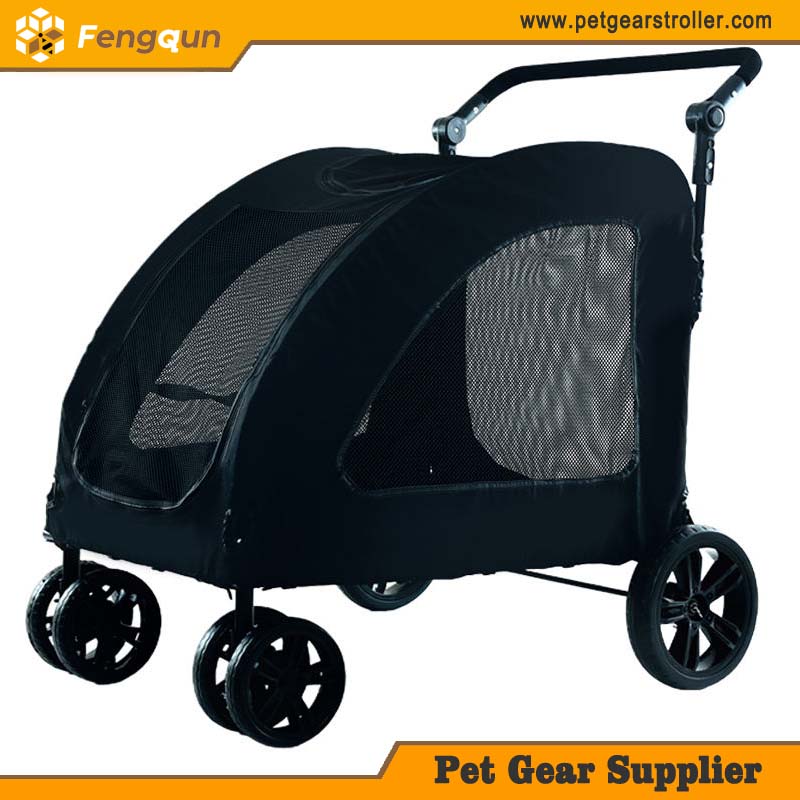
1. Structural Integrity: The Foundation of Safety
Frame Material and Construction
The stroller's frame is its skeleton, bearing the entire load and absorbing shocks from uneven terrain.
Materials: Aircraft-grade aluminum alloys offer the best strength-to-weight ratio, combining durability with manageable weight. Steel frames provide superior strength but add significant heft. Avoid plastic or thin, hollow tubing that can bend or snap under stress.
Joint Engineering: Examine weld points and connection joints. Reinforced, gusseted joints at stress points (where the handle meets the frame, where the cargo area attaches) are crucial. Riveted or bolted connections should use high-grade hardware and show no signs of play or wobble.
Weight Capacity: Always choose a stroller with a maximum weight capacity at least 25-30% greater than the combined weight of your dogs. This safety margin accounts for dynamic forces (like bouncing), the weight of blankets or water bottles, and ensures the frame isn't operating at its absolute limit.
Stability and Anti-Tip Design
A twin dog stroller as a higher center of gravity, making anti-tip features non-negotiable.
Wheelbase Geometry: A wider wheelbase (distance between left and right wheels) dramatically increases lateral stability, preventing the stroller from tipping sideways if one dog shifts weight suddenly. Look for models where the rear axle extends beyond the width of the cabin.
Low Center of Gravity: The main cargo area should sit as low as possible between the axles. Elevated "bassinets" are more prone to tipping.
Anti-Tip Features: A rear-mounted anti-tip bar or a fifth wheel is essential. This protrusion contacts the ground and prevents the stroller from tipping backward if the handle is released or if you descend a curb incorrectly.
2. Containment and Restraint Systems
The Cabin: A Secure Compartment
The cabin is your dogs' primary enclosure and must prevent escape and injury.
Materials: The shell should be made of durable, chew-resistant nylon or polyester with a high denier count (e.g., 600D or higher). Mesh panels must be made of reinforced, tight-weave fabric that cannot be torn by claws or teeth.
Zipper Security: Zippers are the most common failure point. Look for:
Two-way zippers with large, sturdy pulls.
Locking zippers or zipper garages (a flap that covers the zipper head) to prevent curious noses from opening them.
Zippers that close from the top down to the middle, creating a secure overlap.
Interior Safety: The interior should be free of exposed seams, sharp edges, or gaps where a paw or collar could become trapped. A removable, washable padded liner adds comfort and protects the cabin floor.
Harness Systems: The Critical Link
A cabin alone is not enough. A proper internal restraint is vital to keep dogs secured in a sudden stop or tip-over.
Attachment Points: Look for sturdy D-rings or loops sewn into the structural seams of the cabin liner, not just glued or lightly stitched on.
Tether Type: The tether should be a short (12-18 inch), robust lead with a swivel clip on one end (to attach to the dog's harness) and a secure clasp on the other (to attach to the D-ring). Never attach the tether to a collar—use a well-fitted, back-clip harness.
Independent Tethers: Each compartment must have its own tether point. Do not rely on a single point for both dogs.
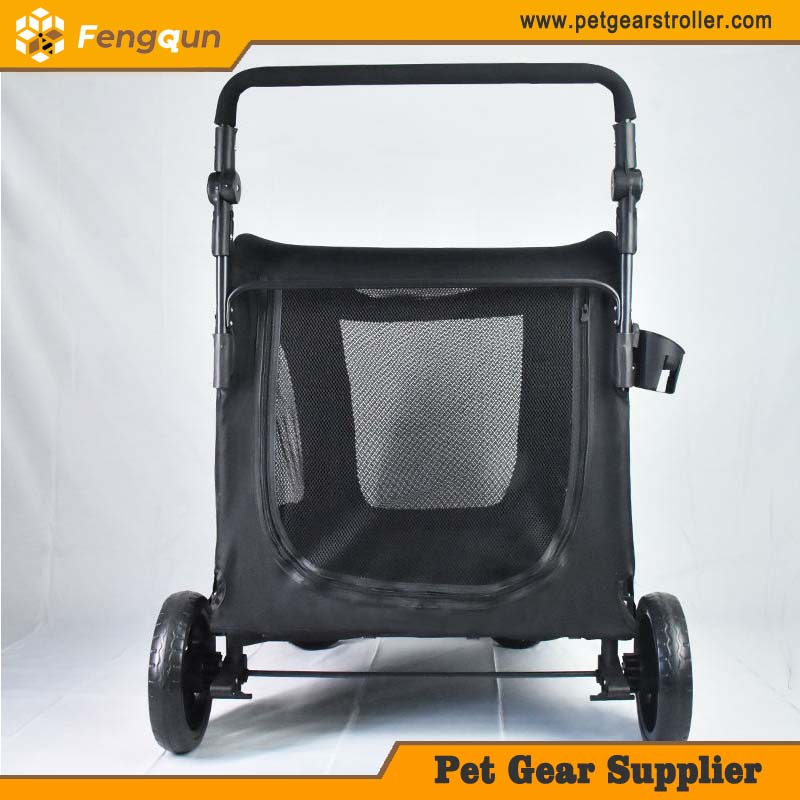
3. Wheel and Braking Engineering
Wheel Configuration and Suspension
Wheels manage kinetic energy from the ground, directly impacting control and smoothness.
Size and Type: Larger wheels (8+ inches) roll over obstacles like cracks and curbs more easily than small wheels. Pneumatic (air-filled) tires offer the best shock absorption but require maintenance. Polymer foam-filled tires are a puncture-proof alternative with good cushioning. Solid plastic wheels are the least safe and comfortable.
Suspension: A coil-spring or independent suspension system on the rear wheels absorbs impacts, providing a smoother ride that reduces jostling and stress on the frame.
Swivel vs. Fixed: Front swivel wheels offer superior maneuverability in tight spaces but should have a locking mechanism to convert them to fixed for straight-line stability at higher speeds or on inclines.
Braking System: Precision Control
A reliable braking system is your primary tool for preventing runaway incidents.
Dual-System Brakes: The safest strollers feature a two-part system:
A Parking Brake: A lever or pedal that locks one or both rear wheels to secure the stroller when stationary.
A Dynamic Brake (Drum or Disc): A handle-mounted brake that allows you to slow the stroller's descent on hills without locking the wheels completely, maintaining control.
Redundancy: Test that the parking brake can hold the loaded stroller on a moderate incline. The mechanism should engage positively with a clear click or firm resistance.
4. Safety-Optimized Design Features
Weather & Visibility: A rain cover that secures firmly and has ventilation flaps is essential. Reflective piping or strips on the cabin and canopy increase visibility during dawn, dusk, or night walks.
Ventilation: Multiple large mesh panels (ideally on three sides) ensure continuous airflow to prevent overheating. Canopy windows provide additional air and a view for the dogs.
Entry/Exit Design: A low-entry threshold or a wide, fold-down door makes loading and unloading safer, preventing dogs from jumping from a great height. A secure leash clip near the door allows you to tether a dog before unclipping the internal tether.
Handlebar Ergonomics: An adjustable handlebar allows the user to maintain an upright, controlled posture, ensuring better steering and reaction capability. Rubberized grips prevent hand slippage.
The Safe Selection Protocol: A Step-by-Step Checklist
Assess Your Dogs: Combine their weights and add a 30% margin. Note their temperaments (calm vs. excitable), sizes, and any special needs.
Define Primary Use Case: Is it for brisk neighborhood walks, rugged trails, or crowded farmer's markets? This dictates wheel, suspension, and width needs.
Research & Shortlist: Focus on reputable brands with clear specifications. Prioritize models boasting the safety features outlined above.
Hands-On Evaluation (If Possible):
The "Wiggle Test": Grasp the frame and try to flex it. It should feel rigid.
The "Tip Test": With weight simulated inside (use bags of dog food), gently push backward on the handle. The anti-tip bar should engage before the stroller balances on its rear wheels.
Inspect Seams, Zippers, and Tethers.
Test the Brakes for positive engagement.
Verify Certifications & Reviews: Look for certifications from standards organizations (where applicable) and meticulously read user reviews, specifically searching for mentions of safety failures or durability issues.
Acclimate Your Dogs: Once purchased, introduce the stroller positively at home with treats and short sessions before the first real outing. Always use the internal tethers.
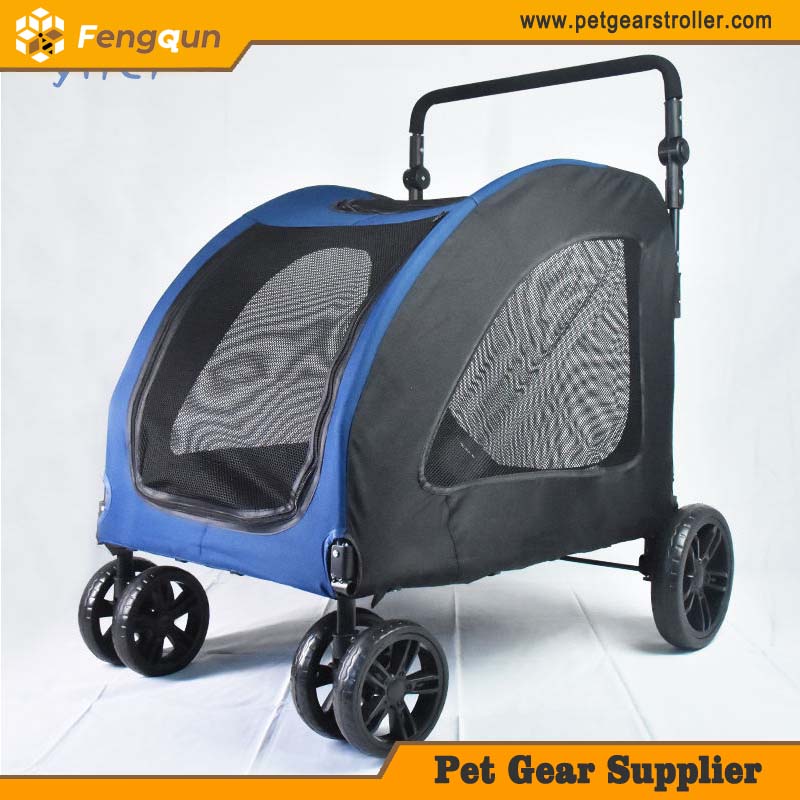
Conclusion
Choosing the safest twin dog stroller is not about finding a single killer feature. It is about evaluating an integrated system where structural engineering, smart containment, reliable control mechanisms, and thoughtful design details work in concert. The safest choice is the one that matches the specific weight, combined behavior, and environmental challenges presented by your dogs. By applying this technical framework—prioritizing a robust frame, fail-safe restraint, advanced braking, and stability geometry—you move beyond marketing claims to make an engineering-informed decision. This investment ultimately provides peace of mind, knowing your canine companions are secured in a meticulously designed mobile haven, allowing you all to enjoy the journey together, safely.
For more about how to choose the safest twin dog stroller: a comprehensive technical guide, you can pay a visit to FengQun Pet Gear Supplier for more info.






