How to Choose the Right Twin Pet Stroller for Your Dogs
As a leading twin pet stroller manufacturer, we've spent years designing, testing, and refining carriers for every kind of furry friend. Among the most rewarding—and complex—products we create are twin pet strollers. Perfect for a dynamic duo, these strollers promise shared adventures, but choosing the wrong one can lead to cramped quarters, safety issues, and a very short-lived product.
Selecting the perfect twin stroller isn't just about finding one that fits; it's about matching engineering to lifestyle, anatomy to architecture, and personality to practicality. Let us, from behind the factory floor, teach you what truly matters.
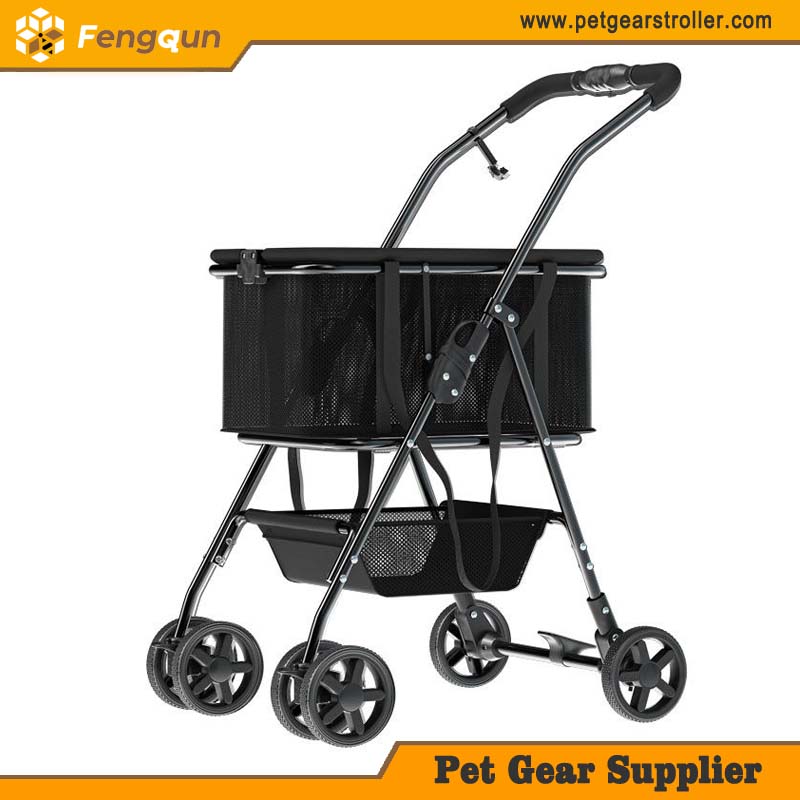
1. The Foundational Question: Is a Twin Pet Stroller Right for You?
Before diving into specs, assess your need. A twin stroller is ideal for:
Two small to medium dogs (under 25 lbs each).
Siblings or bonded pairs who find comfort in proximity.
An older or recovering dog paired with a younger companion.
An owner who frequently navigates crowds, festivals, or urban environments with two pets.
Someone with mobility issues who can't manage two leashes for long walks.
If your dogs are very large, intensely reactive to each other in close quarters, or have vastly different exercise needs, separate solutions might be better.
2. Safety First: The Non-Negotiable Framework
Safety is engineered in, not an afterthought. Here’s what to scrutinize:
Frame Stability & Weight Capacity: This is paramount. Aluminum alloy frames offer the best strength-to-weight ratio. The stroller's total weight capacity must exceed the combined weight of both dogs, plus any gear. Never max out the limit. Look for a wide wheelbase and a low center of gravity to prevent tipping, especially when one dog moves.
Restraint System: Each compartment must have its own, secure tether or harness clip. A simple leash loop is insufficient. Look for sturdy, adjustable straps that attach to a back-clip harness (never a collar).
Braking System: A reliable, parking brake that locks at least two wheels is essential for stopping on inclines or during loading. Check for ease of engagement and release.
Enclosure Security: Zippers should be robust, with locking sliders or tabs to prevent curious noses from pushing them open. Mesh panels must be tightly woven and firmly anchored to the frame to prevent tooth or claw damage.
3. Configuration: Side-by-Side vs. Tandem (Front-Back)
This is your first major design choice, with significant implications.
Side-by-Side Twin:
Pros: Promotes socialization; both dogs get an equal, panoramic view. Often feels more spacious laterally. Generally more stable due to symmetrical weight distribution.
Cons: Wider. Thisis the critical factor. Measure your doorways, gate widths, and store aisles. May be harder to maneuver in tight spaces.
Best for: Dogs of similar size who get along well, and for use in open spaces, parks, and wide pathways.
Tandem (Front-Back) Twin:
Pros: Narrower profile, similar to a single stroller, offering superior maneuverability through standard doors and crowded areas. Often allows for separate, enclosed compartments.
Cons: The dog in the back mayhave a more limited view. Can be longer, affecting the turning radius. Weight distribution must be balanced.
Best for: Urban dwellers, navigating shops and tighter spaces, or for dogs who prefer a bit more separation.
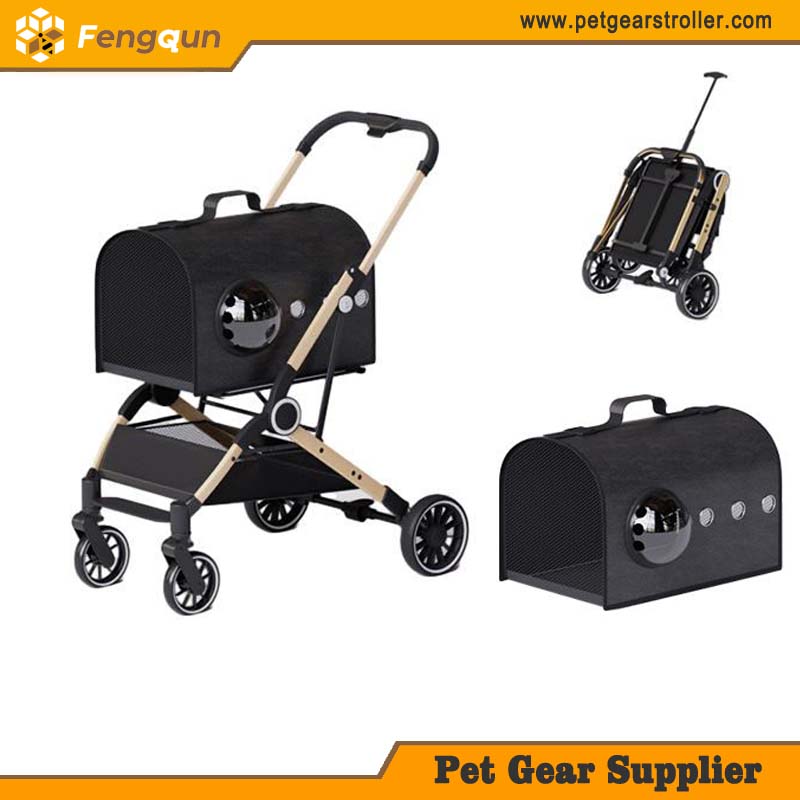
4. Sizing & Interior Space: Beyond the "Fits" Claim
Manufacturers list interior dimensions. Don't just check them—visualize them.
Individual Compartment Size: Each dog must be able to stand up, turn a full circle, and lie down stretched out without touching the sides or the other dog. Account for fluffy coats!
Barrier or Mesh Division: In a side-by-side, is there a supportive, breathable divider to keep dogs from spilling into each other's space? In a tandem, is the partition secure?
Entry Points: Look for large, top-entry openings (like a sunroof) and full-sized side or front doors. This makes securing a reluctant or excited dog infinitely easier.
5. Comfort & Convenience: For Pets and Parent
A stroller that’s a hassle won’t get used. Comfort keeps everyone happy.
For Your Dogs:
Ventilation: Excellent, four-season airflow is critical for two bodies generating heat. Look for multi-panel mesh windows on all sides, plus a mesh top.
Padding & Base: The cabin floor should have a removable, washable, and water-resistant padded liner. A stiff, hammock-style mesh base is better for support and airflow than a sagging fabric one.
Weather Protection: A full, clear vinyl rain cover that can enclose the entire stroller is essential. A peek-a-boo window for the rain cover is a nice touch.
For You:
Maneuverability: Large, air-filled (pneumatic) tires are the gold standard for absorbing shock, rolling smoothly over rough terrain, and providing an easy push. Hard plastic wheels are jarring and loud. 360-degree front swivel wheels with a locking function are a must for agility.
Handle & Storage: An adjustable handlebar accommodates different user heights. A large, easily accessible storage basket (preferably with a sturdy weight rating) beneath the cabin is invaluable for leashes, water, and shopping bags.
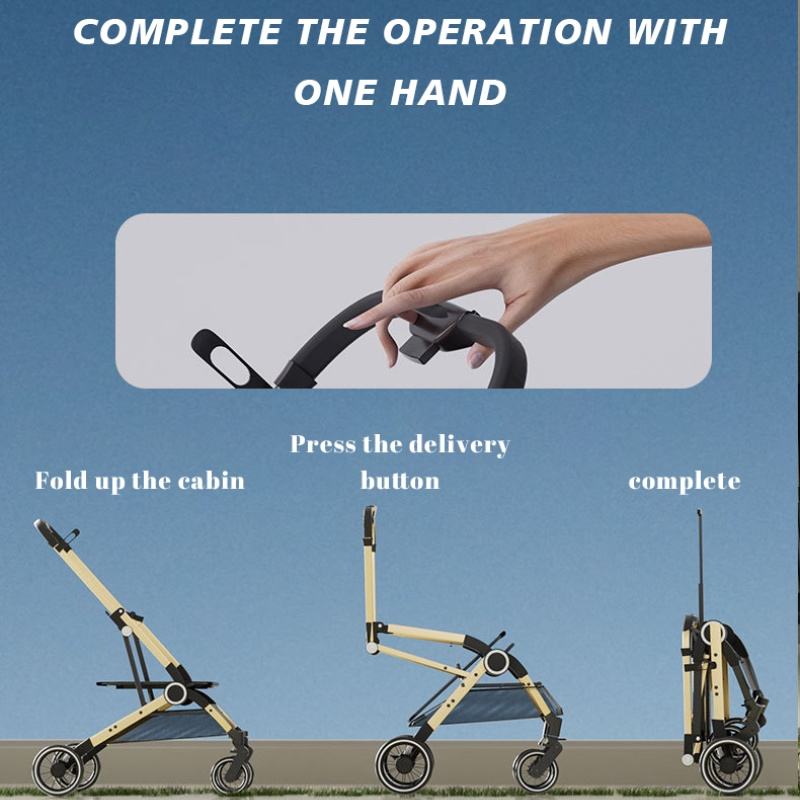
Folding Mechanism: Practice the fold! A one or two-step, self-standing fold is ideal for storage and car transport. Ensure it's manageable with one hand.
6. Quality & Durability: Spotting the Details
As manufacturers, we know where corners are cut. Inspect these areas:
Fabric & Stitching: The fabric should be durable, oxford-grade polyester or nylon. Stitching should be tight, double-stitched at stress points, and free of loose threads.
Frame Joints & Welds: Connections should be solid, with no visible cracking or poor welds. Folding joints should operate smoothly without pinching.
Component Quality: Zippers should be YKK or equivalent brand-name quality. Buckles and clips should feel substantial, not flimsy.
7. Lifestyle Matching & Final Considerations
Primary Terrain: Smooth Pavement? Most strollers will do. Trails, Grass, or Boardwalk? You need large, air-filled tires with all-wheel suspension.
Car Transport: If you'll lift it in and out of a car, weight matters. Aluminum frames are lighter. Ensure the folded dimensions fit your trunk.
Extras: Consider add-ons like a parent organizer for your phone and coffee, a clip-on fan for hot climates, or matching weather shields.
The "Test Drive": If possible, let your dogs try before you buy. Observe their comfort level entering, exiting, and sitting together. Watch for signs of stress.
Conclusion
Choosing the right twin pet stroller is an investment in countless future adventures, vet visits, and sunny park days with your canine companions. It’s a piece of mobility equipment that should inspire confidence, not anxiety.
From our perspective as manufacturers, the best choice is the one where the engineering becomes invisible—where you notice not the stroller, but the joy of your dogs peering out at the world together, secure and comfortable. By focusing on safety architecture, true spatial needs, terrain-appropriate components, and unassailable quality, you move beyond just buying a product. You’re selecting a reliable vehicle for the shared journey, ensuring every outing is a pleasure for every member of your pack, two-legged and four-legged alike.
For more about hw to choose the right twin pet stroller for your dogs, you can pay a visit to FengQun Pet Gear Supplier for more info.






