How to Choose the Right Large Pet Stroller for Your Big Dog (2026 Guide)
TL;DR: Large pet strollers for big dogs (25–50 kg) are fundamentally different from standard models. Key requirements include: reinforced steel or heavy‑duty aluminum frame, pneumatic tires ≥25 cm with independent suspension, interior cabin height ≥70 cm to allow standing, floor dimensions allowing full sternal lying, entry height ≤20 cm for senior dogs, and total weight capacity at least 30% above your dog’s weight. This 2026 guide provides technical specifications, decision criteria based on dog size (25–35 kg vs. 35–50 kg), terrain, dog age, and owner ergonomics. For most big dogs, a wide single‑cabin stroller with pneumatic tires, low entry, and a harness tether is the best choice. Avoid double‑tier or compact “lightweight” strollers – they will fail structurally. No brand or model names are referenced.
1. Introduction: Why Large Dogs Need a Different Class of Stroller
A “large pet stroller” is not simply a scaled‑up version of a small‑dog stroller. Big dogs – typically 25 kg to 50 kg (e.g., Labrador Retrievers, Golden Retrievers, German Shepherds, Boxers) – impose unique engineering demands:
Static load: A 35 kg dog exerts 350 N of force on the floor.
Dynamic load: Going over a 5 cm curb at walking speed multiplies force by 2–3× (up to 1000 N).
Center of gravity: A large dog’s mass sits 40–60 cm above ground, affecting stability.
Interior space: The dog must stand, turn, and lie down fully. Minimum cabin height is 70 cm; length 90 cm; width 45 cm for a 35 kg dog.
Many strollers labeled “large” actually have weight limits of 20–25 kg and cabins sized for small to medium dogs. This guide helps you distinguish between genuinely large‑capacity strollers and marketing exaggerations.
2. Critical Specifications for Big Dog Strollers
Do not trust a product’s name or photos. Verify these technical parameters from datasheets or by direct measurement.
2.1 Weight Capacity
Static capacity: Must exceed your dog’s weight by at least 30% (safety margin for dynamic loads). For a 35 kg dog, look for capacity ≥45 kg. For a 45 kg dog, capacity ≥60 kg.
Test: Some manufacturers list a “tested weight” – ask if that includes dynamic testing (bumps, drops). If not, assume the static number is optimistic.
Red flag: Capacity listed as “up to 50 kg” but the stroller weighs only 8 kg – impossible for a steel frame. Genuine large strollers weigh 12–20 kg empty.
2.2 Interior Dimensions
Your dog must be able to:
Stand without head touching the canopy. Measure your dog’s height at withers (Hw). Add 15 cm for head clearance. Minimum cabin height = Hw + 15 cm. For a 60 cm tall dog, that’s 75 cm.
Lie in sternal recumbency with legs folded. Measure length from nose to base of tail (L). Add 10 cm. Minimum cabin length = L + 10 cm. For an 80 cm long dog, that’s 90 cm.
Turn around – width must be at least shoulder width (W) + 10 cm. For a 35 cm wide dog, that’s 45 cm.
Typical adequate dimensions for a 35 kg dog: Height 75 cm, Length 90 cm, Width 50 cm.
2.3 Entry Height (Ground to Floor)
This is the single most important feature for senior or arthritic big dogs.
Ideal: ≤20 cm. Some large strollers achieve 15–18 cm. This allows the dog to step in without jumping.
Acceptable for young, agile dogs: Up to 25 cm.
Unacceptable: Any entry over 30 cm – the dog must jump or be lifted, risking joint injury.
Measure: Place the stroller on a flat surface. Measure from the ground to the top of the rigid floor panel (not the fabric flap).
2.4 Frame Material and Construction
Steel: Preferred for big dogs (35 kg+). Look for tube diameter ≥25 mm and wall thickness ≥1.5 mm. Steel resists torsion and fatigue.
Aluminum: Acceptable for dogs up to 35 kg if the frame is oversized (e.g., 30 mm diameter, 2 mm wall). Avoid thin‑wall aluminum (1 mm) – it will flex and eventually crack.
Cross‑bracing: The undercarriage must have X‑shaped or triangulated braces. Simple H‑shaped frames will wobble.
Test: Push the empty stroller side‑to‑side vigorously. If the frame flexes >3 cm at the axle, it’s too weak.
2.5 Wheels and Suspension
Wheel type: Pneumatic (air‑filled) only. Solid foam or plastic wheels transmit every vibration, causing joint pain and premature stroller wear.
Wheel diameter: ≥25 cm for pavement and light trails; ≥30 cm for gravel, grass, or uneven ground. Larger wheels roll over obstacles more easily.
Suspension: Independent coil or elastomer suspension on each wheel is strongly preferred. It reduces peak vertical acceleration by 60–70%, protecting your dog’s spine and joints.
Bearings: Sealed ball bearings (not bushings) are essential for longevity.
Maintenance: Check tire pressure weekly (25–35 psi). Underinflated tires increase rolling resistance and cause rim damage.
2.6 Brakes
Type: Foot‑operated parking brake locking at least two wheels (rear wheels preferred).
Performance: On a 15° incline (typical driveway slope), the stroller must not move when the brake is engaged.
Red flag: Some large strollers have only a hand brake (like a bicycle) – that’s a dynamic brake, not a parking brake. You need both or a foot‑operated lock.
2.7 Harness Tether System
Minimum: One internal tether per dog (but for a single big dog, at least two attachment points – left and right sides – to prevent sideways slumping).
Tether length: 15–20 cm, short enough that the dog cannot reach the door.
Tether type: Elastic (shock‑absorbing) preferred to reduce jerk during sudden stops.
Attachment: Must connect to a full‑body harness, never to a collar (risk of tracheal collapse).
If the stroller lacks tethers, do not buy – you cannot safely retrofit reliable tethers on all models.
2.8 Floor Padding
Base: Rigid plastic or metal panel – never fabric alone.
Foam: At least 5 cm of high‑density foam (50 kg/m³) plus 2–3 cm of memory foam on top.
Cover: Removable, waterproof, machine‑washable fabric.
Why: Big dogs put tremendous pressure on their elbows and sternum. Without adequate padding, they develop pressure sores (calluses) within weeks.
2.9 Canopy and Ventilation
Size: Must cover the entire cabin when extended.
Material: UPF 50+ rating. Reflective inner lining reduces heat buildup.
Ventilation: Mesh panels on at least three sides (front, left, right). Big dogs generate significant body heat – cross‑ventilation is critical.
Removability: Canopy should be detachable for washing and for open‑air rides on cool days.
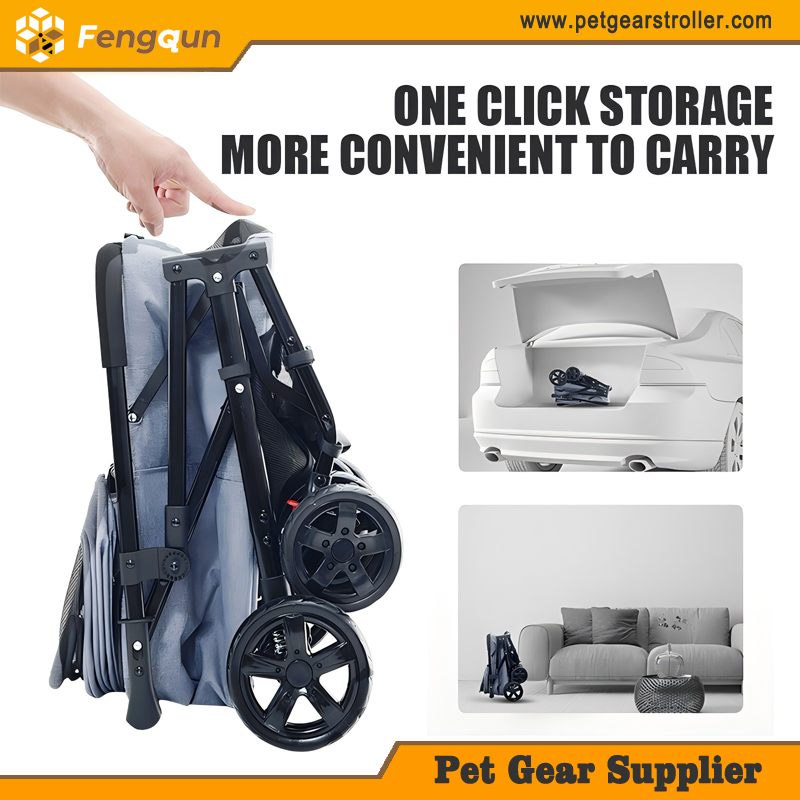
2.10 Folding Mechanism and Storage
Type: One‑handed, single‑action fold (scissor or book fold). Avoid strollers that require removing wheels or separate steps.
Folded dimensions: For a large stroller, expect folded height 80–100 cm, width 60–80 cm, depth 35–50 cm. Measure your car trunk before buying.
Folded standing: The stroller should stand upright on its own (not lean against a wall).
3. Large Dog Size Categories and Stroller Requirements
| Dog Weight | Example Breeds | Minimum Capacity | Min Cabin Height | Min Wheel Dia | Recommended Frame |
|---|---|---|---|---|---|
| 25–35 kg | Border Collie, Standard Poodle, Female Labrador | ≥35 kg (prefer 45 kg) | 70 cm | 25 cm | Oversized aluminum or steel |
| 35–45 kg | Male Labrador, Golden Retriever, Boxer | ≥50 kg | 75 cm | 25–30 cm | Steel |
| 45–55 kg | German Shepherd (large), Rottweiler, Husky | ≥60 kg | 80 cm | 30 cm | Heavy‑duty steel |
| Over 55 kg | Great Dane, Mastiff, Newfoundland | No stroller – use a wagon | — | — | — |
Note: For dogs over 55 kg, no conventional pet stroller is safe or available. Consider an extra‑large dog wagon with modifications.
4. Scenario‑Based Decision Guide
Scenario A: Senior Big Dog (Arthritis, Hip Dysplasia)
Priority features:
Entry height ≤20 cm (non‑negotiable).
Pneumatic tires with suspension.
≥7 cm total foam padding (high‑density + memory).
Low step‑over threshold (ramp optional but helpful).
Harness tether with elastic.
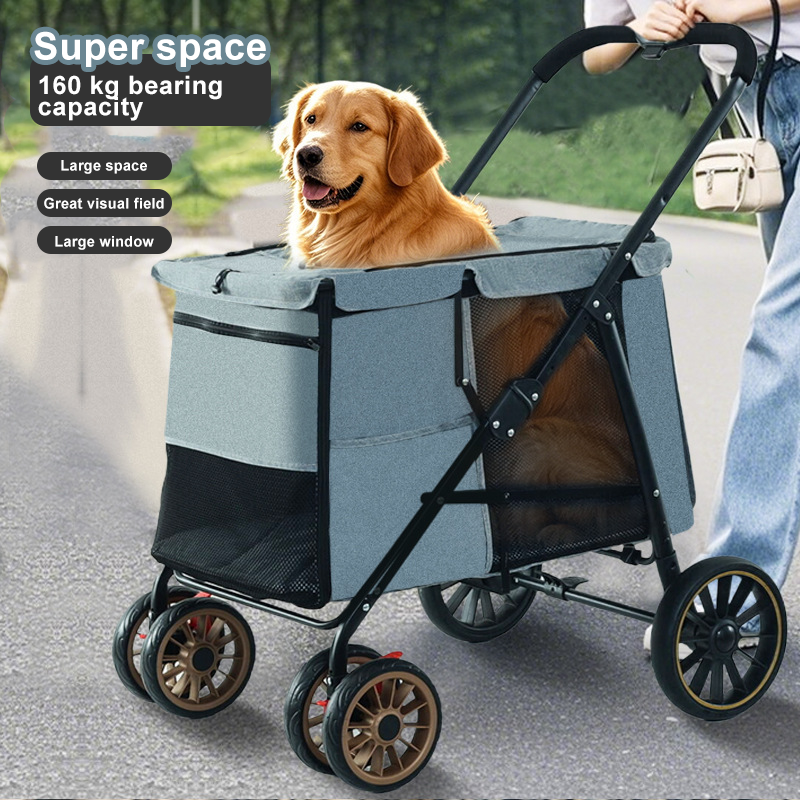
Recommended configuration: Wide single‑cabin pet stroller with steel frame, large pneumatic wheels, and a low‑profile front door that opens fully (zips down to floor level).
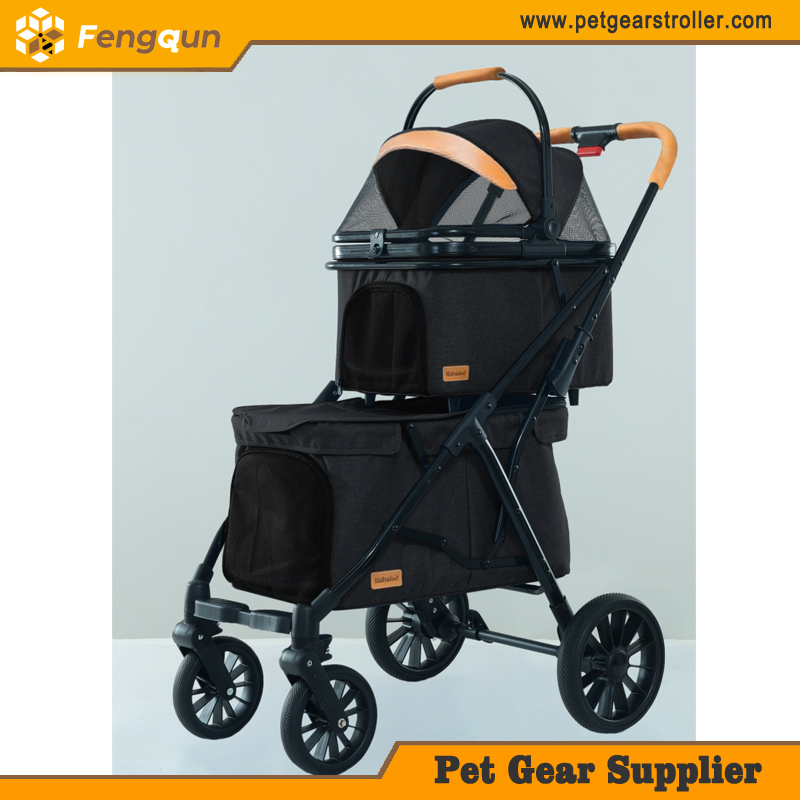
Avoid: Double‑tier strollers (upper cabin inaccessible), strollers with high entry (>25 cm), or those without suspension.
Scenario B: Active Young Big Dog (Recovery from Injury or Temporary Mobility Issue)
Priority features:
High durability (steel frame).
Large wheels (≥30 cm) for trail walks.
Secure enclosure (zippered doors recommended – no‑zip may not withstand lunging).
Internal tether with non‑elastic strap (prevents sudden movements).
Removable canopy for open‑air rides.
Recommended configuration: Heavy‑duty single‑cabin stroller with pneumatic tires, full suspension, and a zippered front door. Do not choose no‑zip for an active big dog.
Scenario C: Multi‑Dog Household (One Big Dog + One Small Dog)
Priority features:
Wide single‑cabin (minimum 70 cm width) to accommodate both.
Removable internal divider to separate if needed.
Two harness tethers (one for each dog).
Total weight capacity exceeding combined weight by 30%.
Recommended configuration: Wide single‑cabin double stroller (not double‑tier). Avoid double‑tier because the upper cabin is too small for a big dog.
Scenario D: All‑Terrain Use (Gravel, Grass, Light Trails)
Priority features:
Wheels ≥30 cm pneumatic with knobby tread.
Independent suspension on all wheels.
High ground clearance (≥15 cm from axle to ground).
Low center of gravity (wide track width ≥65 cm).
Recommended configuration: Steel‑frame stroller with large balloon tires. Some owners retrofit all‑terrain wheels from generic sources – ensure axle diameter compatibility.
Scenario E: Daily Pavement Walks and Vet Visits
Priority features:
Easy fold (one‑handed, under 10 seconds).
Compact folded size for car trunk.
Removable, washable floor pad.
Foot brake that locks securely.
Recommended configuration: Aluminum‑frame stroller (lighter) with 25 cm pneumatic tires. Single‑cabin design.
5. What to Avoid – Red Flags
“Lightweight large stroller” – any stroller under 10 kg empty cannot have a steel frame or large wheels. It will flex and break.
Plastic wheel hubs – crack under big dog weight. Look for metal hubs.
No specified weight capacity – or capacity listed as “up to 50 kg” without dynamic testing.
Fabric floor – will sag, causing spinal issues. Must be rigid.
Entry height over 30 cm – your dog will eventually hurt itself jumping in/out.
No internal tether – unsafe.
Swivel front wheels that cannot lock – on uneven ground, the stroller will wander and tip.
Folding mechanism that requires removing the canopy or wheels – you will hate using it daily.
6. Owner Ergonomics: Pushing a Heavy Stroller
A loaded large dog stroller (stroller 15 kg + dog 35 kg = 50 kg total) requires significant pushing force, especially uphill.
Handle height: Adjustable from 85–110 cm. Set so your elbows are at 90° and wrists neutral.
Pushing technique: Engage core, push from hips. On uphills, lean forward 10–15°. On downhills, use the brake – do not let the stroller run away.
Power assist: Some owners retrofit electric push‑assist wheels (generic e‑stroller kits). Ensure compatibility with axle diameter.
Waist tether: For safety on slopes, attach a quick‑release tether from your belt to the stroller handle – if you slip, the stroller won’t roll away.
If you have back problems or limited strength, a large dog stroller may be too heavy. Consider a wagon with a pull handle (different ergonomics) or a mobility scooter attachment.
7. Maintenance Schedule for Large Dog Strollers
| Component | Frequency | Action |
|---|---|---|
| Pneumatic tires | Before each use | Check pressure (25–35 psi). Inflate as needed. |
| Wheel bearings | Every 3 months | Clean, repack with waterproof grease. |
| Frame bolts and hinges | Monthly | Tighten all bolts. Apply threadlocker (blue) to loosening ones. |
| Brake cables | Monthly | Inspect for fraying; lubricate with light oil. |
| Floor padding cover | Weekly | Remove and machine wash (30°C). |
| Harness tethers | Monthly | Inspect stitching and clip for wear. Replace if frayed. |
| Folding mechanism | Every 2 months | Lubricate with dry PTFE spray. |
Storage: Keep the stroller indoors, away from UV and moisture. If storing for winter, remove wheels and store them off the ground to prevent flat spots.
8. Cost Expectations (2026, No Brands)
A genuinely capable large pet stroller for a 35 kg dog costs:
Entry‑level (adequate for occasional use, pavement only): $150–$250. Features: steel frame, 25 cm pneumatic tires, no suspension, basic padding.
Mid‑range (daily use, light trails, senior dog): $250–$400. Features: reinforced steel, 30 cm pneumatic tires with coil suspension, memory foam floor, low entry.
Premium (all‑terrain, heavy daily use, large dog up to 50 kg): $400–$600. Features: large balloon tires, full independent suspension, quick‑fold, removable carrier option.
Beware: Strollers under $150 claiming to fit a 35 kg dog are either mislabeled or dangerously weak.
9. Decision Flowchart
Weigh your dog accurately.
55 kg → No stroller exists. Consider a wagon.
45–55 kg → Look for heavy‑duty steel stroller with capacity ≥60 kg. Very few exist.
35–45 kg → Wide single‑cabin steel stroller with 30 cm wheels.
25–35 kg → Aluminum or steel stroller with 25 cm wheels.
Measure your dog’s height and length.
Compare to interior dimensions. Add 15 cm to height, 10 cm to length. If the stroller is smaller, reject.
Check entry height.
If dog is senior or has joint issues → must be ≤20 cm.
If dog is young and agile → ≤25 cm acceptable.
Evaluate your typical terrain.
Pavement only → 25 cm pneumatic tires fine.
Gravel/grass/trails → 30 cm pneumatic with suspension required.
Assess your storage space.
Measure folded dimensions. If the stroller does not fit in your car trunk, it’s useless.
Test the folding mechanism (if possible).
Must be one‑handed and take <15 seconds.
Verify safety features:
Harness tether present? (Yes mandatory)
Foot brake locks rear wheels? (Yes)
Rigid floor? (Yes)
If all criteria are met, the stroller is a candidate.
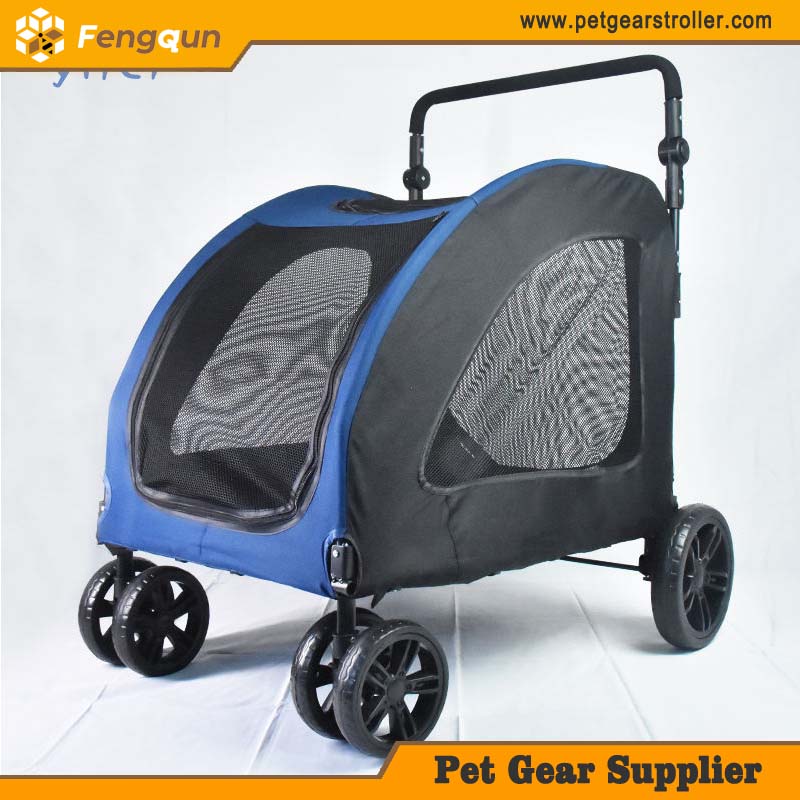
Key Takeaways
Weight capacity must exceed your dog’s weight by at least 30% – for a 35 kg dog, look for ≥45 kg capacity. Never trust a stroller rated exactly at your dog’s weight.
Interior dimensions are critical – the dog must stand (cabin height ≥ withers height + 15 cm), lie down (length ≥ nose‑to‑tail + 10 cm), and turn around (width ≥ shoulder width + 10 cm).
Entry height ≤20 cm is essential for senior or arthritic big dogs – higher entries force jumping, causing joint pain and injury.
Pneumatic tires with suspension are non‑negotiable for outdoor use and senior dogs. Solid wheels transmit vibrations that aggravate arthritis and can damage the stroller frame.
Steel frame is preferred for dogs over 35 kg – aluminum may flex and fail. Cross‑bracing and thick tube walls are necessary.
Harness tethers are mandatory – at least one, preferably two side tethers, short enough (15–20 cm) to prevent the dog from reaching the door.
Folding must be one‑handed and quick – otherwise you will avoid using the stroller. Measure folded dimensions against your car trunk.
Avoid double‑tier strollers for big dogs – the upper cabin is too small, and the lower cabin has poor ventilation and access.
Budget realistically – a safe large dog stroller costs $250–600 in 2026. Under $150, you are buying a product that will fail.
Maintenance is not optional – check tire pressure weekly, repack bearings every 3 months, lubricate hinges. A large stroller requires more care than a small one.
If your dog is over 55 kg, no pet stroller is suitable – use a heavy‑duty wagon with added padding, tether, and ramp.
By following this technical guide, you can select a large pet stroller that will safely and comfortably transport your big dog for years, whether for daily walks, vet visits, or recovery from injury. Always prioritize your dog’s dimensions and joint health over marketing claims or low prices.
For more about How to Choose the Right Large Pet Stroller for Your Big Dog (2026 Guide), you can pay a visit to https://www.petgearstroller.com/product/ for more info.