Eco-Friendly Pet Strollers: Revolutionizing Pet Transport with Sustainable Materials
The global pet care industry is undergoing a significant paradigm shift, mirroring the broader societal move towards environmental consciousness. As pet owners increasingly seek products that align with their eco-friendly values, the market for pet accessories is evolving. Among these, the pet stroller, once a niche luxury item, has become a mainstream accessory for urban pet owners, elderly or disabled pets, and multi-pet households. This article provides a comprehensive technical analysis of the emerging generation of eco-friendly pet strollers, focusing on the innovative use of sustainable materials in their construction. We examine material sourcing, engineering properties, lifecycle analysis, and the tangible benefits these design choices offer to both the consumer and the planet.
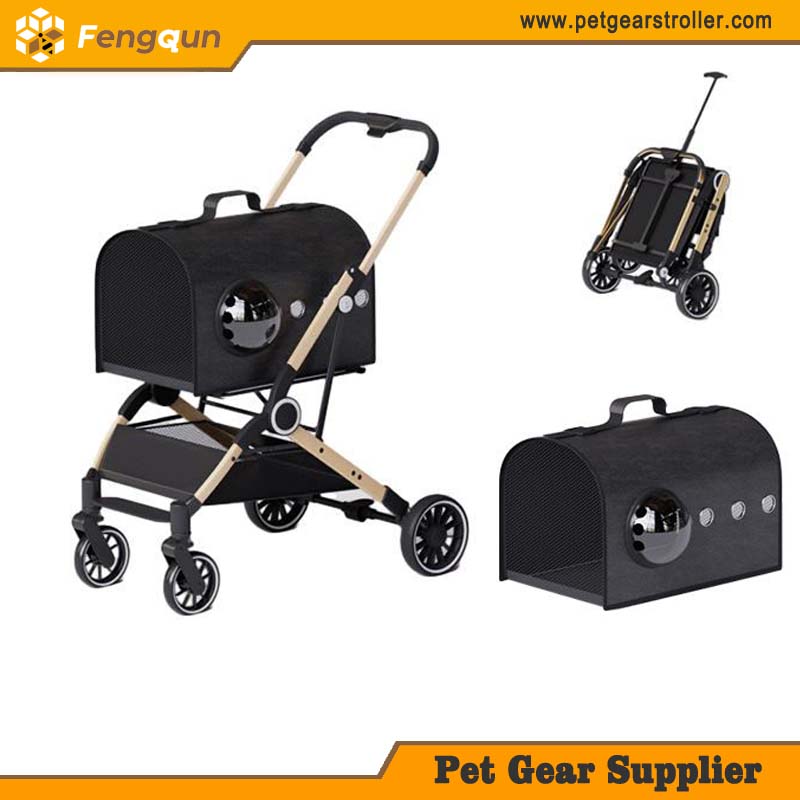
The Convergence of Pet Care and Sustainability
The pet humanization trend has catalyzed a multi-billion dollar industry dedicated to pet comfort, health, and mobility. Pet strollers facilitate safe outdoor excursions, reduce pet stress in crowded environments, and aid in the recovery of injured animals. Concurrently, consumer awareness of plastic pollution, carbon footprints, and ethical manufacturing is at an all-time high. Traditional pet strollers often rely on virgin plastics (like PVC and ABS), synthetic textiles (nylon, polyester), and non-recyclable foam padding, contributing to landfill waste and microplastic shedding.
The eco-friendly pet stroller represents a deliberate engineering response to this conflict. It is not merely a product with a "green" label but a sophisticated reassembly of material science, design principles, and circular economy thinking. The core challenge lies in replacing conventional materials with sustainable alternatives without compromising on critical performance metrics: structural integrity, safety, weight, durability, water resistance, and ease of cleaning.
Deconstructing the Sustainable Material Palette
The modern eco-friendly stroller is a composite system. We break down its key components and the sustainable materials innovating each category.
1. Frame and Chassis: Beyond Steel and Aluminum
The frame is the stroller's skeleton, requiring high strength-to-weight ratios and corrosion resistance.
Recycled Aluminum: A leading choice. Post-consumer recycled aluminum (often from industrial scrap or end-of-life products) requires up to 95% less energy to process than virgin aluminum. It retains all the beneficial properties: lightweight, strong, rust-proof, and is infinitely recyclable at end-of-life.
Bamboo-Reinforced Composites: An avant-garde solution. Bamboo is a rapidly renewable grass with tensile strength rivaling steel. When combined with bio-based resins (e.g., derived from soy or corn), it forms a composite for frame components. The result is a remarkably strong, lightweight, and visually distinct material with a significantly lower embodied carbon footprint.
Recycled Plastics in Structural Components: High-grade recycled plastics, such as recycled polypropylene (rPP) or reclaimed ocean-bound plastics, are being engineered for non-critical structural parts like joint connectors, wheel hubs, and brake assemblies. Advanced polymer sorting and purification ensure these materials meet rigorous stress and UV resistance standards.
2. Fabrics and Upholstery: The Organic and Recycled Textile Revolution
The canopy, liner, and padding are in constant contact with the pet and the environment.
RPET (Recycled Polyethylene Terephthalate) Fabric: The current industry standout. Made from recycled plastic bottles, RPET fabric transforms waste into durable, water-resistant, and easy-to-clean textile. The process mechanically shreds, melts, and re-spins PET plastic into fine yarn, which is then woven. This diverts plastic from oceans and landfills and reduces dependency on petroleum-based virgin polyester.
Organic Cotton and Hemp: For interior liners and padding layers, GOTS-certified organic cotton (grown without synthetic pesticides) and hemp offer breathable, hypoallergenic, and biodegradable alternatives. Hemp, in particular, requires minimal water, no pesticides, and enriches the soil it grows in, making it a highly sustainable crop. Its natural antimicrobial properties are a bonus for pet products.
Natural Rubber and Latex: Replacing synthetic foam and plastic-based waterproof layers, natural rubber (from sustainably tapped rubber trees) provides cushioning in paw pads and bumper bars. It is biodegradable at end-of-life, unlike memory foam derived from polyurethane.
3. Wheels and Tires: Rolling Towards a Greener Path
Airless Tires from Recycled Rubber: Puncture-proof airless tires, manufactured from compounded recycled rubber (from tires and other industrial waste), eliminate the hassle of flats and the use of butyl rubber inner tubes. They offer a consistent ride and are fully recyclable again.
Wheel Hubs from Bio-Composites: Wheel hubs and spokes are increasingly molded from bio-composites, combining natural fibers like flax or jute with plant-based resins, offering a lightweight and durable alternative to all-plastic hubs.
4. Finishes and Coatings: The Invisible Green Layer
Sustainability extends to the chemicals used. Powder-coating over chrome plating for metal parts is standard for its durability and lower VOC emissions. Water-based, non-toxic dyes are used for coloring fabrics, ensuring they are safe if chewed by a pet and less polluting in production.
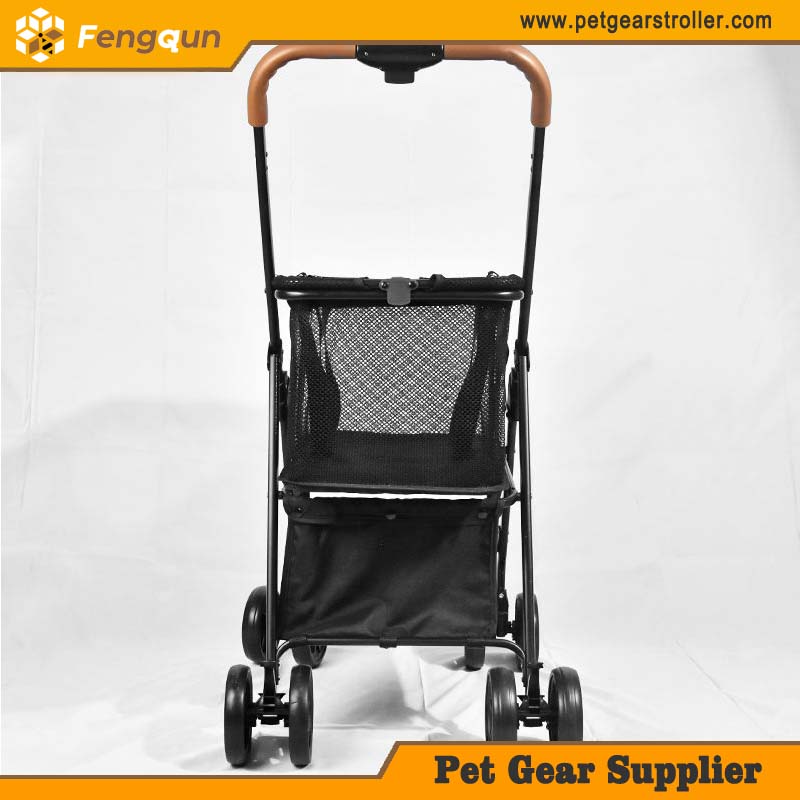
Engineering and Design Innovations Enabled by Sustainable Materials
The adoption of these materials isn't just substitution; it drives innovation.
Modular Design: To facilitate repair and recycling, leading eco-models feature modular construction. A damaged RPET canopy can be replaced independently of the bamboo frame. This extends product lifespan, a core tenet of sustainability.
Lightweighting: The use of advanced composites and high-strength recycled aluminum directly results in lighter strollers, improving maneuverability and reducing the energy required for transportation (lowering the product's overall carbon footprint from logistics).
Enhanced Biodegradability at End-of-Life: A stroller designed for disassembly allows for proper stream segregation: metals to metal recycling, RPET fabrics to textile recycling, and natural rubber/hemp components to industrial composting facilities, dramatically reducing landfill contribution.
Comparative Lifecycle Analysis (LCA): A Quantitative Perspective
A cradle-to-grave LCA provides the most honest assessment of environmental impact.
Traditional Stroller: High impact in raw material extraction (petroleum for plastics, bauxite mining for aluminum). Manufacturing is energy-intensive. Use phase is neutral. End-of-life: >90% likely to end up in landfill, with slow-decaying plastics and mixed materials making recycling economically unviable.
Eco-Friendly Stroller: Lower initial impact due to the use of recycled and rapidly renewable inputs. Manufacturing may have similar energy use but avoids virgin resource depletion. Use phase identical. End-of-life: Designed for circularity, with a high potential for material recovery and recycling, or safe biodegradation of specific components, closing the loop.
While the production of some bioplastics or composites can be energy-intensive, the net benefit is realized across the full lifecycle, especially in waste reduction and resource conservation.
Challenges and Future Technical Directions
The sector faces ongoing challenges:
Cost: Sustainable materials and ethical manufacturing often command a 20-40% price premium over conventional counterparts, a barrier to mass adoption.
Performance Parity: Ensuring that recycled fabrics are as scratch-resistant as virgin nylon, or that bio-composites can withstand extreme temperatures and loads, requires continuous R&D.
Supply Chain Complexity: Sourcing certified organic cotton, verified ocean-bound plastic, or food-contact-safe recycled materials adds layers of complexity to the supply chain.
Greenwashing: The lack of universal standards for "eco-friendly" in pet products necessitates third-party certifications (like OEKO-TEX, GRS, FSC) for consumer trust.
Future directions are promising:
Mycelium-Based Foams: Using the root structure of mushrooms to grow custom-shaped, fully biodegradable cushioning and structural forms.
Advanced Chemical Recycling of Textiles: Breaking down old stroller fabrics into their base polymers to create new, high-quality yarns in a true circular process.
Integrated Solar Panels: On canopies to power small built-in fans or LED safety lights, enhancing functionality with renewable energy.
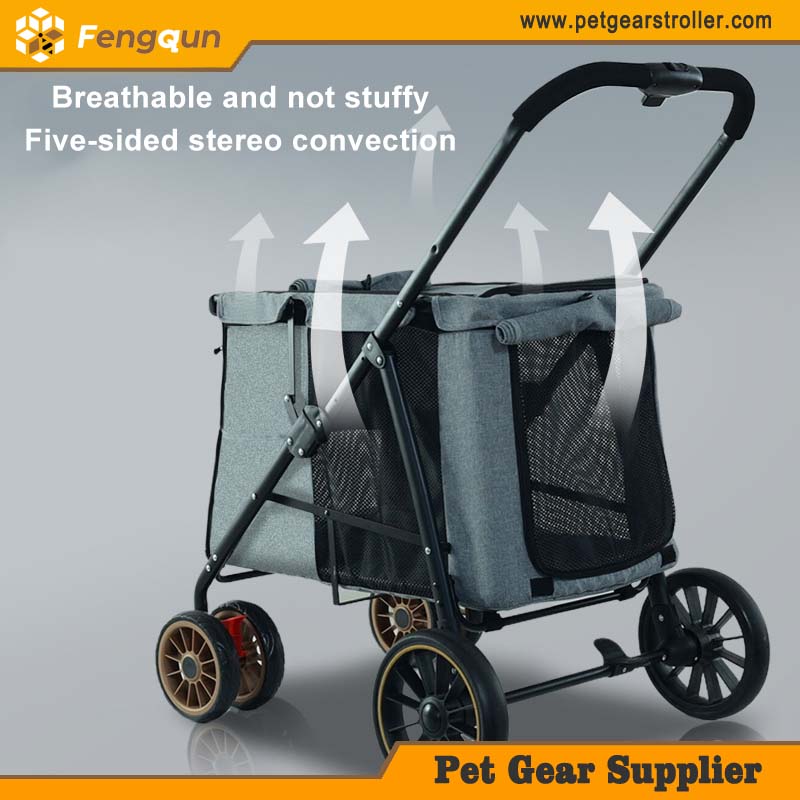
Conclusion
The eco-friendly pet stroller is a microcosm of sustainable industrial design. It demonstrates that through intelligent material selection—prioritizing recycled content, rapidly renewable resources, and biodegradable elements—it is possible to create high-performance consumer goods that mitigate environmental harm. This transition is not a marketing trend but a necessary re-engineering of the product lifecycle. For the environmentally conscious pet owner, these strollers offer a powerful alignment of values: providing the utmost care and mobility for their companion while actively participating in the stewardship of the planet. As material science advances and circular economy models mature, the sustainable pet stroller will evolve from a premium alternative to the industry benchmark, setting a new standard for responsible pet parenthood in the 21st century.
For more about eco-friendly pet strollers: revolutionizing pet transport with sustainable materials, you can pay a visit to FengQun Pet Gear Supplier for more info.






