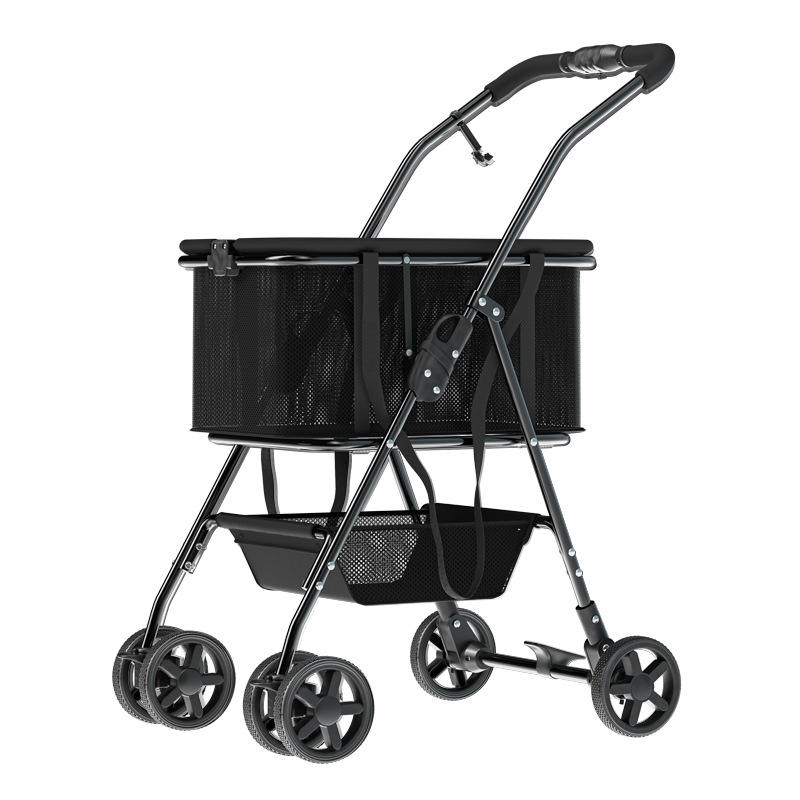
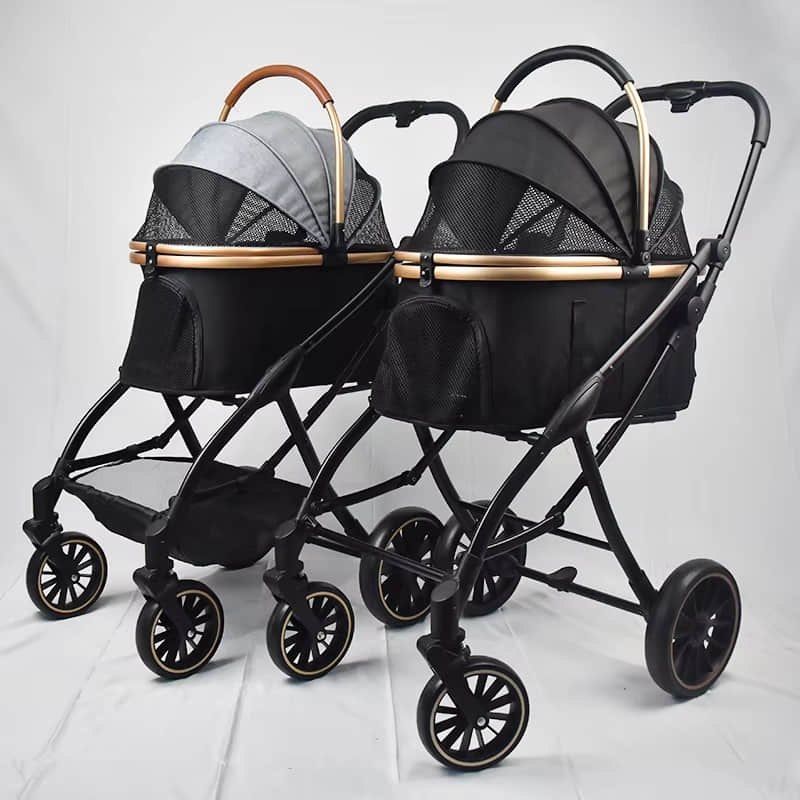
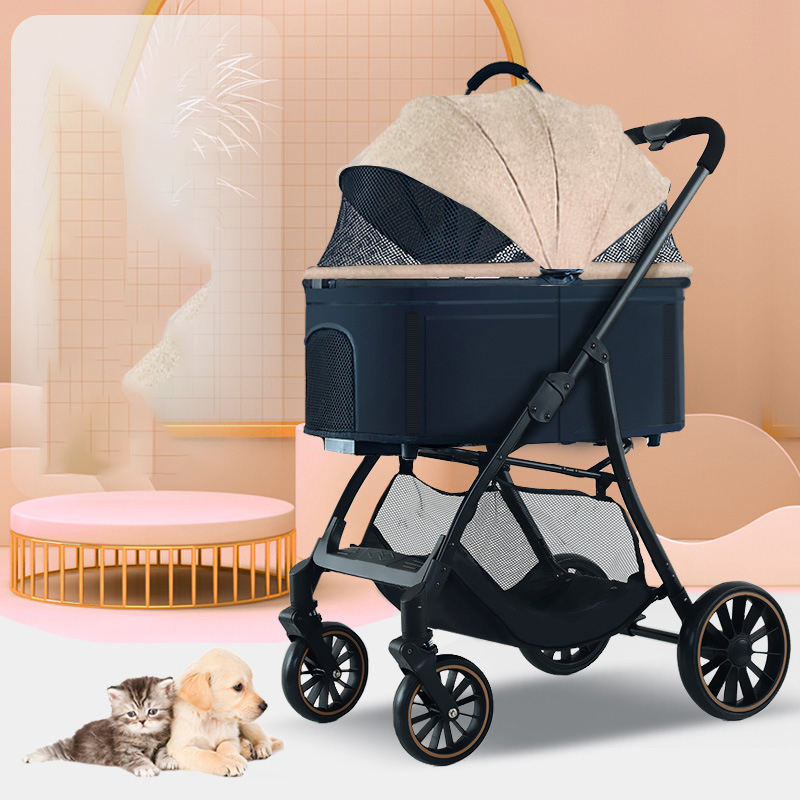
What are the best jogging pet strollers for large dogs?
TL;DR: Selecting a jogging pet stroller for a large dog requires evaluating structural integrity, wheel dynamics, braking systems, weight capacity, and safety restraints. This article provides a technical framework for comparing strollers without relying on brand names. It covers frame materials (aluminum vs. steel), wheel diameter and tire types (pneumatic vs. foam-filled), suspension systems, locking front wheels for running, internal volume and load limits, interior tether attachments, folding mechanisms, and maintenance practices. The goal is to enable data-driven decisions based on your dog’s size, running habits, and terrain. Key metrics: minimum 100 lb (45 kg) capacity, 12‑inch or larger wheels, dual‑point parking brake, and adjustable handlebar height.
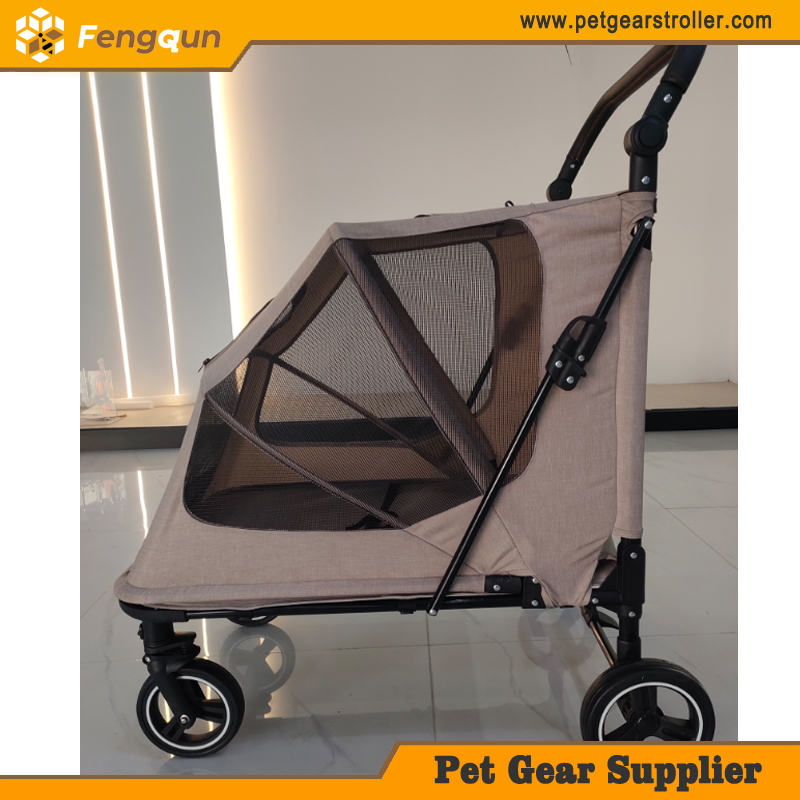
Introduction: The Engineering Challenge of Large‑Dog Jogging Strollers
Running with a large dog (typically over 50 lb / 22.7 kg) imposes significantly higher dynamic loads on a pet stroller than walking with a small companion. The combination of high‑speed acceleration, sudden deceleration, uneven terrain, and the dog’s own movements creates forces that demand robust mechanical design. A standard “pet carriage” often fails within weeks of regular jogging use. Therefore, the term “best” must be defined by engineering parameters that ensure durability, safety, and comfort for both the runner and the animal.
This article avoids any brand endorsements. Instead, it establishes objective criteria – from axle strength to brake hysteresis – that can be applied universally. By understanding these technical specifications, any pet owner can evaluate competing products on a level playing field.
Weight and Size Requirements for Large Breeds
2.1 Static vs. Dynamic Load Capacity
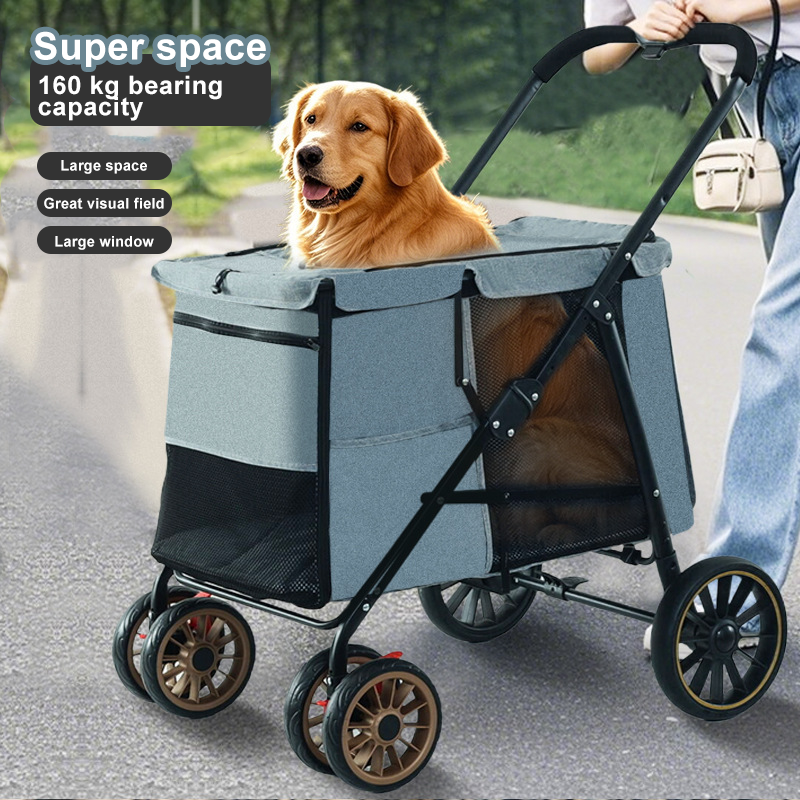
Manufacturers commonly list a maximum static weight rating (e.g., 100 lb). For jogging, the dynamic load can be 1.5–2 times higher because of bumps, quick turns, and the dog shifting its weight. Hence, a stroller rated for 100 lb static is often adequate for a 70–80 lb dog during light jogging, but for a 95 lb dog on rough trails, you need a margin of safety – look for a rating of at least 120 lb static.
2.2 Interior Dimensions
Large dogs require ample length (from nose to base of tail) and shoulder height. Measure your dog while standing and while lying down. The stroller’s cabin should allow the dog to sit upright without its head rubbing the canopy and to turn around comfortably. Minimum recommended interior length: 30 inches (76 cm); interior height: 24 inches (61 cm). The floor should be flat and reinforced, with no central ridge that could cause pressure sores.
2.3 Door and Entry Design
Large dogs cannot squeeze through small openings. Look for a rear drop‑down door or a wide front zipper that spans nearly the full width of the cabin. The entry threshold should be low (<4 inches / 10 cm) to avoid encouraging jumping, which can stress joints. Magnetic or snap‑buckle closures are more durable than plastic zippers under repetitive use.
Chassis and Frame Construction
3.1 Material Choice: Aluminum vs. Steel
Aluminum – Lighter (typically 5–7 lb less), resists rust, but may flex under heavy loads. High‑grade 6061 or 7005 aluminum with thick wall tubing is acceptable for dogs up to 80 lb.
Steel – Heavier but provides superior rigidity and vibration damping. Ideal for dogs >90 lb or when running on very rough terrain. The downside is potential rust if the paint chips; look for powder‑coated or stainless steel.
3.2 Joint and Folding Mechanism Integrity
The point where the frame folds is a stress concentration. The best designs use double‑wall hinges with locking pins that audibly click into place. Avoid single‑button folding releases that can accidentally collapse while jogging. A safety secondary latch – requiring two distinct actions to fold – is a must for large dogs.
3.3 Handlebar Ergonomics and Adjustability
A fixed handlebar forces the runner into a suboptimal posture. Adjustable handlebars (telescoping or pivoting) allow you to match your height (from 5’2” to 6’4”) and maintain a natural arm swing. Vibration‑absorbing foam or gel grips reduce hand fatigue during long runs. The distance from the rear axle to the handle grip should be long enough that your feet never kick the undercarriage – typically >18 inches (46 cm).
Wheel System and Terrain Adaptability
4.1 Diameter and Hertzian Contact Pressure
Wheel diameter directly affects rolling resistance and obstacle clearance. For large dogs and jogging speeds (up to 8 mph / 13 km/h), 12‑inch (30 cm) wheels are the minimum; 16‑inch (40 cm) wheels are preferable for unpaved trails. Smaller wheels produce higher contact pressure, sink into soft ground, and transmit more shock to the dog.
4.2 Tire Type: Pneumatic vs. Solid
Pneumatic (air‑filled) tires – Provide excellent shock absorption and traction. However, they require regular pressure checks (recommended 30–40 psi) and can puncture. For large dogs, puncture‑resistant liners or slime‑filled tubes reduce risk.
Solid foam / honeycomb tires – Never go flat, but offer much less cushioning. The increased vibration can cause long‑term joint discomfort for a large dog. Acceptable only for smooth asphalt running.
4.3 Front Wheel Caster and Lockout Mechanism
For jogging, the front wheel must be locked in a fixed, forward‑pointing position. A flimsy lock that disengages during a hard turn can cause a catastrophic tip‑over. The best systems use a spring‑loaded pin that engages into a metal receiver. Some high‑end designs offer a dual‑mode caster: swivel for walking, lock for running, and a second partial‑lock that limits swivel to ±15° for gentle curves.
4.4 Rear Axle and Bearing Quality
The rear axle should be one continuous steel rod (diameter ≥12 mm) rather than two separate stubs. Bearings should be sealed ball bearings (ABEC‑3 or better) – not nylon bushings. Sealed bearings resist dirt and moisture, maintaining low rolling resistance over hundreds of miles.
Suspension Systems for Large Dogs
5.1 Why Suspension Matters
Without suspension, every crack in the pavement sends an impulse through the wheels, frame, and into the dog’s spine. For a 70 lb dog, a 1‑inch bump at 6 mph generates roughly 200 lb of peak force. A well‑designed suspension reduces that peak by 50–70%.
5.2 Types of Suspension
Leaf spring / Flex‑beam – A single composite or steel beam that bends elastically. Simple and robust, but provides relatively linear damping. Works well for consistent loads.
Coil‑over shocks – Each wheel (usually rear) has a small spring and damper. Superior for variable loads and high‑frequency bumps. Requires more maintenance.
Elastomer bumpers – Cheap and silent but degrade over time. Not recommended for large dogs except as a secondary feature.
5.3 Suspension Tuning
Adjustable preload is valuable if you run with varying cargo (e.g., sometimes with one dog, sometimes two). A stiffer spring setting for heavier loads prevents bottoming out. Without adjustment, the suspension should be matched to the average weight of your dog plus a 10 lb margin.
Braking Systems: Safety First
A runaway jogging stroller carrying a large dog can cause serious injury. Brakes must function reliably even when wet or muddy.
6.1 Brake Types
Hand‑operated bicycle‑style levers with disc brakes – Best performance. Provide proportional stopping power and require least hand force. Disc rotors should be at least 140 mm diameter.
Foot‑operated parking brake only – Dangerous for jogging because it cannot be applied gradually while moving. Only acceptable as a secondary parking brake.
Drum brakes – Rare but very durable; sealed from dirt. Heavier than disc brakes.
6.2 Parking Brake Design
The parking brake must lock at least two wheels simultaneously (preferably both rear wheels). A single‑wheel lock allows the stroller to spin around a pivot point on a slope. The engagement mechanism should be a positive click with visual indicator (e.g., red band showing when engaged).
6.3 Brake Maintenance
Disc brakes need occasional adjustment of the cable tension and replacement of pads every 200–300 miles. For large dogs, specify sintered (metallic) pads for better wet‑weather bite.
Canopy, Ventilation, and Weather Protection
7.1 Canopy Coverage
A large dog cannot escape sun or rain. The canopy should extend at least to the front wheel axle when fully deployed. Multiple flexible stays allow shaping around the dog’s head. UV‑rated fabric (UPF 50+) is essential for summer runs. A rear ventilation window – mesh with an opaque rolling cover – provides airflow while allowing the dog to see you (reducing anxiety).
7.2 Airflow Calculations
At a jogging pace (6 mph / 2.7 m/s), the pressure differential across the cabin can be significant. The stroller should have at least 40 square inches (260 cm²) of open mesh area at the front and another 40 sq in at the rear to allow cross‑flow. Without adequate ventilation, carbon dioxide can accumulate if the dog pants heavily inside a closed canopy.
7.3 Rain and Mud Flaps
Zippers on the canopy are common failure points. A better design uses hook‑and‑loop (Velcro) flaps over the zipper to keep out fine dust. Removable mud flaps along the lower front edge prevent road spray from entering the cabin.
Restraint Systems: Keeping the Dog Secure
8.1 Internal Tether Requirements
Every jogging stroller must have an internal leash anchor point that attaches to the dog’s harness (not a neck collar). The anchor should be low on the rear wall, preventing the dog from climbing out the front. The tether should be short enough that the dog cannot reach the front entry but long enough to lie down – typically 12‑18 inches (30‑45 cm) from anchor to harness clip.
8.2 Load Rating of Restraint
The tether clip, webbing, and anchor point must withstand a sudden deceleration force. In a hard stop from 6 mph, a 70 lb dog produces roughly 150 lb of force. Look for anchors that are bolted through the frame (not sewn into fabric). Some designs use a carabiner‑grade steel clip.
8.3 Escape Prevention
Large dogs can push out of poorly designed closures. The primary closure (zipper or buckle) should be supplemented with a secondary safety strap that physically attaches the door to the frame. For dogs that chew, metal mesh panels are better than nylon screening.
Folding, Storage, and Portability
Although large‑dog jogging strollers are heavy (often 30–45 lb / 14–20 kg), they must fold compactly for car transport.
9.1 Folding Mechanisms
The two common architectures:
One‑hand fold – Pull a central handle and the stroller collapses like a baby stroller. Convenient but must have a locking latch to prevent unintended folding during a run.
Two‑step fold (e.g., remove wheels then collapse frame) – More cumbersome but usually more rigid when open. Acceptable if you don’t fold daily.
9.2 Folded Dimensions and Standing Capability
After folding, the stroller should stand upright on its own (or include a small kickstand) to avoid leaning against a car. A folded length under 36 inches (91 cm) and width under 24 inches (61 cm) fits most sedan trunks.
9.3 Removable / Quick‑Release Wheels
Quick‑release axles (push‑button or lever cam) make cleaning and storage easier. Ensure the release mechanism is robust; some cheap quick‑releases can loosen from vibration. Threaded axles with a wingnut are more reliable but slower.
Maintenance and Longevity for Demanding Use
Jogging strollers for large dogs endure more wear than any other pet mobility product. Maintenance must be systematic.
10.1 Inspection Checklist (Every 50 Miles / 80 km)
Tire pressure (pneumatic) – maintain 30–40 psi.
Axle nut torque – hand‑tight plus ¼ turn.
Brake pad thickness – replace if <2 mm.
Frame hinge bolts – check for loosening with a hex key.
Fabric for tears near the door zippers.
10.2 Cleaning Protocol
Salt, mud, and dog hair cause corrosion and odor. Rinse the undercarriage with a garden hose weekly, avoiding high‑pressure washers that force water into bearings. Use a damp cloth with mild soap for the canopy. Lubricate wheel bearings with a light oil (e.g., Tri‑Flow) every 100 miles. Do not use WD‑40 as a long‑term lubricant.
10.3 Replacement Parts Availability
Even without naming brands, when evaluating a stroller, ask the retailer or check the manual for the availability of individual spare parts: inner tubes, tires, brake pads, and hinge pins. A model whose manufacturer refuses to sell spare parts should be avoided – it is effectively disposable.
Terrain‑Specific Considerations
11.1 Paved Roads and Sidewalks
Here the priority is low rolling resistance and quiet operation. Smooth pneumatic tires with a shallow tread pattern work best. A front wheel lock is essential to prevent shimmy at speed.
11.2 Unpaved Trails and Gravel
Requirements shift to larger wheels (≥16 inches), deeper tread, and full suspension. The front wheel should not be too lightweight – a heavier hub dampens vibration. Consider adding a wrist strap to the handlebar in case the stroller hits a hidden root and tries to twist away.
11.3 Snow or Sand
Standard strollers sink. Only purpose‑built fat‑tire models (wheel width >3 inches / 7.6 cm) with very low pressure (15 psi) can manage. For occasional snow, adding ski‑type runners that attach to the wheels is an aftermarket option, but efficacy is mixed.
Cost vs. Performance Analysis
No specific prices are mentioned, but the technical features listed above correlate directly with cost. A minimalist stroller for small dogs often lacks:
locking front wheel
suspension
large pneumatic tires
adjustable handlebar
high‑quality bearings
Expect to pay significantly more for each of those features. For large dogs, the minimal viable configuration must include:
✅ 12‑inch wheels with pneumatic tires
✅ lockable front swivel wheel
✅ parking brake that acts on two wheels
✅ internal tether with metal anchor
✅ frame capacity ≥100 lb
Any stroller missing one of these is unsuitable for jogging with a large dog, regardless of price.
Matching Stroller to Your Dog’s Behavior
13.1 Calm vs. Anxious Riders
A dog that stands and shifts weight constantly creates dynamic instability. For such dogs, a wider track (distance between rear wheels) – at least 24 inches – improves lateral stability. Also, a lower center of gravity (floor of cabin close to axle height) reduces tipping risk.
13.2 Senior or Arthritic Dogs
For older large breeds, additional padding (at least 2‑inch thick orthopedic foam) and a ramp instead of a high step‑in are valuable. However, ramps are rare; a removable step stool is a practical accessory.
13.3 Two‑Dog Configurations
If you have two medium‑large dogs that together exceed 100 lb, you need a side‑by‑side “double” jogger. In a double, the max weight per side is typically 50–70 lb. Ensure each side has its own restraint and the central divider is rigid (not mesh only), otherwise the dogs can entangle legs.
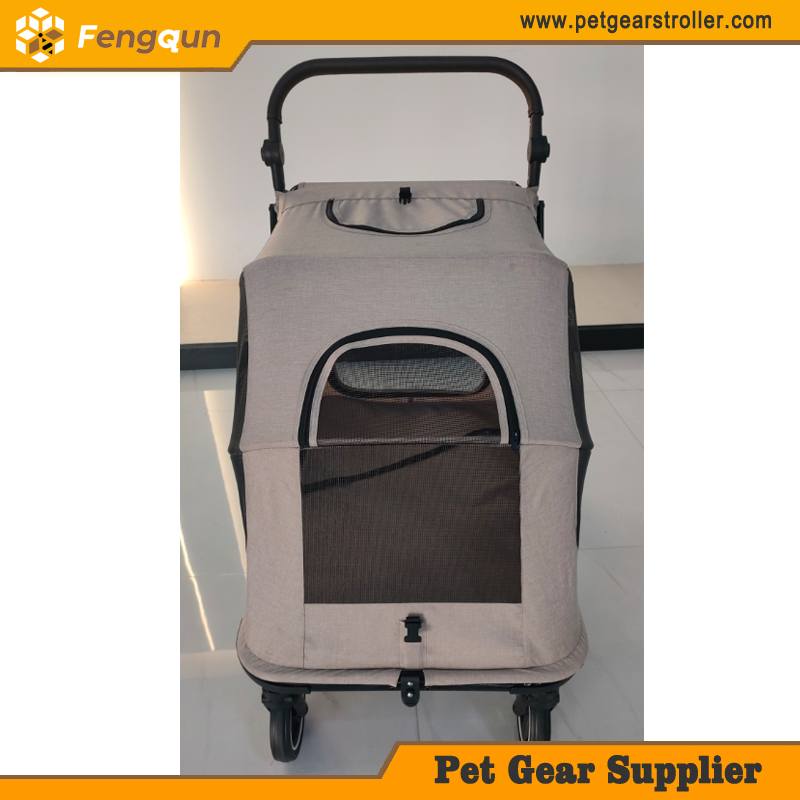
Key Takeaways
Weight rating and interior size are the first filters. For large dogs, look for a minimum static capacity of 100 lb and interior length of 30 inches.
Wheel diameter must be at least 12 inches – 16‑inch is better for trails. Pneumatic (air‑filled) tires provide essential shock absorption.
The front wheel must have a reliable locking mechanism for jogging. Without a lock, the stroller will wander dangerously.
Brakes – a hand‑operated lever with disc brakes offers the best control; a parking brake alone is insufficient for active running.
Suspension (preferably coil‑over) significantly reduces spinal impact on the dog. A rigid frame is acceptable only on very smooth pavement.
Restraint system – use a low‑anchored tether attached to a harness, not a neck collar.
Frame material: Steel is heavier but more rigid for dogs >90 lb; thick‑wall aluminum is adequate for most.
Regular maintenance (tire pressure, brake pads, bearing lubrication) is non‑negotiable for safety.
Avoid any model that lacks spare parts availability or fails to specify dynamic load limits.
The best jogging stroller for your large dog is the one that matches your specific terrain, your dog’s weight and temperament, and your own running gait – evaluated strictly by engineering features, not by marketing claims.
For more about What are the best jogging pet strollers for large dogs? you can pay a visit to https://www.petgearstroller.com/product/ for more info.